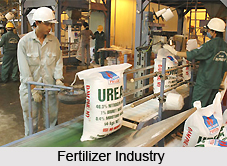
 Fertilizer industry in India is putting great efforts to produce the complex fertilizers in order to improve the productive capacity of the lands. In general, Indian lands being deficient in fertilizing elements like phosphorous, nitrogen and potassium are less productive comparatively. Thus, the fertilizer industries manufacture chemical fertilizers that are rich in water soluble compounds and minerals. Fertilizers with different combinations of the essential elements are being manufactured in India.
There are several fertilizer factories in the country. The various large modern fertilizer factories of the country are situated at different places like Nangal of Punjab, Kanpur, Baroda, Mumbai, Varanasi, Kota, Vishakhapatnam, Debari near Udaipur, Durgapur, Haldia, Namrup in Assam, Gorakhpur and more. Moreover, number of fertilizer industries are constantly been increasing for augmenting the production of fertilizers. Production is for the most part in the hands of public sector and co-operative sector. Prices of fertilizers have been partly liberalized. However, the government has been paying huge subsidy to farmers, as it is a critical input in meeting the rising food demands. So far fertilizer plants were inclined to be situated near the stockpiles of raw materials. Now natural gas is being used more and more as worthy raw material. As it can be channelised any where through pipelines, fertilizer plants are now being built close to potential markets. Fertilizer plants are located in public, private, joint, and co-operative sectors. Some fertilizer plants have also set up mutually by Indian and local collaborators in some west Asian countries.
India produces a balanced proportion of rock phosphate, which is the source of phosphorous. Further, its production has also increased considerably over the years. Rock phosphate is insoluble in water. But when it is mixed with sulphuric acid it is transformed into water soluble compound. However, sulphur has to be imported. Interestingly, most of the basic raw ingredients that are necessary for the production of fertilizers are imported.
With time, utilization of fertilizers has tremendously increased in the country. And at the same time, the production of the different types of fertilizers has also increased considerably over the years. Thus, it can be said that production of the fertilizer industries have helped in overcoming the acute shortage of food grains in the past. The fertilizer industries are slowly and gradually improving the overall agricultural production of the country.