Drawing Room , Vastu Shastra - Informative & researched article on Drawing Room , Vastu Shastra
  Indianetzone: Largest Free Encyclopedia of India with thousand of articles Indian Religion


in  
Art & Culture | Entertainment | Health | Reference | Sports | Society | Travel
Forum  | RSS Feeds  | Free E-magazine
Indian Religion : Vastu Shastra l Indian Religions l Indian Myths l Indian Mythology l Gods of India l Goddesses Of India l Religious Thinkers of India l Types of Religion in India l History of Indian Religion l Indian Yogis l Ajivikas l Sacred Scriptures in Indian Religion l Tantra l Shaivism l Indian Communities l Sacred Animals in India l Roman Impact on South Indian Art and Society l Bhattacharyas l Indian Classical Terms
Home > Society > Indian Religion > Vastu Shastra > Drawing Room
Drawing Room , Vastu Shastra
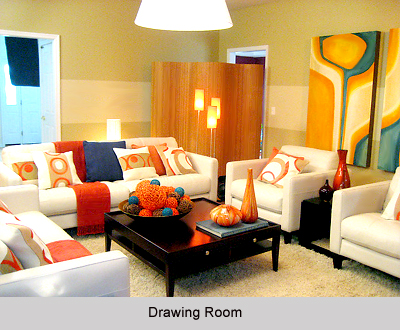
Living Rooms can be made perfect for using by following the rules of Vastu Shastra.

Vastu Shastra is an art and science that is as old as the Vedic Age. References to it has been found in the texts that date back to this era. `Vaasthu` in Sanskrit refers to `Vasthu` meaning a commodity. Shastra means system in Sanskrit. Vastu may also refer to `vaas` (to live). This ancient science has laid down several rules following which will lead to a harmonious existence for the living beings. These rules pertain to the construction of houses and even work places.

The living rooms in a flat are an important section. If the residents follow certain principles of Vastu Shastra it can generate positive energy in their houses.

  • The living rooms should be in the east (leaving the south-east corner) or in the north. It would be more beneficial if they are located in the north side of the flat.


  • The slope of the floors in the living room should either be in the east or in the north.


  • The doors of the living rooms should not be constructed in the south-east or the south-west directions.


  • Built the doors in the eastern and the western sides as this would prove very auspicious for the living rooms.


  • The furniture, show cases and other heavy articles should be placed in the west or the south directions.


  • Circular, triangular, egg shaped, hexagonal or odd shaped furniture in the living rooms should be avoided. These should either be square or rectangular.


  • In case there is a separate sitting arrangement for the head of the family it should be in the east or in the north directions.


  • T.V. should be in the south-east corner. It is better not to put T.V. in the north-east or the south-west corners. If it is in the north-west corner and remains on for a long time a lot of valuable time is lost. If the T.V. is in the south-west corner frequent breakdowns are expected.


  • The telephone should be in the east or in the south-east or in the north.


  • If the residents have arranged for the Indian style of sitting then it should be placed in the east, the west or the north.


  • Portraits of God or other images should be hung in the north-east corner of the living rooms.


  • Stuffed animals should be placed in the north-west corner.


  • Colours that can be used on the walls can be white, yellow, blue or green. Tiles of similar colors can also be used. Avoid using red or black colors in the living rooms.


  • Do no hang fancy chandelier at the centre of the room. It should be placed slightly towards the west. The logic behind this is that due to the gravitational force acting on this heavy item it should not fall at Bramha`s place. the center of a rooms is considered to be Lord Brahma`s, according to Vastu Shastra.


  • Portraits of birds, animals, women, weeping children, scenes from wars and others should not be displayed in the living rooms.


  • Do not put up photographs of any God at the entrance doors. In case someone is too keen, they can display the photograph or tile painting of the Lord Ganesha above the entrance door on the outside.


  • Due to scarcity of space, if the furniture are to be kept in the east or in the north direction, they should not come in direct contact with the flooring. They should be light and hollow and placed on base that is 1-3 inches above the floor.


  • It is also favorable to have the ceiling a bit slanting to the east or the north. This rule is completely optional.


  • There should be no outlet in the middle of the room.


  • As far as the coolers are concerned they should be placed in the west direction and not in the south-east section.


  • According to the principles of modern architecture the height of the living room is usually more than that of the other rooms. There is no harm in doing so.


  • If there are staircases adjacent to the living rooms they should be in the south, the west or the south-west corner of the room. They should be rise up towards the south or the west directions.

  • (Last Updated on : 10/09/2009)
      More on Vastu Shastra...
     
    Pyramid Vastu Home Vastu Vastu Principles
    Essentials of Vastu Elements of Vastu Griha Pravesh
    Designing a home using Vastu Vastu tips for a house Kitchen Room in Vastu Shastra
    Bathrooms in Vastu Shastra Toilets in Vastu Shastra Sceptic Tank
    Drainage Pipe Line Place of Idol and Worship Selection of Plot
    Bedrooms Strong Room Verandah
    Dining Room Drawing Room Store Room
    Study Room Basement Corners of the Open Space around the Structure
    Open Space Around The Building Parking Staircase
    Upper Floor Central Position of a Flat in Vastu Overhead Water Tank
    Proper and Improper Shape of the Plot Survey of the Land or Soil Waste Storage Rooms
    Angles in the Corner of a Plot Compound Wall Engineering and Architecture in Vastu Shastra
    L Type Plots Roads Around the Plot Auspicious Time for Bhoomipuja
    Division of the Plot Gate of the Compound Wall Location of the Well
    Plots with Circular Roads Vithishula Trees Around the Building
    Entering a New House as per Vastu Shastra Purchase of the Adjacent Plot Building Material
    Universal Magnetic field in the Plot Slope in a Plot Diagonal Plots
    Life of the building Quality of a Plot Constructions of Religious Temples
    Constructions of Factories Constructions of Shops Constructions of Hospitals
    Construction of Banks Constructions of Educational Institutions Flat system in Vastu Shastra
    Natural elements and the Vastu Division of a Diagonal Plot East-South-East Extended Plot
    Flooring of the Flat North-North-West Extended Plot Rectifications in the Extended Plots
    South-South-West Extended Plot West-South-West Extended Plot East-North-East Extended Plot
    Entrance Gate for Main Building in Diagonal Plots North-North-East Extended Plot Purchase of the Adjacent plot along the Diagonal Building
    South-South-East Extended Plot West-North-West Extended Plot Windows of Flat
    Apartments and Flat Systems Bedroom in the Flat Kitchen in the Flat
    Outhouse And Garage Main entrance Door of Flat Kitchen and Dining Table
    Bathroom in flat Seating Room in the flat Structures in the Flat
    Vastu in Different Units of a Flat Tips for Purchasing a Flat Row and Group Housing
    Vastu Shastra Effect of Planets on Buildings Haunted Structures
    Accursed Building Obstacle in a Structure or Dwarvedh Chhaya Vedh
    Selection of the Right Plot Ways to Overcome Inauspicious Vithishula Trees Touching the Structure
    Omens Related to Domestic Animals Omens Related to a Dog Omens Related to a Cat
    Omens Related to a Horse Omens related to a Crow Junction Plots
    Building Construction in L-Shaped Plots L and C Shaped Constructions Construction of L-type Buildings
    Construction of C Shaped Buildings Buildings in Triangular Plots Omens Related to Birds
    Omens Related to Serpent Omens Related to Sneeze Omens
    Auspicious Constellations for Travel Multilevel Structures Structure On a Hill
    Structure in a Ditch Vastu Shastra Related to Agriculture Interior Planning of the Main Building
    Vastu Shastra for Buildings Semi - Diagonal or Extended Plot Units in Apartments and Flat Systems
    Auspicious and Inauspicious Omens Mezzanine Floor  
    Recently Updated Articles in Indian Religion
    • Dhammapada
      Dhammapada, the core of Buddhist teaching in Pali language, is considered the gospel of Buddhism even today
    •  
    • Brahma Nirvana
      Brahma Nirvana is the ultimate communion with the eternal Reality of life that is the Brahma.
    •  
    • Ahmadiyya Sect,
      Ahmadiyya Sect is an Islamic sect founded in India by Mirza Ghulam Ahmad of Qadian.
    •  
    • Arahant
      Arhant according to the philosophy of Dhammapada is an individual who has attained the highest degree.
    •  
    E-mail this Article | Post a Comment
    Free E-magazine
    Subscribe to Free
    E-Magazine on Indian Religion

     
    Drawing Room , Vastu Shastra - Informative & researched article on Drawing Room , Vastu Shastra
    Sitemap
    Contact Us   |   RSS Feeds
    Copyright © 2008 Jupiter Infomedia Pvt. Ltd. All rights reserved including the right to reproduce the contents in whole or in part in any form or medium without the express written permission of Jupiter Infomedia Pvt. Ltd.