Division of Occupation - Informative & researched article on Division of Occupation
  Indianetzone: Largest Free Encyclopedia of India with thousand of articles History of India


in  
Art & Culture | Entertainment | Health | Reference | Sports | Society | Travel
Forum  | Free E-magazine
History of India : Sources of History of India l Ancient History of India l Medieval History of India l Modern History of India l Indian Historical Dynasties l Indian Battles l Sepoy Mutiny 1857 l Indian Rulers l History of India l Indian Freedom Struggle l Indian Governor- Generals l British Indian Acts l Post Independence India l Iron Age in India
Home > Reference > History of India > Ancient History of India > Vedic Civilisation in India > Vedic Literature > Division of Occupation
Division of Occupation
In India, there was a class division of occupations amongst the four varnas.

In Vedic literature it cannot be found any reference regarding the restrictions in diet, drink and inter-marriage. Therefore, the varnas appear to be open classes. They were based on individual qualities rather than on birth and descent. Therefore, it has been assumed by some sociologist that the original parts of the Vedas do not know the system of caste. In the Rig Vedic literature the occupations assigned to different varnas are not well defined.

In India, there was a class division of occupations amongst the four varnas. According to Manu, "Among the several duties, the most commendable are teaching the Veda for the Brahmin, protecting the people for the Kashtriya and trading for vaishya". But there are certain relaxations regarding the prescribed occupations of the four varnas in times of distress and adversity. A Brahmana who is unable to maintain himself by his own occupation may adopt the occupation of Kshatriya similarly the Kshatriya may adopt the occupation of a Vaishya. Further a Vaishya who is unable to subsist by his own occupation may adopt the Shudra`s mode of living.
(Last Updated on : 11/09/2009)
  More Articles in Vedic Literature
 
Prakrit Literature Pali Literature Manu Smriti
Division of Occupation Origin of Brahmana Literature Pratisakhyas
Shabda Pramana Aitareya Brahmana Pantheism in Vedic literature
Origin of Man in Hindu Literature Later Smritis Yajnavalkya Smriti
Naradasmriti Vishnu Smriti  
Recently Updated Articles in History of India
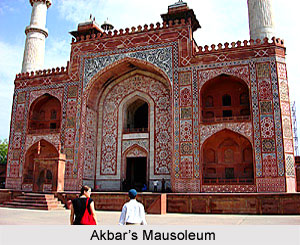
  • Mughal Architecture
    Mughal architecture is a combination of Islamic, Persian, Turkish and Indian architecture. It is a style that was developed under the Mughal dynasty in the sixteenth and seventeenth centuries.
  •  
  • Mansabdari System in Mughal Dynasty
    Akbar introduced the Mansabdari System in the Mughal army which primarily meant the ranking of officers on decimal system.
  •  
     
  • Deccan Policy of Mughal Dynasty
    Deccan Policy of the Mughal dynasty was weak during the reign of Babur and Humayun but after the accession of Akbar on the throne, the political situation changed and the Deccan policy was a success.
  •  
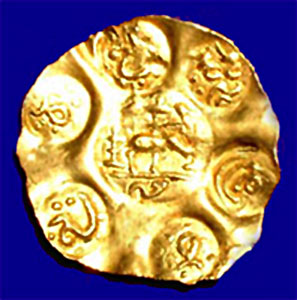
  • Coins of Pandyas
    Coins of Pandyas bear the legend of different Pandya ruler in different times.
  •  
  • Art and Architecture of Mughal Empire
    Art and architecture of Mughal Art offers an aesthetic degree to all art lovers. The subtlety of the finesse and the dazzle of the aura create huge amount of interest among tourist.
  •  
    E-mail this Article | Post a Comment
    RSS Feeds
    Forum
    Forum on History of India

    Free E-magazine
    Subscribe to Free
    E-Magazine on Indian Crafts
     
     
    Division of Occupation - Informative & researched article on Division of Occupation
    Sitemap
    Contact Us   |   RSS Feeds
    Copyright © 2008 Jupiter Infomedia Pvt. Ltd. All rights reserved including the right to reproduce the contents in whole or in part in any form or medium without the express written permission of Jupiter Infomedia Pvt. Ltd.