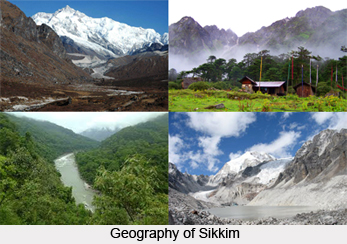
 Altitude is a vital condition in the circulation of vegetation in mountainous region, because temperature decreases with increasing altitude. In mountainous regions one can notice a series of natural vegetation belts from tropical to the tundra region. All of them are condensed within an altitude of six kilometres or so. However, even in the same altitude, sunny areas vary in plant life from those that are not so sunny.
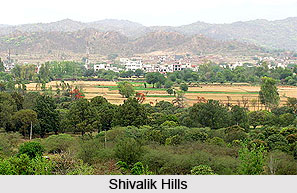
Shivaliks, foothills of the Himalayas, are beautified with tropical moist deciduous forests. Sal is the most prevailing and economically essential species. Bamboo trees are also familiar within this belt.
It is then followed by wet hill forests, within 1,000 and 2,000 metres above sea level. Evergreen wide leave oaks, chestnuts and apples are the regular trees. Other trees that can be found are ash and beech. At such an altitude in north-eastern hills where it rains profoundly, one can witness the presence of sub-tropical pine forests, in which chir or chil trees dominate.
Further up i.e. within 1,600 and 3,300 metres above sea level, pine, cedar, silver fir and spruce are some of the more significant species. These are the well-known coniferous forests of the temperate region. In the inner Himalayan ranges and in drier climates these trees along with deodar can be found in abundance.
Temperate coniferous forests give way to Alpine forests, mostly at 3,600 metres above sea level. They consist of silver firs, pines, birches and junipers. Alpine forests yield territory to Alpine grasslands, through shrubs and scrub.