 After the revolt of 1857, there was an impression that the Muslims were the arch conspirators of the Sepoy mutiny. The Wahabi political activities of 1860`s and 1870`s had confirmed such suspicions. However a change in the situation was perceptible during the 1870s. The Book "The Indian Musalmans" made a vigourous plea for reconciling with the Muslims. The Muslim community began to receive patronage of the Britishers in India. A section of the Muslim community led by Sir Syed Ahmed Khan prepared to accept favour and patronage of the British Government. These Muslims felt that if the Muslims alienate themselves from the rest of the society and political uprisings throughout India, they would get a rightful share in the administrative services.
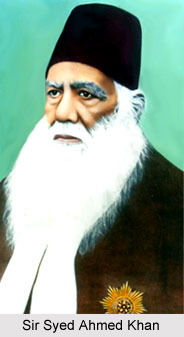
Sir Syed Ahmed Khan was the most prominent among the Muslims reformers of 19th century. A respectable Muslim, Sir Syed held the judicial service of the company during the revolt of 1857 and stood loyal to the Company. His loyalty earned him knighthood in 1888. As a true Muslim, Syed Ahmed tried to modernise the outlook of the Muslims. He tried to introduce the members of his religion to modern scientific thoughts and British rule. Sir Syed also urged them to accept services under the government. In this objective he had achieved great success.
Sir Syed Ahmed was a social reformer. He tried to reform the Muslim society from social abuses. He strongly condemned the system of `piri` and `muridi`. The pirs and fakirs claimed to be followers of the Sufi school and propagated the mystic words or murids to their disciples. He also criticised the institution of slavery practiced in Indian society during 20th century. His social messages were voiced out by his magazine `Tahdhib-ul-Akhlaq` (Improvement of Manners and Morals). In his treatise- Commentaries on Koran, he had openly criticised the narrow outlook of traditional interpreters and at the same time had revealed the emptiness of traditional superstitions.