 Trachoma or granular conjunctivitis is a chronic and severe form of conjunctivitis, and is the greatest single cause of serious and progressive loss of sight. It is estimated that there are more than 400 million people in the world suffering from the same disease. In present it has been a source of worry for the World Health Organization and the health authorities of the various countries of the world.
Trachoma is one of the most common causes of blindness in the developing world. It is linked to extreme poverty and poor sanitation as well. Trachoma is triggered by bacteria that cause repeated conjunctivitis, irritating the eyes and creating a mucous discharge. Although the conjunctivitis clears up after a month or so, it is easily spread. This is particularly the case in places where there is little water for people to wash their hands and faces regularly. Globally, 84 million people suffer from active infection and nearly 8 million people are visually impaired as a result of this disease.
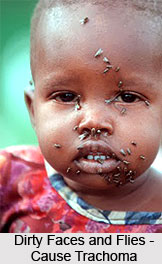 Causes and Symptoms: Modern medicine believes that trachoma is of viral origin and claims to have separated the virus responsible for it.
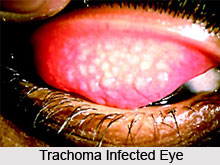
Trachoma is characterized by the appearance of nodules, which is pale in colour, and often compared to boiled sago grains situated on the conjunctival lining of the lids. It can always be seen that the upper half of the cornea becomes covered with a hazy film containing a network of superficial blood vessels. In the later stages of the disease, there is much scarring and shrinking of the conjunctiva, and the lids are apt to be torn inwards, thereby causing the lashes to rub on the cornea. Loss of transparency of the cornea and consequent dimness of vision are, therefore, frequent results of this disease. A very large number of cases of blindness can be traced to chronic trachoma.
Trachoma is mainly caused by infection with the bacteria named Chlamydia trachomatis. After being exposed to the bacteria the symptoms of the disease being appeared 5 to 12 days later. If the eyelids are severely irritated, the eyelashes may turn in and rub against the cornea. This can cause eye ulcers, further scarring, vision loss, and even occurs blindness.
Trachoma occurs worldwide but primarily in rural settings in developing countries it is present in abundance. It frequently affects children, although the consequences of scarring may not be seen until later in life. Trachoma is rare in the United States. Certain populations marked by poverty, crowded living conditions, or poor hygiene are at higher risk for this illness. Trachoma is spread through direct contact with infected eye, nose, or throat secretions or by contact with contaminated objects. These objects include towels or clothes. In addition, certain flies can spread the bacteria as well.
Some common symptoms of the said disease can be mentioned as conjunctivitis, discharge from the eye, Swollen eyelids, Turned-in eyelashes, Swelling of lymph nodes just in front of the ears, Cloudy cornea, etc.
Medicines & Prescriptions: Lekhyanjana is a compound of kashis, rock salt, trikatu, and calx of horn should be taken in equal quantities and should be used for the eyes. Alternatively, Chandrodaya Vati, Chandraprabha Vati, and Churnanjana should be ground with honey and used as collyrium. The eyes should be washed with warm water in which borax has been dissolved. All these actions help to remove the disease.
Home Remedies: Six grams of alum, 1 gm of tutia, and 120 ml of rose water should be made into a mixture and used as eye drops. Pure mustard oil can also be used as eye drops. All these are really helpful in this condition.
Diet and Other Regimen: The same dietary regimen is to be followed as in the case of conjunctivitis.
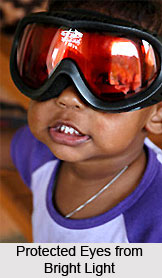
Eyes should be protected from bright light and wearing of dark goggles is recommended. Strain to the eyes should be avoided.