


 The direct control power assumed by the British crown in 1858.The assumption of the direct responsibility somewhat defined the interrelationship between the Indian states and the British Crown. The British Crown accepted the treaties and the agreements made between the Indian native princes with the Company. Moreover the company agreed to maintain all the terms and the conditions of the agreement and accepted the same from the native princes. The direct control power assumed by the British crown in 1858.The assumption of the direct responsibility somewhat defined the interrelationship between the Indian states and the British Crown. The British Crown accepted the treaties and the agreements made between the Indian native princes with the Company. Moreover the company agreed to maintain all the terms and the conditions of the agreement and accepted the same from the native princes.
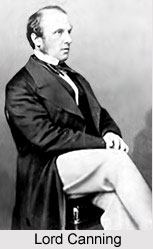
The years following the proclamation of Queen in 1858, the period witnessed a transformation in the policy of the British in their process of territorial extension. The policy of annexation was completely abandoned by the queen. The doctrine of Lapse was completely abolished. This change was due to the loyal attitude of the princes during the great revolt of 1857-58. Lord canning gave a practical shape to this new policy by granting 140 sanads to the Hindu and Muslim princes. The new policy was primarily intended to punish the rulers for their misgovernment. If necessary the rulers could be deposed but his state was not annexed by the British government. This form of policy was one of the tactical practices of the British. Instead of direct annexation, they adopted a way in which the control of the state automatically came in their hands. This policy of annexation however r6educed the status of the Indian princess to an ignominy. Under the East India Company the sanction of the Governor General was necessary only in case of the downfall or the absence of the natural heirs. After 1858,the dominion of the Mughal Crown was completely shattered and the British Crown became the undisputed authority of India. As a result all successions had to seek regularly the sanction of the Crown directly. Under this new policy the native princes obtained the throne not by the legacy, but as a gift of the British crown. Normally every ruler was formally installed on the throne by the British government. At the same time the British government also acted as the guardian of the minor prince and managed the administration of the state during minority. Under the new policy of subordination the principle of the equal status of the Indian prince with the Crown came to an end. Canning referred to the Indian native princes as the vassals or feudatories. The Crown also exercised the right to regulate the status and the salutes of the Indian princes in all matters of ceremonials. Just as the Mughal rulers before 1858 granted the honors and titles, the Crown awarded the titles and decoration to the Indian princes. The government of India exercised the right to interfere in the internal affairs of the Indian states. However the British were further helped by the Indian princes themselves to encroach in their internal sovereignty. Developments of an all India character compelled the rulers of Indian states to fall in line with the governments of India's policy. The development of the modern means of transport, communication, public press and an all India public opinion all directed to the new policy of the British government. Further the states were required to assist in the military plans and provide all the facilities for movement of the Indian army. The government of India exercised a complete and acknowledged control over the externals and the s internal affairs of the Indian states. In this way the Indian Government (the British crown) could declare war, peace or neutrality for the Indian states. The period also witnessed the growth of the political practice, which further circumscribed the rights of the Indian princes. Thus the new trend seemed to reduce all the Indian states into a vassal state or feudatory, whether they were treaty states or enjoying varying degrees of authority. From 1905 onwards the governments followed a policy of cordial co-operation towards the Indian states the growth of the political unrest in British India puts the Government of India in trouble. Hence they used the policy of subordinate union as an instrument to subdue the revolutionary activities. The British Government thought it to be expedient to utilize the supports of the India princes to counter the progressive and the revolutionary activities. Hence by the policy of subordinate union the Government of India and the native princes formed a common front to safeguard their position and the privilege. The government of India no longer feared the resistance of the Indian princess. Thus the policy of Subordinate isolation ultimately gave rise to the policy of Subordinate union. During the First World War, the government of India often called the Indian princes to take part in the consultation on matters of Imperial Defence. Lord Chelmsford carries the scheme of conferences. Later the framer of the Montague-Chelmsford reforms favored the formation of Council of Princes. These recommendations formed the necessity of the formation of the chamber of princes. The s chamber of princes formally inaugurated inFebruary1921. The Indian princes thus become the favorite family of the British princes and the chamber. The Indian princes collectively reorganized the independent constituent of the Empire. The chamber of Princes were mainly entrusted with the power to settle the minor discord within their Empire and to work according to the instructions of the British Government. |
| |||



Home > Reference > History of India > Modern History of India > British Empire in India > Administration of British Empire > Policy of subordinate Union
Policy of subordinate Union
| The policy of Subordinate union was in disguise, a diplomacy of the British to annex the Indian native state . |
| ||||||||||||||||||||||||||||

