


 Sects of Shaivism are of various kinds, and they all highly revere Lord Shiva as their Supreme Deity and Saviour and they vary from one another in various disciplines like processes of worship and other aspects. The individual 'soul' and the nature of the 'Brahman', as well as the relationship between both also differ between the numerous sects of Shaivism. Shaiva sects have been categorised under the three schools of Hinduism known as 'Dvaita' or dualism, 'Vishishtadvaita' or qualified monism' and 'Advaita' or 'monism'. Out of the numerable sects of Shaivism, six are quite prominent, which comprise Gorakhnatha Shaivism, Pashupata Shaivism, Kashmiri Shaivism, Shaiva Siddhanta, Vira Shaivism and Ganapati Shaivism. Sects of Shaivism are of various kinds, and they all highly revere Lord Shiva as their Supreme Deity and Saviour and they vary from one another in various disciplines like processes of worship and other aspects. The individual 'soul' and the nature of the 'Brahman', as well as the relationship between both also differ between the numerous sects of Shaivism. Shaiva sects have been categorised under the three schools of Hinduism known as 'Dvaita' or dualism, 'Vishishtadvaita' or qualified monism' and 'Advaita' or 'monism'. Out of the numerable sects of Shaivism, six are quite prominent, which comprise Gorakhnatha Shaivism, Pashupata Shaivism, Kashmiri Shaivism, Shaiva Siddhanta, Vira Shaivism and Ganapati Shaivism.
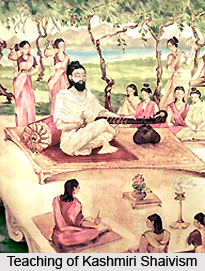
Gorakhnatha Shaivism This sect is also known as 'Siddha Siddhanta' and is termed after Gorakhnatha. Followers of this particular Shaiva sect are known as 'jogis' or 'yogi'. This school was basically ascetic and portrays certain secrets of 'hatha yoga', 'kundalini yoga' and 'samadhi yoga'. Pashupata Shaivism The most ancient branch of Shaivism is Pashupata Shaivism. It dates back to Indus Valley Civilization and till date remains the most controversial one. Shiva, Himself, is considered to be the founder of this sect. It was He who passed the knowledge to the ancient sages. Gujarat and Kashmir are important regions of this sect. Kashmiri Shaivism Also popularly known as 'Pratyabhijna Darshana', this school of Shaivism explains the creation of soul and world as Lord Shiva's shinning forth in His dynamic first impulse. Shiva is surpassing and immanent. It is associated to monistic explanations of 'Bhairava Tantras' composed by the 'Kapalikas'. Kashmiri Shaivism surpassed the Shaiva Siddhanta. 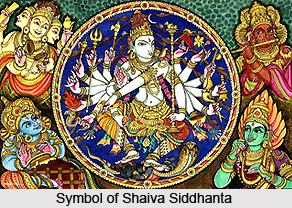 Shaiva Siddhanta
This is one of the oldest schools of Shaivism. Dating back to almost 2000 years it was mostly popular in Kashmir and South India. According to this doctrine 'Jiva', the soul created by the Lord is fated to merge with him. Lord Shiva is looked upon as transcendent, immanent and He is beginning-less and endless. Ritualistic rites, cosmology and theories of Tantric Shaivism are directly proportional to Shaiva Siddhanta. Vira Shaivism According to this sect God and Jiva are inseparable. However the difference lies in the activity of 'Shakti' manifested by the Supreme Power. During creation Shiva remains immutable while Shakti manifests the world. 'Devi' or Shakti is an inseparable aspect of the Lord. Ganapati Shaivism Ganapati Shaivism is a departure from the main principles of Shaivism. It is closer to the 'tantric form' of worship in ancient India. There are certain doctrines in this branch that are similar to those of Shaivism Ganesha. He, too, is worshipped as the ultimate master. He is seen as the creator, preserver and destroyer of the universe. Lord Ganesha is also associated with the deity of Shakti. Shaivism largely owes its recognition to the sages who popularized it. Manikkavachaka, Appar, Jnanasambhanda and Sundarmurthy are some of the names that were instrumental in propagating the doctrines of Shaivism throughout India. These saints are considered to be the founder of the four important paths of Shaivism- 'sat marga', 'dasa marga', 'satpura marga' and 'saha marga'. Besides them Sakyanayanar, a Buddhist monk, also dedicated his life to the devotion of Lord Shankar or Shiva. Auvai, a woman saint from Tamil Nadu and Nandanar were also some of the well-recognized saints of Shaivism cult. It was because of the simple dogmas and selfless devotions of the sages that Shaivism became popular in ancient India and today it is considered as the foundation of ancient Indian culture. |
| |||



Home > Society > Indian Religion > Types of Religion in India > Hinduism Religion > Shaivism Religion > Sects of Shaivism
Sects of Shaivism
| Sects of Shaivism are numerable, of which six are extremely popular namely Gorakhanath Shaivism, Pashupata Shaivism, Kashmiri Shaivism, Shaiva Siddhanta, Vira Shaivism and Ganapati Shaivism. |
| ||||||||||||||||||||||||||||

