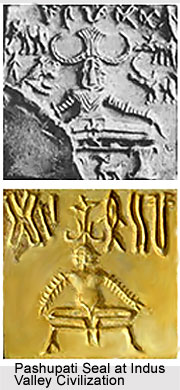
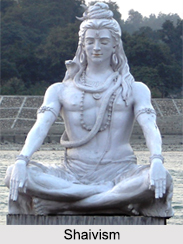
Saivism is a specific type of religious doctrine. They who worship Shiva as their God follow the religion. The earliest reference of Saivism can actually be traced from the 8,000-year-old Indus Valley civilization.
There are many schools of Saivism, which are as follows:
The Pasupatas: The earliest of the Saiva sects was the Pasupata sect. According to the Mahabharata Pasupati, Srikanta or Siva, the consort of Uma and son of Brahma revealed the jnana or knowledge known as Pasupata to the people. In the Vayu Purana it is stated that Mahesvara would incarnate as a brahmacarin, by name Nakulin. After entering a dead body in the burial ground of Kyarohana, a land of sidhas and that he would have four pupil namely Kusika, Gargya, Mitraka and Rusta. In the Linga Purana the name of the incarnation is Lakulin and not Nakuli. In some inscriptions also Lakulin is called an incarnation of Siva. Before the beginning of the Gupta period i.e. C. 300 A.D. four important schools of Saivism arose viz. Pasupatas, Savias, Kapalikas and Kalamukhas.
The Pasupatas besmeared the body with ash. It made a sound resembling that of an ox and did things condemned by all. All these actions would bring about righteousness and enable them attaining the highest power of knowledge and action. These revolting activities of the followers of the Pasupata sect seem to be a revolt against the rigidity of the caste system as prescribed by the brahmanas. In the Mahabharata Siva clearly says that his teachings are against varnasrama organization of society. Some foreign rulers of India like the Sakas, the Parthians and the Kusanas, who had no faith in the caste system, became followers of Saivism.
They hold that Mahesvara taught five categories for the sake of releasing the soul from its bonds. The five can be named as Karya or effect, Karana or cause, Yoga or path, Vidhi or rule and Dukhanta or End of misery-final deliverance from sorrow.
The Saiva School: It professed more moderate and rational doctrines. It laid stress on twilight adorations, worship, muttering of formulas or japa, throwing oblations into the fire, occasional ceremonies for the attainment of eternal bliss, methods of restraints of breath, abstraction, meditation, concentration, absorption in thought or samadhi, penances, purificatory ceremonies and worship of the various phallic forms.
Kapalikas: They maintain that a man who knows the six marks and who is skilful in their use, attains the highest bliss by concentrating on the soul seated on the female organ. The six marks can be mentioned as a necklace, an ornament, an ear ornament, a crest jewel, ashes and the sacred thread or Yajnopavita. The person whose body bears these marks is free from transmigration.
Some of their practices can be described as eating food in skull, besmearing the body with ash, holding a club, keeping a pot of wine and worshipping the God as seated therein.
Kalamukhas: They hold that the practices followed by the Kapalikas are the means for the attainment of desires concerning this world and the next. They maintain that people of other castes may become brahmanas by a process of simple initiation.
There is no great difference between the religious view of the Kapalikas and Kalamukhas. Both of these were extreme schools, and gave expression to their revolt against the Brahmanical organization of the society based on Varnasrama dharma.