Sanskrit is regarded as the oldest language and medium of education in India. The Southern part of India is no different while it comes to Vedic education. In earlier days, there was no annual exam or mass promotion in the education system.
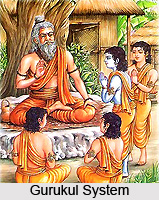
The gurukula system was prevalent in the Sanskrit and Vedic studies. So, the teachers could give private attention and no new topic was taken unless they could learn the previous topic taught by him. This system was described in Sanskrit as `apratibhayam varantam kalam Na veda tavantam kalam tadadhiyita -Bohayana Dharmasiitra`. The intelligent students were given special attention and they were not kept in hold for their dull counterparts. The students usually get twelve years to adept one Veda with all its auxiliary texts. Again, those who were interested in learning more than one Vedas could stay in the teacher`s house for longer period.
9When the studies ended, the students could leave the house of the teacher only after he permits to do so. Before that, the student was needed to prove his education skill in front of an assembly known as `Parisad`. The `Parisad` consisted of total 10 members. Again four members of them were well versed in four Vedas, three - one each from each asrama. The rest of the three are a `naiyayika`, a `mimamsaka` and a `dharma-sastrajna`. The example of this `Sanskrita siksha` can be seen in Mahabharata, where guru Drona presented the `Pandavas` and the `Kauravas` to the assembly after the completion of their military and Vedic training.
The `Parisad` conducted various exams of the students including the exams for proficiency in Vedic studies, which was known as `Surkkattipnriksa` i, e, a test on razor`s edge. The Monasteries, Dharmasamsads and ex rulers also used to conduct exams and these used to be conducted at different levels and different places. Such exams were earlier conducted in various places of South India like at Pudukkottai, Mannargudi, Mysore, Prayag and Tenali.
There were ten levels of examinations in Advaita Vedanta in the `Advaita Sabha`, which was started under the aegis of Kanchi Kamakoti Pitham. Afterwards, various universities came up and the government also started taking entrance and oriental title courses in Sanskrit. In the Government Institutions, the students who completed their elementary schooling had to go under six years of entrance exams. These Sanskrit students were given lessons on `kavyas` and `natakas` and were introduced to `vyakaratia`, `nyaya` and `mimamsa`. The students could opt for any one of these subjects as their special subject for doing specialisation in later period. The exams, which were taken after this course, consisted of four years of studies of which two years were for preliminary and two years for finals. The Madras University Sanskrit exams were known as the `Siromani`. Again, in Kerala, the title given is known as the `Mahopadhyaya`, in Andhra it is known as `Vidyapravina`, in Karnataka it is called `Vidvat` and in the western part of the country it was known as `Tirtha`.
There are six exams named Parichaya, Abhijna, Vichaksana, Samartha, Kovida and Vidya pravina were conducted in Chittoor Samskrita Bhasha Pracharini Sabha every year. Amarabharati Samiti also used to conduct Sanskrit exams and they tested the knowledge of the students in the Grantha script too. The Madras University conducted Vidvan exams and the candidates were tested both in Tamil classical literature and, grammar and Sanskrit literary rhetorical works.