 Maintaining purity of food & kitchen is of utmost significance as it lowers food risks and accidents. It is said that given a chance bacteria grows in large numbers hence with some basic knowledge of safe practices, the numbers could be substantially reduced and food poisoning cases can be controlled.
Historical Influence on Purity of Food & Kitchen
Earlier much emphasis was laid on purity of food as the Vedic Indians were of the opinion that proper mental make up of a person depended on the purity of food. From the Sutras, it is known that every respectable person or Arva both in the morning and in the evening was expected to take his meals after cleaning his hands, feet and mouth.
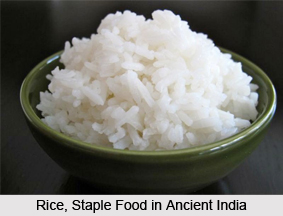
Apastamba prescribes that the Aryas that is. the members of the three varnas purified by a bath may prepare food for Vaisvadeva. They should stop speaking, coughing or spitting with their faces turned towards the food that is being prepared and should wash their hands with water on touching their hair, limbs or garment. Sudras can cook food if they are supervised by Aryas. Sudras were expected to shave their hair and beard, pare their nails and bathe before being permitted to cook food for the higher castes. Rice was well washed before being boiled for food.
In the Vedic period, many implements and utensils were used in cooking. Some of these were made of clay while others were made of metals. Leather vessels were used for storing liquids. In the Sutra period, besides earthenware, vessels of copper, iron and stone were in common use. Sometimes vessels made of gold and wood were also used. In the Apastamba Dharma Sutra, a reference to a copper plate with gold in the centre is given. The Indo-Aryans were so particular about the cleanliness of utensils used for taking meals that Apastamba prescribes that an earthen vessel not used for cooking may be used as a plate for meals. But if it had been used for cooking it may be used as a plate for food after being baked in fire. An iron plate scoured within ashes is pure and even a wooden plate may be used provided it is thoroughly scraped from inside.
Basic Rules that Ensure Purity of Food & Kitchen
Some basic steps can be maintained for cleanliness of food and kitchen in order to control the standard of food. It is said that all forms of food poisoning are preventable if certain rules could be followed.
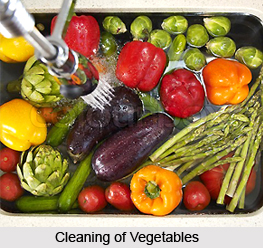
Buying hygienic food from reputed retailers and ensuring the dates, which are marked on the food is a safe practice. Scrubbing the rinds or skin of fruits and vegetables before cutting assures purity of food.
After buying food, it is essential to handle it hygienically at kitchen. The storage areas need to be cleaned. Periodically, wiping doorknobs, handles, buttons and light switches in and around kitchen with cleaning agents is helpful in the long run. Kitchen floors and rubbish bin need to be cleaned regularly as it helps to get rid of debris, grease and foul smells.
It is advisable not to store too much food in the fridge. And it is beneficial to keep raw food on the lower shelves and the cooked food above. Cleaning the fridge regularly is of great importance.
Another important thing that has to be kept in mind is proper selection of cleaning chemicals. This method ensures additional safety of kitchen and eventually food.