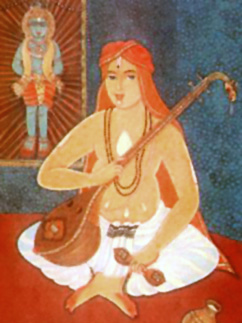
Muthuswami Dikshitar was born on 24th March in the year 1775. He is a popular poet and composer of South India and forms the musical trinity of Carnatic music. His compositions, of which 500 are usually known, are noted for their contemplative nature and for capturing the essence of the raga forms through the vainika (Veena) style that emphasizes Ghamakas. Typically, they are in a slower speed (Chowka Kala).
He is also known by his signature name of Guruguha. Most of his compositions are widely sung and also played in classical concerts of Carnatic Music. Some of his compositions are widely played and sung in classical concerts of Carnatic Music.
The musical trinity comprises of Dikshitar, Tyagaraja and Syama Sastri although, unlike the Telugu compositions of others, his compositions are predominantly in Sanskrit language.
Early Life and Background of Muthuswami Dikshitar
Muthuswami Dikshitar was born in Tiruvarur of Thiruvarur district in the Indian state of Tamil Nadu. He was born to as the eldest son to Tamil Iyer Brahmin couple Ramaswami Dikshitar and Subbamma. As per the account of Subbarama Dikshitar, Muttuswami Dikshitar was born in the year of Manmatha, in the month of Panguni under the asterism Krittikaa. He was given the name after temple deity, Muttukumaraswamy; legend has it that he was born after his parents prayed for a child in the Vaitheeswaran Temple. He had two younger brothers Baluswami, Chinnaswami and a sister Balambal.
Muthuswami, in accordance with Brahminic educational tradition, learnt the Sanskrit language, Vedas, and other important religious texts. He also obtained his introductory education in music from his father. His father sent him to a pilgrimage while he was still young, in his teens, with a wandering monk named Chidambaranatha Yogi to gain musical and philosophical knowledge. Over the course of the pilgrimage he also visited several places in north India and also acquired a broad look that is reflected in many of his compositions. During the stay in Varanasi, his guru Chidambaranatha Yogi, presented Dikshitar with a unique Veena and died shortly thereafter. The samadhi of Chidambaranatha Yogi can still be seen in the Hanuman Ghat area in Varanasi.
 Music of Muthuswami Dikshitar
As per legend, one day guru of Muthuswami asked him to visit Tiruttani (a temple tower near Chennai). While he was immersed there deep in meditation an old man appeared and asked him to open his mouth. He then dropped sugar candy into his mouth and then disappeared. As he opened his mouth, he had a vision of the deity Muruga and Dikshitar burst forth into his first composition "Shri Nathadi Guruguho" in the raga Mayamalavagowla.
This song addressed the Lord (and/or the guru) in the first declension in Sanskrit. Dikshitar later composed Kritis in all the eight declensions on the Lord. These are mostly with epithets glorifying the guru and have very few references to Lord Muruga or specifically to the deity in the saguna form, as at Thiruthani.
He then went on a pilgrimage visiting and composing at the temples at Kanchi, Tiruvannamalai, Chidambaram, Tirupathi and Kalahasthi, before returning to Tiruvarur.
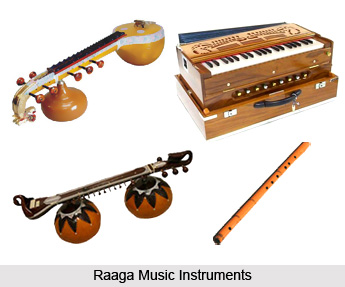
Muthuswami Dikshitar attained mastery over the Veena, and the influence of Veena playing is evident in his compositions, particularly the gamakas. In his Kriti Balagopal, he introduces himself as a Vainika Gayaka, "a player of the veena". He experimented with the violin, and among his disciples, Vadivelu of the Thanjavur Quartet, and his brother Baluswami Dikshitar pioneered the use of violin in Carnatic Music, now an integral part of most Carnatic ensembles.
Music Compositions of Muthuswami Dikshitar
Total compositions of Muthuswami Dikshitar are about 450 to 500, most of which are very widely sung by musicians today in Carnatic music concerts. Most of his compositions are in Sanskrit and in the Krithi form, i.e., poetry set to music. Muthuswami Dikshitar travelled to many holy shrines throughout his life, and composed Krithis on the deities and temples he visited. Dikshitar is considered to have composed on the widest range of deities for any composer.
Each of his compositions is unique and brilliantly crafted. The compositions are known for the depth and soulfulness of the melody his visions of some of the ragas are still the final word on their structure. His Sanskrit lyrics are in praise of the temple deity, but Muthuswami introduces the Advaita thought seamlessly into his songs, resolving the inherent relationship between Advaita philosophy and polytheistic worship. His songs also contain much information about the history of the temple, and its background, thus preserving many customs followed in these old shrines.

Muttuswami also undertook the project of composing in all the 72 Melakartha ragas, (in his Asampurna Mela scheme) thereby providing a musical example for many rare and lost ragas. Also, he was the pioneer in composing Samashti Charanam Krithis (songs in which the main stanza or Pallavi is followed by only one stanza, unlike the conventional two). Dikshitar was a master of Tala and is the only composer to have kritis in all the seven basic Talas of the Carnatic scheme. Dikshitar shows his skill in Sanskrit language by composing in all the eight declensions.
For richness of raga Bhava, sublimity of their philosophic contents and for the grandeur of the Sahitya, the songs of Dikshitar stand unsurpassed. Muthuswami Dikshitar composed many Kritis in groups. The List of compositions by Muthuswami Dikshitar describes those groups and compositions that belong to each group.