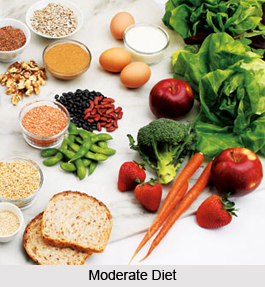
 Moderation in food refers to the control and regulation of the intake of food. The concept is very beneficial if both the types and quantities of food consumed are moderated especially in terms of calorie intake. Apart from etiquette considerations, moderation in food helps in the promotion of general health, chronic disease management and weight loss. Sometimes only certain foods trigger overeating in an individual while in others it may develop as a regular habit. Irrespective of the weight of an individual, overeating may result into a dangerous health habit. Moderation in food in some or all areas is very beneficial especially for the people with obesity issues, high cholesterol or sweet tooth. Consuming food at a moderate pace is also very important.
Moderation in Food as per Satapatha Brahmin
The Satapatha Brahmin establishes that the quality of food should be limited. Food should be taken as to what is proportionate to body, is sufficient for it and does not injure it. When there is too much food it injures the body. When the food is too little it does not satisfy the requirements of the body. This means that every individual should take as much food as may be necessary for the sustenance and nourishment of the body. According to the Brahmins one should take food only twice a day, once in the morning and a second time in the evening.
Moderation in Food as per Dharmasutras
According to the Dharmasutras a Vedic student should eat as much food as is necessary for the sustenance and nourishment of his body. A householder should take thirty-two morsels of food, a forest hermit sixteen and an ascetic only eight morels of food. But according to Baudhayana a student and a householder should not stint themselves as to food. They can do their work properly and efficiently only if they eat sufficient quantity of food. There is, however, no sin if a fast is observed by a householder as a penance for some lapse. Baudhayana says that a householder should take only two meals every day. He should not eat food in the intervening period and that if he acts up to this advice he reaps the merit of a fast, but Apastamba allows partaking of roots and fruits between the two meals.
Moderation in Food as per Bhagavad-Gita
In the Bhagavad-Gita it is clearly stated that one can discharge one"s duties neither by taking too much food nor by avoiding food altogether. One should take as much food as is essential for sustaining his life. And also the food should provide adequate nourishment.