 Filariasis occurs commonly in the Terai regions of the Himalayas, eastern Uttar Pradesh, Bihar, Bengal, Cochin, and Travancore. In all these areas where natural drainage is defective, where water has a tendency to collect in pools and ponds, and where filaria-carrying mosquitoes are found in abundance. Lymphatic Filariasis is a parasitic and infectious tropical disease, caused by three thread-like parasitic filarial worms called nematode worms, Wuchereria bancrofti, Brugia malayi, and Brugia timori. All these are transmitted by mosquitoes. It is extremely rare in Western countries.
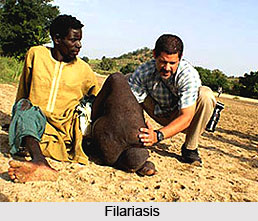
Causes and Symptoms: According to allopathy, filariasis is caused by Wuchereria bancrofti. It is a threadlike worm. The female of the species is at least four feet long. The disease is transmitted to humans through contaminated water by infected mosquitoes. Once attacked, the person may not feel anything for almost a year. Bur after one year there is a painful swelling of the legs. The skin of the affected parts become like that of an elephant. And because of this reason the name of the disease is elephantiasis. There is inflammation of the skin and the subcutaneous tissue, and concurrent obstruction of the lymphatic vessels. The thickening is due to excessive increase in the connective tissues. The inflammation also attacks the muscles of the legs and they become weak.
In some cases, there is involvement of the testicles, which become inflamed and enlarged. Gross enlargement of the legs may take place to such an extent that their circumference increases to several times the normal size, and the scrotum may attain a weight of even up to twenty-five kilograms. Elephantiasis may develop elsewhere in the body, as in the arms, but the legs are the most commonly affected parts.
Filariasis fever is a short and sharp fever. It rarely continues for more than four days, but its attacks are frequent. The inflammation tends to increase the size of the legs with each fresh attack. The testicles enlarge to enormous proportions and the patient has difficulty in walking. This happen both on account of the increased circumference of the legs and the weakness of the muscles.
According to Ayurveda, the disease is caused by the vitiation of all the three doshas, but mainly kapha. Bloodletting is advised by the acharya in certain cases of elephantiasis, but it has to be done under the guidance of an expert.
Home Remedies: A paste made of Dhatur, a root of the castor tree, nirgundi, punarnava, bark of Sahijan or mustard seeds, all in equal quantities should be ground in cow urine or water should be applied over the affected parts.
Diet and Other Regimen: No diet restrictions are necessary in this case. However hard-to-digest foods should be avoided.
The patient should ensure that he does not get any mosquito bites so as to avoid subsequent attacks.