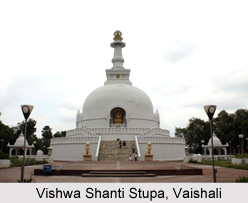
 Vaishali or Vesali was an ancient city, the capital of Lichhavis and the Vajjian Confederacy. Situated on the northern shore of River Ganges, Vaishali is bordered by hills of Nepal on the northern side and touches timid river of Gandak on the west. As per a legend, Vaishali was once infested with plague and when Buddha entered Vaishali, it rained heavily expunging the town from all the infections.
Vaishali is one of the oldest cities of India with an immense wealth of traditions and historical legends. In 6th Century B.C. it was the capital of powerful Republic of Lichhavis. It is also the birth place of the 24th Jain Tirthankara, Lord Mahavira. This place is closely associated with Buddha and Buddhism. Lord Buddha visited Vaishali several times and spent some of the varshavas and announced here his impending death. The miracle offering honey by the monkeys to Buddha occurred at this place. A Stupa was erected by the Lichhavis on the holy relics of Lord Buddha. The remains of the stupa can be seen at this place. Vaishali is further celebrated in the history of Buddhism as the site of second Buddhist council.
According to tradition, the city in early times was surrounded by 3 walls with gates and watch towers. The site today is marked by two groups of mounds and has been partly excavated by archaeologists. The earliest occupation of the site is associated with black and red pottery of probably pre-Buddhist age; it was followed by the northern black polished ware of early Buddhist times. Vaishali is on the site of a village now known as Besarh. Yet, the claim to fame that has been most secure for more than 2000 years has been Buddha"s connection with the city.
History of Vaishali
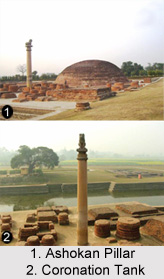 Vaishali got its name from King Vishal of the period of Mahabharata. The city of Vaishali was the capital of the vibrant republican Lichhavis state even before the advent of Buddhism and Jainism. Vaishali was probably the second republic in the world and was similar to those found in ancient Greece. Vaishali was an ancient metropolis and the capital city of the republic of the Vaishali state. It was situated in the Himalayan Gangetic region of the present day Bihar state. The early history of Vaishali is not well-known. In Vishnu Purana there are records of 34 kings of Vaishali. The first king was believed to be Nabhaga, who renounced his throne over a matter of human rights and then declared himself as the free tiller of the soil, king over his own acre. The last king among the 34 kings was Sumati, who was considered as contemporary of Dasaratha, father of Lord Rama.
There are many references of Vaishali in the Jain and Buddhist texts and there is also mention about other Mahajanapadas. Vaishali was established as the republic by the 6th century BC, before the birth of Gautama Buddha in 563 BC. Some scholars of history think that Vaishali was the first republic.
In the republic of Vaishali, Lord Mahavira, the founder of Jainism was born. Gautama Buddha delivered his last sermon at Vaishali and announced his Parinirvana there. Vaishali was also the land of Ambapali, the famous courtesan, whose story is found in many folktales as well as in Buddhist literature. Later, Ambapali was converted to Buddha"s disciple.
Vaishali was ruled by many kings as the state was a republic dominion. One representative was elected from the kings and he was anointed with the sacred water of Abhishek Pushkarini. Next to it stands the Japanese temple and the Vishwa Shanti Stupa built by the Nipponzan Myohoji sect of Japan. A small part of Buddha`s relics are found now-a-days in Vaishali and have been enshrined in the foundation and in the chhatra of the stupa. Near the coronation tank Stupa 1 or the relic stupa is situated. Here the Licchavis encased one of the 8 portions of the Buddha`s relics, which was given to them after the Mahaparinirvana of Buddha.
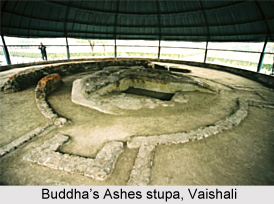 After his last preaching at Vaishali Buddha set out for Kushinagar, but the Licchavis were following him. Buddha then created an illusion of a river in spate and the followers gave up and went back. This site is identified with Deora in modern Kesariya village. Later King Ashoka built a stupa here. Ananda, the favorite most disciple of Buddha attained Nirvana in the midst of Ganga outside the city of Vaishali.
Jain Religion At Vaishali
Vaishali was also an important city for the Jains as it was the workplace of last Jain Tirthankara Mahavira, also known as Niganthas. It is believed that of the 42 rainy seasons in his ascetic life, he spent the 12 rainy seasons at Vaishali. Vaishali was also the residence of Kandaramasuka and Patikaputta. Among eminent followers of the Buddha, who lived in Vaishali the most significant names were Ugga, Siha, Vasettha, Pingiyani, Karanapali and other Licchavis.