Rig Vedic civilisation followed the Mohenjodaro and Harappa Civilizations. After the decline of Indus Valley civilization, a gap prevailed for a short period of time in the rich timeline of Indian civilization. Rig Vedic civilisation filled this gap. Huge changes were witnessed almost in every sphere during this age and the socio political and economic structure of the country gained a matchless facet.
History of Rig Vedic Civilisation
There seems to have been a division among the Rig Vedic tribes. One group included the Srnjayas and the Bharatas and the other group comprised Yadus, Turvasas, Druhyus and Purus. In the battle of Ten Kings all the people of Rigvedic India were involved. There were five tribes to the west of the Indus, the Alinas i.e. of modern Kafiristan, the Pakthas, the Bhalnases, the Sivas and the Vraisnins. The Anus, the Druhyus, the Turvasas, the Yadus and the Purus also joined this side. They are non-Aryan people namely the Ajas, Sigrus and Yaksus joined this coalition. Vishwamitra was the priest of this coalition, against Sudas. Vashishta was the priest of the group in which Sudas was the leader. Sudas was a Bharata king of Tritsu family, which was settled in the country, which later came to be known as Brahmavarta, the region between the Sarasvati and the Yamuna. The Bharatas emerged as victorious in the battle that was fought on the Parusul or Ravi utterly routing the confederacy. Thus, the Bharatas were able to become supreme of all the Rig Vedic tribes and the country came to be known as Bharata.
Side by side with the struggle for supremacy among the different Aryan tribes there was a struggle for supremacy between the Aryans united against the non-Aryans. The non-Aryans who are called Dasa, Dasyu, Asura or Pisacha were different from the Aryans both in physical features and culture. They are called dark-skinned, having dark children and nose less. In culture they spoke an unintelligible language; they were devoid of rites, non-sacrificing, not worshipping the gods, and wanting in prayer. They are called reviling the Vedic gods and worshipping the phallus. The non-Aryans were considered as organised people. They had cities with forts of iron and stone. In the end the Aryans were able to establish their supremacy over these non-Aryan tribes as well.
Social Life in Rig Vedic Civilisation
The Rig Vedic societies were patriarchal in nature. The foundation of society was the family. The families or kulas were ruled by male members. The head of the family called as kulapa. The eldest male member of the family was usually the kulapa. Mostly joint families existed in the societies and were usually large. The head of a village or Grama was called Gramani. The tribe or Jana had its leader who was called Gopta or protector. The head of a state or Rastra was called Rajan. The king was there to protect his people against enemies. In return for his services the people obeyed him and offered presents. The king also acted as a Judge. He himself was above punishment. His ministers assisted the king in administration. The most important minister was the preceptor or Purohita while another minister was the commander-in-chief that is the Senani. The third one is the village headman or Gramani. There were two popular bodies namely the Sabha and the Samiti. The Sabha was the council of elders. The Samiti was probably the larger assembly of the people in general. These popular bodies served as checks upon the autocracy of the ruler. The Rig Vedic societies had proper legal system. The accused had to pay fines for crimes committed by them. For example an accused had to pay the price of 100 cows for some crime. The army was composed of foot soldiers and charioteers.
Religion in Rig Vedic Civilisation
The prayers of the Rig Veda are addressed to many gods and goddesses but the many are worshipped as the manifestation of one god. Worship of natural forces was prevalent. Besides the prayer to one God in its various manifestations, people in the Rig Vedic societies performed sacrifices in which the offerings consisting of ordinary food and drink were thrown into fire in order that they might reach the gods. Animals like horses, rams, buffaloes, bulls and even cows were sometimes sacrificed in this manner. They believed that religion of sacrifice that is Yajna had also its symbolic aspect.
Economy of Rig Vedic Civilisation
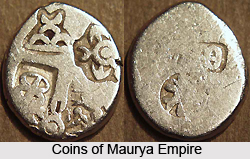
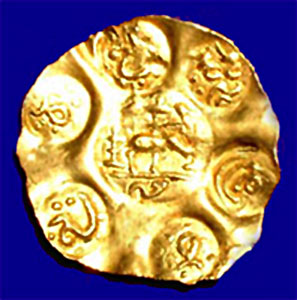
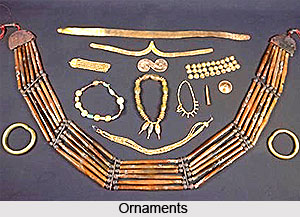
Cattle rearing were more important than agriculture in the beginning of this period. Out of the 10,462 hymns of the Rig-Veda, agriculture is mentioned only in 24 hymns. Of the cereals and pulses only barley is mentioned in this Samhita. But agriculture was developed towards the end of this period. In the first and the tenth mandas of the Rig-Veda many agricultural processes such as clearing of forests, ploughing of fields, sowing of seeds, reaping of corn, separating corn from the chaff are mentioned. In this period the owner of a piece of land was the individual who cultivated it. The farmers most probably paid bail in the form of corn to the leader of the tribe because he protected the people. From the Rig-Veda it is known that the crafts of wood, textiles, metals, pottery and leather were fully developed during the early Vedic. The Rig-Veda mentions two metals namely gold and probably copper. Gold was used for making ornaments and also coins while Copper was used in making pillars, armours, helmets and weapons. The carpenters made chariots, carts, and wooden utensils. In this period people generally wore woollens clothes. Bags were made of leather so do containers for liquids, strings for bows, reins of horses and whips. Trade and commerce also contributed to the economy of the Rig Vedic civilisation. Most of the trade was carried on by exchange of goods but even in this period cow was considered a medium of trade. Niska was a gold necklace in the beginning but later it was also used as a coin for giving as a reward to a poet. The custom of haggling for fixing the prices of articles was in vogue even in that period.
Culture of Rig Vedic civilisation was quite similar to Andronovo culture and early Iranian culture.