Jhana Meditation
|
Jhana in Buddhism is the path to achieve salvation.
|
|
|
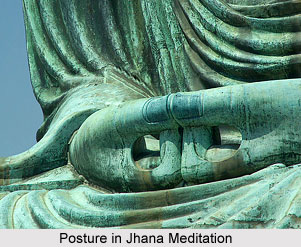 In the Theravada tradition or the Pali canon Gautama Buddha had described four states for meditation or Jhana (dhyana). The Jhanas are considered by Buddhists as a state, which helps to increase the endurance level and liberates an individual from the worldly sufferings. Jhana is that state of meditation when the mind is free from five defilements, mainly, sloth, craving, doubt, agitation and aversion. The mind is also unable to wander at this stage. Hence an individual can concentrate for a longer time on the principles of Buddhism and successfully empower himself with truth. A deep jhana can last for many hours. In the Theravada tradition or the Pali canon Gautama Buddha had described four states for meditation or Jhana (dhyana). The Jhanas are considered by Buddhists as a state, which helps to increase the endurance level and liberates an individual from the worldly sufferings. Jhana is that state of meditation when the mind is free from five defilements, mainly, sloth, craving, doubt, agitation and aversion. The mind is also unable to wander at this stage. Hence an individual can concentrate for a longer time on the principles of Buddhism and successfully empower himself with truth. A deep jhana can last for many hours.
Jhana or dhyana is an extension of Buddha's Eightfold Paths where he talks about Right Concentration. This is the only way to achieve Right Concentration. In this state a monk isolates himself from the material desires and enters in the first jhana in which his mind is filled with joy because of his seclusion and then he concentrates deeply. In this concentration he finds tranquility and oneness of mind. This is his second jhana. As the joy fades his mind is now clearly awake; in this stage he enters the third jhana. As elation and distress vanishes realization ushers into his mind. As he enters the fourth jhana he is completely bereft of material emotions i.e. suffering and pleasure.
These are the four steps for the meditative absorption, which are known as immaterial attainments. These are often referred to as "formless" jh?nas, or arupajhana. There are also the rupajhanas or dhyana with forms. In general the jhanas are divided into 8 stages of consciousness. Though these are naturally occurring phases but it takes time to learn the art of entering them and staying in that state.
Meditation or jhana are seen as the best ways of attaining knowledge and spirituality. And the Buddhist tradition too propagates similar philosophy.
|
|
|
|





