Indianetzone.com - Web Portal on Indian Culture & LifestyleArt & Culture  •  Health  •  Movies & Entertainment  •   Society  •  Reference  •   Sports  •  Travel  

  Home >> Reference >> Indian Philosophy >> Indian Religious philosophy
Forum
Forum on Indian Philosophy
Discuss Now
Free E-magazine
Subscribe to Free E-Magazine on Indian Culture & Lifestyle.
Learn More
Interesting Readings
  - Ashramas or Stages of Life
  - Classical Indian Philosophy
  - Jain Philosophy
  - Buddhist Philosophy
  - Vedanta Philosophy
  - Schools of Indian Philosophy
  - Indian Philosophy
Jimtrade.com : India Business to Business Directory
Business Directory of Indian Suppliers Manufacturers and Products from India.
India`s leading Yellow pages directory.
Indian Religious philosophy

All religions in the past tried to understand how this universe came into being and the nature of God who created the animate and inanimate objects of this world. All great teachers in different parts of the world tried to explain the nature of God who controlled this universe and man`s duty towards Him. People were afraid of the displeasure of gods in every action of lifetime. From birth to death in a man`s life was carried out strictly in accordance with the rules laid down in his religious books. People everywhere believed that God Himself had inspired these teachers to write these truths hence it was their duty to obey them, if they wished to be happy in this world and to go to a happy world after death.

In India the word dharma has been used in the sense of religion. Broadly speaking the concept of dharma is said to comprise precepts, which aim at securing the material and spiritual sustenance and growth of the individual and the society. As Margaretta Morris states, "The religion of a community is not something unrelated to its secular activities any more than the religious experience of an individual is apart from his general mental development."

The Rigvedic Aryans realized that there was a cosmic order or rtam. This cosmic order circumscribes the universe like a wheel. It regulates it and keeps it in place. It is Varuna`s pasa and has its physical basis as the belt of the zodiac from which no luminary deviates. The penalty for transgression whereof is ensnare by the shackles of non-rta or darkness and death. This rta is the Rigvedic concept of dharma. The controller of this cosmic order or rta is called Varuna. The Rigvedic Aryans pray to Varuna who is called the supreme ruler that he may punish them if they do not fulfill their duty towards friends, guests, brothers and other members of their families.

In another context the term dharma has been used in the sense of that power which sustains the universe. The concept of rta or dharma makes it clear that its aim was maintenance of order in society. This order can be maintained if every individual regards every human being as the creation of God and treats him on a footing of equality. The last hymn of the Rigveda throws some light on the Rigvedic concept of dharma. It lies down that all human beings should move together, speak together and their minds are of one accord.

In another context in that work it is said that Soma protects the truth and destroys what is untruth. A society can make progress it its members follow truth and avoid untruth and this can be the real basis of dharma. The same spirit of harmony is expressed in a hymn of the Yajurveda. It states that God pervades all the animate and inanimate objects of this universe. Man should enjoy these blessings given to him by God. He should not be greedy in the process. If this attitude is adopted by every member of a community it will lead to maintenance of good relations. By following this principle of dharma he will do only those deeds which are conducive to, not only his own well-being, but also to that of the society as a whole.

According to the Brahmins dharma comprised performance of sacrifices but the teachings of the Upanishads laid emphasis on good conduct. The Chandogya Upanishad throws some light on the concept of dharma. It lays down that a virtuous man should develop the virtues of penance, charity, straightforwardness, non-violence and also truth. Again in another context it regards stealing gold, drinking, killing a Brahmin and violating the teacher`s bed as great sins. It further lays down that a virtuous man should have noble thoughts, should behave politely with all women, think of the well-being of all, show respect to all learned persons and treat all human beings as he himself wished to be treated by them.

In the words of S. Radhakrishnan "The term dharma stands for all those ideals and purposes, influences and institutions that shape the character of man both as an individual and as a member of society. It is the law of right living, the observance of which secures the double object of happiness on earth and salvation. The concept of dharma was not static. Its content changed in the changing contexts of time, place and social environment. It is why Baudhayana states that there are three sources of dharma namely the Vedas or sruti, the law-books or smrti and the conduct of cultured persons in society or sistatcara. The law-books laid down rules to suit the changing times. The lawgivers could not foresee all the circumstances. And that is the reason why it was laid down that in such circumstances a person should follow the example of cultured persons. They were expected to act in conformity with the ideal social behavior that in no way could be a hindrance in the harmonious development of the society.

Dharma has two sides that are interdependent, the individual and the social. Dharma holds together all living beings in a harmonious order. Virtue is conduct contributing to social welfare and vice is its opposite. In the Sutra literature both these aspects of dharma are discussed under four sections namely samanya-dharma i.e. rules which all classes should follow, varna-dharma i.e. rules for an individual and social classes, asrama-dharma i.e. rules for the four stages of life and raja-dharma i.e. rules which a ruler should follow. The rules of samanya-dharma include cultivation of virtues such as kindness, fortitude, avoidance of jealousy, purity in body, speech and thought, avoidance of being too ambitious, willingness to help others, sentiments of not being weak in intelligence, not to have a desire of having things belonging to others. The evils which are to be avoided are speaking ill of others, pride, faithlessness, crookedness, self-praise, deceit, greed, anger etc.

According to Apastamba a man should avoid all those evils that lead to his ruin and acquire all those virtues that help him in his progress. The authors of the Sutras make it very clear that they did not attach as much importance to performance of sacrifices as to moral qualities in a man. They aimed at establishing a moral order. Valmiki expresses similar views when he makes Rama declare that he will not forsake truth on account of greed, attachment, ignorance or any other wicked desires. The Mahabharata lays down some points that members of all the varnas should fulfill and these can be mentioned as hat not to be angry, speaking the truth, love of justice, to have children from married wife, good conduct, avoidance of quarrels, politeness and consideration for the welfare of attendants.

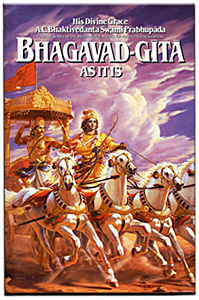
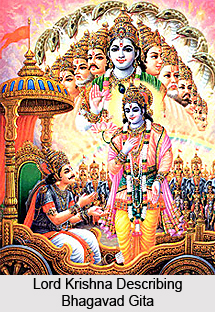
The author of the Bhagavad-Gita prescribes that a man should work with intelligence and faith. Intelligence is necessary to do an act efficiently and faith to do it with full devotion. Of the Smrtis the Manusmrti is the earliest. It lays down that ten virtues are the constituents of dharma, namely fortitude, forgiveness, self-restraint, no stealing, purity, restraint of passions, intelligence, knowledge, truth and freedom from anger. Thus dharmasastras also lay emphasis on these moral qualities. According to S. Radhakrishnan the varnasramadharma or the discipline of the classes and stages of life was the Hindu`s device for the gradual improvement of human nature.

In considering the varna dharma it should be remembered that the main objective of the lawgivers was the harmonious development of the society. The varna system was in accordance with an individual`s temperament and his actions. On this basis the lawgivers laid down the social functions of the four varnas. If the members of all the four varnas do their duties sincerely it will lead to harmonious working of the society. It is for this reason that Manu lays down that a person gets all his wishes fulfilled who does his duties assigned to him as a member of a particular varna and stage in life i.e. asrama. He also gets immortality after death.

In the varna system it is a mistake to regard one varna superior to the other as they are always complementary and not rivals. The four classes i.e. Brahmins, Ksatriya, Vaisya and Sudra correspond respectively to the intellectual, the militant, the industrial and the unskilled workers who are all members of one organic whole.

The aim of assigning duties of the four stages in life was to make every individual lead a disciplined life. As a student he was expected to acquire the knowledge, which he gets from his forefathers, and lead a disciplined life. He has to be able to face the problems of life with intelligence and fortitude. As a householder he had to discharge his duty towards his forefathers, guests, members of his family and other relatives. Thus the harmonious working of the society depended to a great extent on the proper discharge of his duties by every householder. The stages of a forester and a recluse were not only an opportunity for the individual to prepare himself for his own salvation but also for enabling him to give proper guidance. It is based on his knowledge and experience, to the householders in discharging their duties towards the society.

The aim of rajadharma i.e. rules for the rulers was also maintenance of those conditions which might enable every member of the society to develop his faculties fully. It is because of the reason that he may be able to discharge his duties towards the society efficiently. According to Kautilya the ruler should make all people do duties prescribed for them as members of the four varnas and befitting the stage of life through which they are passing. In this way the ruler helped the individual and the society as a whole to act according to the tenets of dharma. Thus all the facets of dharma, namely samanvadharma, varnadharma, asrama dharma and rajadharma had one common aim. And it is named as the harmonious working of the society by enabling every individual to realize his ultimate aim in life namely salvation by fulfilling all his duties as a member of the society as a whole.

It is inferred that dharma in India does not force men into virtue but trains them for it. It is not a fixed code of mechanical rules, but a living spirit that grows and moves in response to the development of the society. Even the State in India was a servant of dharma. It was not above morality. Its function was not to altar or annual dharma but only to administer it. Dharma was essential because it promoted individual security and happiness as well as the stability of the social order.

Religion played a dominant role in all ancient cultures especially in India where it was the prime factor moulding the lives of the people for ages. It was because our forefathers realized that man is not simply body-life-mind complex. He is essentially and fundamentally a spiritual being. They realized that he is endowed by God not only with his lower mind like other animals but also with a higher mind which connects him with the Divine. Some higher spirit that enables him to distinguish the right from the wrong pervades his conscience. They saw that the complexities of the universe could not be explained by man`s senses alone. There are other powers within man himself of which he is normally unaware. It can be explained as he is conscious only of a small part of himself and the invisible always surrounds the visible. This is also true that the supersensible even as the infinite always surrounds the finite. The spiritual self of man is an integral part of the self of the universe. Religion enables a man to control and regulate his lower self of desires by the law of the higher self. It places before him the ideal of perfection and provides the inner urge to move towards it. It is a part of the nature of man to aspire to transcend his finitude and become one with the Absolute. This supreme aspiration finds expression in the Vedic prayer. This can be mentioned as "From Unreality lead me to Reality, From Darkness Lead me to Light, From Death lead me to Immortality". Religion is nothing but the process by which an individual is able to transcend all that is relative and finite in him and enter into communion with the infinite or Supreme Being. This supreme aspiration of man seems to have been the most important factor why religion played so important a role in ancient India.

The general impression that the spirit of science is opposed to that of dharma is unfortunate and untrue. The mind of man, which splits the atom, is superior to it. The achievements of science stand as witnesses to the spirit in man. The nature of cosmic evolution with its order and progress suggests the reality of underlying spirit. The spirit of science leads to the refinement of religion. Religion is not magic or witchcraft, quackery or superstition. It is not to be confused with outdated dogmas, incredible superstitions, which are hindrances and barriers. These also spoil the simplicity of spiritual life. Experience is not limited to the data of perception or introspection, it embraces para-normal phenomena and spiritual state. All religions are rooted in experience.

Faith without wisdom and tolerance and respect of others` ways of life is a dangerous thing. Asoka`s twelfth Rock-Edict sets forth the principle of religious toleration in very clear terms and constitutes one of the noblest documents of human history.

"King Devanampriya Priyadarsin is honouring all sects i.e. both ascetics and householders, both with gifts and with honours of various kinds he is honouring them. But Devanampriya does not value either gifts or honours so highly as this viz. that a promotion of essentials of all sects should take place. But a promotion of the essentials is possible in many ways. But the root is this, viz., guarding one`s speech i.e. that neither praising one`s own sect nor blaming other sects should take place on improper occasions or that it should be moderate in every case. But other sects ought to be duly honoured in every case."

"If one is acting thus, he is both promoting his own sect and benefiting other sects. If one of acting otherwise than thus, he is both hurting his own sect and wronging other sects as well. For whosoever praises his own or blames other sects-all this out of devotion to his own sect i.e. with the view of glorifying his own sect-if he is acting thus he rather injures his own sect very severely."

"Therefore concord alone is meritorious i.e. that they should both hear and obey each other`s morals. For this is the desire of Devanampriya, viz. that all sects should be full of learning and should be pure in doctrine."

All religions lay down certain basic principles and values of life and all activities of man are guided by these basic principles, and also values of life. Therefore it is the utmost importance that all should know those basic principles and values of life. These values enabled the ancestors to make the culture so great that is has retained its individuality to the present day. All religions help an individual in his efforts to realize an ideal and for the accomplishment of a mission. The ideal of perfection provides an inner urge to move towards it. If society is to be lifted out of the slack into which it has fallen today the individual men and women have to recreate themselves. They must find out the meaning and purpose of life. It is the business of religion to restore belief in the purpose of life and give best and meaning to it. And only then a society can survive.

Recently updated articles in Indian Philosophy
Home | Sitemap | Contact Us