


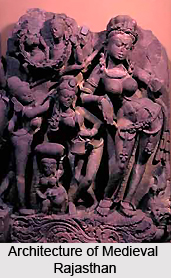
 The present state of Rajasthan emerged after merging 22 feudal kingdoms in independent India. In the British era the state was more popularly known as Rajputana or the land of the Rajputs. In the northeast of the state lies Mount Abu while the Aravalli ranges divides fertile Dhundar basin from the impressive Thar Desert. The lucrative trans-Thar trade routes have been an area of special interest from times immemorial. Both the Rajputs and Mughals amassed vast fortunes by taxing the movement of silk, spices and precious stones across their territories. This wealth was later utilised in developing the area and for new constructions. The present state of Rajasthan emerged after merging 22 feudal kingdoms in independent India. In the British era the state was more popularly known as Rajputana or the land of the Rajputs. In the northeast of the state lies Mount Abu while the Aravalli ranges divides fertile Dhundar basin from the impressive Thar Desert. The lucrative trans-Thar trade routes have been an area of special interest from times immemorial. Both the Rajputs and Mughals amassed vast fortunes by taxing the movement of silk, spices and precious stones across their territories. This wealth was later utilised in developing the area and for new constructions.
The word Rajasthan literally means the land of the rajas. Its history is woven with tales of courage, chivalry, friendship, loyalty and romance. This Indian state is a riot of colors when it comes to festivals. The craftsmanship of the Rajasthanis have been engraved in the historic monuments, such as, palaces, forts and finely carved temples. Today they comprise one of the country's richest crops of exquisite buildings. However these buildings are not the only legacy of the region's prosperous and militaristic past. The rule of Rajputs have created bound by codes of chivalry and honour powerful enough to have driven the female population of whole cities to mass suicide, or jauhar. From the very beginning Rajasthan has been a reflection of the true spirit of Indian culture. It has always been very particular about the social hierarchy where a strict caste based social was followed. This rigidity is till date a part of Rajasthan's culture. As a tourist one will find the history and culture of Rajasthan quite fascinating. Every fort and palace has some tale to tell. While touring the state the travelers would be narrated interesting digressions from Rajasthan's epic history. The swaggering moustaches, heavy silver anklets, bulky colorful turbans, pleated veils and mirror-inlaid saris prove arresting for the tourists. Steeped in folklores this is one place to know more about the folk culture. From times immemorial these folklores have added an extra charm to the state's history. Early History of Rajasthan The history of Rajasthan is also dotted with courtly intrigue and interstate warfare. The Rajputs-- Sisodias, Chauhans, Kuchwahas and Rathores-- emerged in the 6th and 7th centuries. The Rajputs provided land, employment and trading opportunities for their subject and are still praised as gods in some communities. 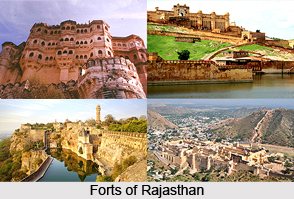 Rajput clans emerged and held their control over different parts of Rajasthan from about 700 AD. Before that, Rajasthan was a part of several republics. It was a part of the Mauryan Empire. Other major republics that dominated this region include the Malavas, Arjunyas, Yaudhyas, Kushans, Saka Satraps, Guptas and Hunas. The Rajput clan's ascendancy in Indian history was during the period from the eighth to the twelfth century AD. The Pratihars ruled Rajasthan and most of northern India during 750-1000 AD. Between 1000-1200 AD, Rajasthan witnessed the struggle for domination between Chalukyas, Parmars and Chauhans.
Medieval History of Rajasthan Around 1200 AD a part of Rajasthan came under Muslim rulers. The principal centers of their powers were Nagaur and Ajmer. Ranthambhore was also under their power. At the beginning of the 13th century AD, the most famous and powerful state of Rajasthan was Mewar. Mughul Emperor Akbar had, never united Rajasthan, politically until its domination. Akbar created a united province of Rajasthan. Mughal power started to decline after 1707. The political breakdown of Rajasthan was caused by the dismemberment of the Mughal Empire. The Marathas penetrated Rajasthan upon the decline of the Mughal Empire. In 1755 they occupied Ajmer. The beginning of the 19th Century was marked by the attack of the Pindaris. In 1817-18 the British Government completed treaties of coalition with almost all the states of Rajputana. Thus began the British rule over Rajasthan, then called Rajputana. Modern History of Rajasthan The previous Rajputana comprised 19 princely states and two chief-ships of Lava and Kushalgarh and a British administered territory of Ajmer-Merwara. Rajasthan State was diverse collection of separate political entities with different administrative systems prevailing in different places. The present State of Rajasthan was formed after a long process of integration, which began on March 17, 1948 and ended on November 1, 1956. Before integration it was called Rajputana; after integration it came to be known as Rajasthan. |
| |||



History of Rajasthan
| The history of Rajasthan is dotted with tales of valor, chivalry, camaraderie and romance. |
| ||||||||||||||||||||||||||||

