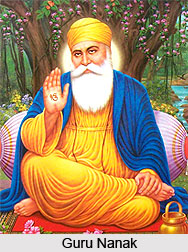
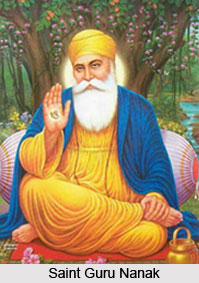
 "There is no Hindu, nor any Mussalman."-This very vision of Guru Nanak gained an utterance in his religious philosophy. Infused in deep religious connotation his doctrines announced the supreme significance where his religious philosophy stood apart as the synthesis of metaphysics and divinity. "Brotherhood of man" and "fatherhood of God" these truths gained a colossal articulation amidst his religious philosophies.
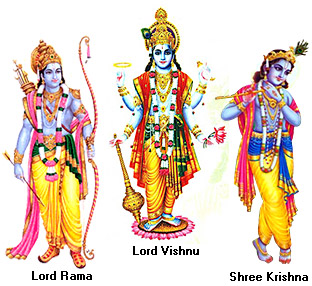
Unity of God: Nanaka shared the full electric spirit of his time. He used both Hindu and Muslim names for God such as Rama, Govinda, Hari, Murari, Rab and Rahim. He wanted to demolish the wall that stood in the way of conciliation of the Hindus and the Muslims. His one mission in life was to unite the two communities. And to get the result he tried every possible manner.
His Social Ethics: He wanted to establish the religion of truth and remove evil. He wished to protect the poor and avoid unnecessary killing of all creatures. He held that it was a sheer folly to think in terms of caste. A man was to be revered for his devotion to God and not for his position in society, he says, "God know the man`s virtues and inquired not his caste. In the next world there is no caste. He preached that one should avoid greed, untruth and stealing."
Nanak was not in favour of retirement from active life. He was a perfect devotee of God. According to him it is not needed to lead an idle and passive life. He praises the agricultural labourer who cultivates the field while sweat trickles down his cheeks and body. According to Nanaka the agricultural labourer`s work is his real devotion to God because everyone eats of his earnings.
He condemned traders who sold counterfeit goods or accumulated wealth by unlawful means. He also condemned those who hoarded goods to amass wealth.
According to Nanaka a man is the maker of his destiny. A man`s fate is decided by his own acts. One should not beg and he or she should live by honest labour. Nanaka did not consider women impure. He condemned those lawgivers who vilified the female sex. He advised women to be devoted worshippers of their God and devoted companions of husbands and lead a virtuous and chaste life as well.
His Religious Ideas: Nanaka regarded himself as the prophet of God, who received God`s signs, the chapters and traditions of the prophet. He drew his followers from among both the Hindus and the Muslims. He started the free community kitchen, called Guru ka langar. All his followers irrespective of their caste were persuaded to eat together. It was meant to inculcate the feeling of equality and brotherhood among his followers. He did not believe in contamination of food by the touch of a person of a lower caste.
He preached that his followers should have firm faith in one God and God is always the supreme truth. He is the creator who is omnipresent. He is not born nor does He die to be born again. He is unseen, Infinite, Inaccessible, and Inapprehensible. He has no lust. He is pure, endless and all light. He discarded the worship of images. He educated people to distinguish superstitions from true religion. He condemned superstitions and formalism of both Hinduism and Islam.
Nanaka did not pay attention to the fake means to attain God. According to him Ganges water, the study of eighteen Puranas or the four Vedas or giving alms on holy days, or keeping fast and performing religious ceremonies is not true religion. To know God man should cultivates such virtues as kindness, sincerity, justice, modesty, truth, right conduct and do good deeds. He laid stress on love, purity of life and preached that good deeds were more effective in securing salvation than metaphysical discussions. According to him that man alone was religious who looked on all men as equal. Religion does not consist in visiting sacred places or visiting Makka or bathing in the Ganges. It consists in leading a life of purity and love for all creatures.
He considered education essential for the attainment of true and complete life. True education helps the soul to unfold itself like a lotus of countless petals. The universalism of Nanaka`s message and reasonableness of his precepts brought about a moral renaissance in India. He preached to the high and the low without any distinction of caste or creed. Nanaka`s mission was to reform the Hindu religion on the basis of unity of Godhead and bring about friendly relations between the Hindus and the Muslims. The entire teachings of Guru Nanaka are nothing but a synthesis of the fundamental principles of Hinduism and Islam. By bringing up Kabir was a Muslim and by birth Nanaka a Hindu, yet they are both products of the fusion, which was going on despite outward separation. Nanaka won the hearts of people by his transparent sympathy, characteristic humility and infinite forbearance. And all of these are very important to become an important human being.