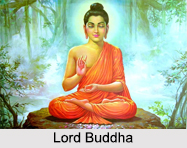
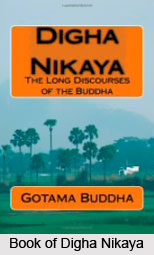
 Digha Nikaya or the Collection of Long Discourses is part of the Sutta Pitaka. These form an important part of the Buddhist scriptures. Sutta Pitaka is one of the three baskets that complete the Pali Tipitaka of Theravada Buddhism. These suttas are 34 in number. However they have been grouped into three sub divisions: Silakkhandha vagga, Maha vagga and Patika vagga.
There are certain suttas that are quite well known with the Buddhists. These include: -
Brahmajala Sutta: This primarily deals with points of views of the Buddha and other ascetics in India. Here they are seen discussing about time and universe. Buddha corrects 62 wrong notions about these.
Samannaphala Sutta: In this sutta King Ajatsatru questions Buddha on the benefits of becoming a recluse. Buddha answers him from the perspective of arahantship.
Maha Parinibbana Sutta: This section relates the story how Buddha attained Parinirvana. It also states how Buddha spent the last few months of his life, his death, the funeral and how his relics were distributed.
Singalovada Sutta: Here Buddha discusses ethics and practices that are essential for the lay followers.
Atanatiya Sutta: This sutta is described as tantra in Tibetan and Japanese Buddhism. It is told here that gods gave Buddha for his followers that would protect from the evil spirits.
Potthapada Sutta: It describes the benefits of jhanas or meditation. Here Buddha answers all the unanswered questions about the origin of the jhanas, the first three formless attainments and how it is to be practiced.
The other suttas in Digha Nikaya include Janavasabha Sutta, Ambattha Sutta, Kevaddha Sutta, Sonadanta Sutta, Lohicca Sutta, Kutadanta Sutta, Tevijja Sutta, Mahali Sutta, Jaliya Sutta, Kassapa Sihanada Sutta, Subha Sutta, Mahapadana Sutta, Maha Satipatthana Sutta, Agganna Sutta, Udumbarika Sutta, Maha-Govinda Sutta, Lakkhana Sutta, Dasuttara Sutta, Cakkavatti Sihanada Sutta, Sangiti Sutta and others.