Introduction
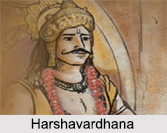 One of the most important Indian emperors of the 7th century, Harshavardhana was a Buddhist convert in a Hindu era, whose reign seemed to mark the transition from the ancient to the medieval period, when decentralized regional empires continually struggled for dominance. Harshavardhana was a part of the Pushyabhuti dynasty also known as the Vardhana dynasty, which came into prominence after the downfall of the Gupta Empire.
Ascension of Harshavardhana
The second son of Prabhakaravardhana, the king of Thaneswar, Harshavardhana was crowned at the age of 16 years after the assassination of his elder brother, Rajyavardhana. It was King Shashanka, the ruler of Gauda in Eastern Bengal who murdered Rajyavardhana. After the unfortunate death of his brother, Harshavardhana marched against the treacherous king of Gauda and killed Shashanka in a battle.
Religion followed by Harshavardhana
Harshavardhana"s ancestors were sun worshippers, but Harshavardhana was a Shaivite. He was an ardent devotee of Lord Shiva, in fact in the Sanskrit play "Nagananda" which was written by Harshavardhana himself was dedicated to Lord Shiva"s consort Goddess Parvati. According to the Chinese Buddhist traveller Xuanzang, Harsha became a devout Buddhist at some point in his life. Harshavardhana built hospices and ordered his men to maintain them well. These hospices served as shelters to the poor and to the religious travellers across India. He also organized a religious assembly called Moksha, which was organized once in every 5 years.
Harshavardhana was also renowned for organizing a grand Buddhist convocation in 643 CE. This convocation was held at Kannauj and it was attended by hundreds of pilgrims and 20 kings who had come from far and wide. Xuanzang also describes a 21-day religious festival organized by Harsha in Kannauj. During this festival, Harshavardhana and his subordinate kings performed daily rituals before a life-sized golden statue of the Buddha.
Harshavardhana built many stupas and viharas and forbade the slaughter of all sorts of creatures. He passed away on about 647 AD. After his death there was an utter chaos and disorder in Northern India. He died without any heir and his entire kingdom was divided into many parts and various rulers took charge of those parts. He made endowments to the University of Nalanda, where 2 seals of Harsha have been found there.
Reign of Harshavardhana
Harshavardhana ruled over the entire North India from 606 to 647 CE and united the small republics from Punjab to Central India. Under the rule of Harshavardhana, there was a vast unified empire which underwent considerable expansion and grew to include the Punjab, Rajasthan, Gujarat, Bengal, Odisha and the entire Indo-Gangetic plain north of the Narmada River. He proved himself to be an able administrator and presided over a kingdom where peace and prosperity prevailed for most of the time.
Harshavardhana"s capital Kannauj, modern day Uttar Pradesh, attracted many artists, poets, religious leaders and scholars who travelled from far and wide. Harsha"s Sanskrit court poet Banabhatta authored his biography, "Harshacharita", where he described Harsha"s association with Thaneswar, besides mentioning the defence wall, a moat and the palace with a two-storied Dhavalagriha or a white mansion.
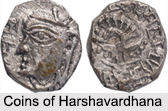 Under his administration the economy became increasingly self-sufficient and feudal in nature. Over a period of time trade started declining and commerce receded. The diminishing trade and commerce also affected other industries and thus the people grew increasingly dependent upon agriculture. As the king Harshavardhana maintained good relations with Emperor Taizong of the Tang Dynasty in China. Chinese pilgrim Xuanzang spent several years in India and following his visit, Harshavardhana sent a mission to China which established the first diplomatic relations between China and India.
Harshavardhana tried to extend his empire to the southern peninsula of India but was defeated Pulakeshin II of the Chalukyan dynasty, who proposed a treaty with Harshavardhana. The main term of treaty was that the Narmada River was designated as the border between the Chalukyan and the Vardhana Empire.
Social condition During Harshavardhan`s Reign
Much of the social condition of India during the reign of Harshavardhan can be known from the writings of the Chinese traveler Hiuen Tsang. It is said that the caste system was prevalent in the society. The Brahmans were highly honored and performed religious duties. The Kshatriyas formed the governing class. The Vaisyas formed the traders and merchants class. The Sudras were the lowest rung of the ladder of society and did work of agriculture and performed other menial works. According to Hiuen Tsang. "The Kshatriyas and Brahmans are cleanly and wholesome in their dress, and they live in a homely and frugal way. There were rich merchants who dealt in gold trinkets and so on. They stain their teeth red or black which are very particular in their personal cleanliness. All wash before eating; they never use food left from a former meal. Wooden vessels must be destroyed after use; metal ones must be well polished and rubbed. After eating they clean their mouth with a willow stick, and wash their hands and mouth."
Food habit of the people of upper class also had a distinct line of difference with that of the lower class. People at pure diets, never consumed onions and garlic and it was only the chandals who consumed onion and garlic.
The position of women was good in the society. There was no purdah system. Women of respectable families received education. There were no inter-caste marriages. Marriages within the same caste were prohibited within certain degrees. However, the system of sati existed. For example, queen Yashomati burnt herself after death of her husband Prabhakar vardhan. Rajyasri had also made an attempt to burn herself after Sasanka had freed him. However, her life was saved by the persuasion of Harshavardhan who reached at the scene quite on time.
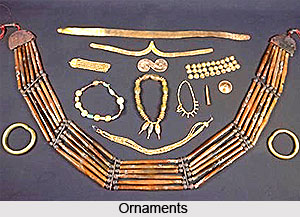
The dress of the people of this age was very simple. Men covered their upper portion i.e. from waist to chest by a long cloth. They kept their shoulders bare. Both men and women wore ornaments. As for examples necklaces, rings, etc. were very much popular at that time.
People led a highly moral life. According to Hiuen Tsang, people were truthful. Treachery and cheating were rarely found. People were usually simple, honest and truthful. People considered their sacred duty to respect the guests.
Administration Of Harshavardhan
After the fall of the Gupta Empire, there prevailed a state of chaos and confusion in India. It was Harshavardhan who removed this state of chaos and confusion, and built up a vast empire, which included almost the entire of northern India. According to Hiuen Tsang people were happy and prosperous during his reign and the administration was quite efficient. Harsha was a popular king. For the welfare of the people he had constructed roads, opened schools and got planted trees on both the sides of the road.
Harsha`s administration was based on the traditional administrative system. It can be said that his administrative system was like that of the Guptas
King: King occupied the highest position in the administration, king used to adopt the titles of `Parm-bhattarak`, `Parmeshwara`, `Paramdevata`, `Maharajadhiraja`, etc. The king was autocrat and absolutely enjoyed the supreme position in the state. But the kings were always eater to wing popularity and hence never misused their unlimited powers in the field of liberality and charity no king can equal him much less surpass him the king appointed Samartas and other officers, he was the highest judicial authority on the earth and king was considered equal to god. Bana has described Harsha as the incarnation of all the gods. He led the army in the battlefield Harsha made a tour of the whole country for the welfare of the people. Like Ashoka, he was ever prepared to work for the good and welfare of the people.
Officers: There were several ministers to help Harsha in the administration. They were called `Sachiv` or `Amatya`. The chief Sachiv of Harsha was Bhandi and Sandhivigrahak was Avami. Sighavad was his Senapti. Skanda Gupta was also one of the ministers who were the Senapati of elephants wing of army. It can be learnt from Madhuban inscription that governor was called `Rajasthaniya`, `vishayapati` i.e. head of the district, and `Uparika` i.e. head of the province.
`Kumaramatya` were other officers. There were other officers like:-
• Mahasandhivigradhikrita i.e. minister of war and peace.
• Mahabaladhikrita i.e. officer in supreme command in the
area.
• Baladhikri i.e. senapati or commander
• Brihadavavara i.e. head cavalry officer.
• Katuka i.e. commandant of the elephant force.
• Pathi i.e. superintendent of soldiers barracks.
• Chata-bhata i.e. irregular and regular soldiers.
• Yama-cetis i.e. women watchers at night.
• Duta i.e. ambassador.
• Rajasthaniya i.e. foreign secretary.
Kumaramatya i.e. counsellor of the prince.
Uparika i.e. official title of the governor of province.
Visahyapati i.e. the head of a visya or modern district.
Daussadhanika i.e. suprintendent of villages
Bhogika or Bhogapati i.e. one responsible for the collection of state produce.
Mahapratihara i.e. chief warden, Mimansak i.e. justice, Akshapattalika
and Dutuka i.e. keepers of the records.
These names show that Harsha`s administration was more or less on the lines of Gupta administration.
Army: Harsha had built up a vast empire. The safety and security of such an empire needed a big army. It is due to this reason that Harsha had paid his special attention to the maintenance of this huge and strong army. The basis of recruitment in the army was bravery and merit. The profession of a soldier had become hereditary. The son of a soldier also joined the army as a soldier. According to Hiuentsang, Harsha`s army consisted of 6,000 elephants and 1,00,000 cavalry. There were also a large number of camels in his army. The Samantas and the friendly kings also provided bands of soldiers. For example Kamrupa king had met Harsha along with 2000 elephants. According to Bana, Harsha received a large number of elephants in gifts from Samanta kings. Horses were purchased from Sindh, Afghanistan and Persia.
Infantry, cavalry and elephants were the three main branches of Harsha`s army. The use of chariots was not prevalent. Some of the inscriptions of that time make mention of naval forces also but it is not know much about them. Mahasandhivigrahadhikrita was the chief officer of the military department. He was entitled to make war and also settled peace. Mahabaladhikrita was the officer who organized the army. The officers known as Baladhikrita, Senapati, Patasvapati, Katukapati etc. worked under the subordination of Mahabaladhikrita.
Police department: The police department of Harsha was very efficient. It worked like modern police department. The names of the officers of this department are somewhat similar to the officers of the Gupta period.
Some of the officers of the police department can be mentioned as follows
• Dandapashika.
• Dandika.
• Cruiurodvaranika, and
• Yama-cheti.
Intelligence department: There was fine system of spies who turned throughout the state and secretly detected the crimes.
Provincial administration: The Empire of Harsha was divided into several provinces, which were known as `Bhukti`. These `Bhuktis` were further divided into visayas i.e. districts and visayas were divided into several `Pathakas` i.e. tehsils. Village was the smallest unit of administration; the provincial ruler or head of the province was also called something. The `visaya` was called `visayapati.` There were Dandika or Jrodvaranika, Dandapasika. etc. to help the rulers of province and district.
Village administration: The head of the village was called `gramika`. An official called `Mahattar` was appointed to look after the village. He used to be either some salaried officer or some respectable man. Bana has referred to an officer called `Agraharika` who probably looked after the lands given in charity. `Akshapata-lika` was like the modern Patavari. However, `Gramika` and `Asthakula adhikari` were the chief officers of the village administration. According to Dr. Basaka `Asthakuladhikaran` was empowered to inspect as many as eight small departments.
Crime and punishment: Punishment were severe and very strict in Harsha`s reign. Like Mauryan period severe punishment were awarded to criminals. As compared to Gupta period there were more cases of crimes. Roads and rivers etc. were not safe to travel. Yuan Chwang himself was robbed twice. Persons who committed crime against the king were sentenced of life imprisonment. According to Hiuen Tsang, "For offences against social morality and disloyal and unofficial conduct, the punishment is to cut off the nose, or an ear or a hand, or a foot or to banish the offender to another country or into the wilderness. Minor offences were dealt with fines. Ordeal by fire, water, weighing were the instruments to determine the innocence or guilt of a person."
Sources of income:
Following were the main sources of income
(1) Udranga i.e. a type of land revenue.
(2) Uparikara i.e. taxes besides the regular fines.
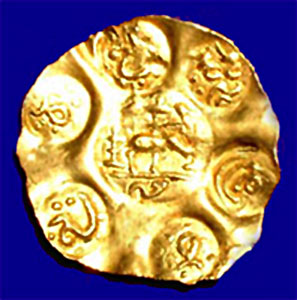
(3) Hirenya i.e. gold, and
(4) Ordinances.
Goods of daily requirements were also taxes. Taxes were levied on the sale of the goods. Money was also realized by imposing fines. The ferries and barriers stations were also subject to taxation and fetched a lot of state revenue. The rate of land tax was one-sixth of the total produce. Mines and buried treasures were considered as the property of the king.
Consequently it can be seen that Harsha`s reign was significant from the point of view of administration.
Military Administration of Harshavardhana
As Harsha had built up a vast empire he needed a huge army to safeguard it. He paid a special attention to the maintenance of his strong and huge army. People were recruited in the army on the basis of merit and bravery. The profession of a soldier had become hereditary. As per Hiuen Tsang, Harsha`s army consisted of 6,000 elephants and 1,00,000 cavalry. The army had several camels. The Samantas and the friendly kings also provided soldiers. As per Bana`s account, Harsha received large number of elephants as gift from Samanta kings. From Sindh, Persia and Afghanistan horses were purchased.
The three main branches of Harsha`s army were infantry, cavalry and elephants. Chariots were not used. Contemporary inscriptions also mention naval forces. The chief officer of the military department was Mahasandhivigrahadhikrita. He was permitted to make war as well as make peace. Mahabaladhikrita was responsible for organizing the army. Baladhikrita, Senapati, Patasvapati, Katukapati were the officers who worked under Mahabaladhikrita.
Mahasandhivigrahadhikrita and its incumbent was a person named Avanti at the time when the Harshacharita was written. Harsha presupposed a strong military force. The strength of infantry has not been mentioned. Ordinary soldiers were known as chatas and bhatas, cavalry officers, brihadasvavara and infantry officers, baladhikritas and mahabaladhi-kritas. Mahasenapati was the commander-in-chief.
Conquests of Harshavardhan
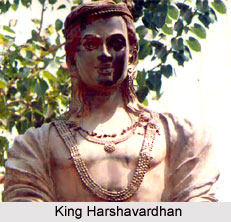 Conquests of Harshavardhana reveal that he had followed the policy of Digvijaya. He had ascended the throne of Thanesar in 606 A.D. His ascension to the throne was a period of political turmoil in Pushabhukti House, owing to the sudden death of Rajya Vardhana, elder brother of Harshavardhana, in the hands of Sasanka of Gauda. Harsha`s immediate task after his ascension to the throne was to avenge his enemies. Harsha Vardhana had first outlined the plan of "Digvijaya", which he readily pursued. Harsha and his feudatories dreamt to conquer distant lands, though campaign against Sasanka was his immediate target. After the conquest of Bengal and eastern India, Harsha Vardhana`s thirst for conquest increased considerably and he devoted himself to the scheme of conquering whole of India and accomplished successful takeovers for a long period of thirty years. The River Narmada was the southern boundary of Harsha`s kingdom.
The military campaigns and conquests of Harsha Vardhana can be categorised into several phases - conquest of Bengal and Eastern India, campaign against western India, the Chalukya War and his war with Sindh. On the northern frontier of his kingdom, Harsha came into contact with Kashmir. Chinese traveler HieunTsang has vividly mentioned some of the famous conquests of King Harsha Vardhana in his writings. Some of them are listed here.
Campaign in East India
The primary objective of Harsha`s campaign in East India was to defeat Sasanka and expand his dominion. According to historical accounts such as the “Harshacharita†and “Arya-manju-shri-mul-kalpaâ€, Harsha not only emerged victorious against Sasanka but also conquered several other smaller kingdoms that stood in his path to triumph. Following Sasanka`s demise, Harsha seized control of Gaud. Furthermore, Kamrupa in the east had already come under the influence of King Harsha, as Bhaskarvarman, the ruler of Kamrupa, had willingly accepted Harsha`s authority.
Consequently, Harshavardhan`s eastward conquest resulted in forming friendship alliances with numerous kingdoms. The ruler of Magadha, Pundravarmana, also acknowledged Harsha`s supremacy, and even Nalanda, along with Magadha, embraced Harsha`s hegemony. A seal discovered from the region indicated that Ayodhya was under Harshavardhana`s rule. Additionally, Harsha organized the `Mahamoksha Parishad` in Prayag every five years. The novel Ratnawali also mentions the existence of Kosambhi bhukti.
The Battle of Vallabhi
Vallabhi, an empire situated in Gujarat, became the target of Harsha`s military campaign. Dhruvsena II, also known as Dhruv Bhatta, ruled over Vallabhi, and Harsha launched an attack against him, resulting in his defeat. Jay Bhatta III`s writings extensively describe this event. Both Harsha and the Chalukya dynasty had an interest in Vallabhi from a political standpoint. Consequently, Harsha formed a friendly alliance with Dhruvsena II and married his daughter, thereby securing his military forces along the western border. This move effectively limited the expansion of the Chalukyas into northern territories. This diplomatic success proved to be one of Harsha`s most notable achievements.
Campaign in Sindh
Sindh, situated adjacent to Harsha`s kingdom, presented an opportunity for territorial expansion. Banbhatta`s detailed account in the Harshacharita depicts how Harshavardhana treated the king of Sindh with great respect and honor while extracting substantial wealth from him. This war strategy employed by Harshavardhana aided in overcoming the Vardhana dynasty`s longstanding enemy, Sindh. However, Hieun-Tsang`s writings provide conflicting information, describing Sindh as an independent and powerful kingdom. Thus, the exact details of Harsha`s victory over Sindh remain uncertain.
Campaign in Bengal
After Sasanka`s death in 620 AD, Harshavardhana initiated a campaign to conquer a significant portion of Bengal. He achieved supremacy over Samtat, Tamralipti, Karnasuarna, and Pundravardhan. Following the conquest of Bengal, Harshavardhana issued a copper inscription known as the Daanpatra. According to an inscription from Bengal it is probable that the whole of Bengal passed under the rule of Harsha. The discovery of an inscription from Eastern Bengal dated in the Harsha era proves that the region was under the sway of the Kannauj monarch.
War against Chalukyas
Chalukya War of Harsha Vardhana had confined the area of Harsha`s sovereignty. Harsha with the aim of becoming the sole lord of India had projected his campaign against the southern kingdom. But he was confronted with the powerful resistance of Chalukya king Pulakesin II of Vatapi. Hence Harsha Vardhana could not extend the limits of his Empire to the south of the Narmada River. The Chalukya war of Harsha Vardhan destined him as the paramount ruler of north, who had no supremacy over the kingdoms of south India.
Conquests in Deccan India
According to Hieun-Tsang`s writings, Harshavardhana gained control over Jejakbhukti (Bundelk hand), Maneshwarpur (Gwalior), Gurjar, and Ujjain in the Deccan region.
Campaign of Kashmir and Nepal
The accounts of Banbhatta and Hieun-Tsang mention Harshavardhana`s alleged victories over Nepal and Kashmir. According to Hieun-Tsang, Harsha carried the tooth relic of Gautam Buddha from Kashmir to Kannauj and constructed a sangharam there. The prevalence of the Harsha Samvat calendar in Nepal implies that Nepal was under Harshavardhana`s control.
Campaign in Odisha
By 640 AD, Harshavardhana had brought northern and southern parts of Odisha and Kalinga under his dominion. With this triumph, Harshavardhana extended his control over the entire northern India. Consequently, he adopted the title of Shaklotarapathnath. Having consolidated his empire, Harsha implemented his imperialist policies, leading many to consider him the establisher of a vast and unified empire after the Gupta dynasty.
Expansion of Empire by Harshavardhana
Harshavardhana inherited the territories of Delhi, Thaneshwar, and eastern Punjab. While his father, Prabhakar Vardhana, had won a few battles, he had been unable to expand the kingdom`s boundaries. Harsha added Kannauj, extending the boundary of his empire northwards. The Banskheda and Madhuban copper plates reveal that Ahichatra and Shravasti were also part of his empire. Another account states that Harsha assumed the title of Magadhadhiraj in 641 AD, indicating the annexation of Magadha. Hieun-Tsang describes how Munger district was also conquered by Harsha and subsequently donated to Buddhist monks. Moreover, Harshavardhana is said to have annexed Odra (Odisha) and Kongodh (present-day Ganjam), as supported by the donation of 80 villages in Odisha to Buddhist monks, which the monks later refused.
In the south, the boundaries of Harsha`s empire extended up to the Narmada River, beyond which the Chalukyan kingdom began. Additionally, some portions of Vallabhi remained outside Harshavardhana`s control, making it unclear whether he had complete dominion over Gujarat and Saurashtra. However, western Malwa was firmly under Harshavardhana`s rule. While he may have achieved victory over Sindh, he did not incorporate it into his empire. The ruler of Sindh acknowledged Harshavardhana`s supremacy while maintaining his independence. The ruler of Kamrupa, Bhaskarvarman, willingly accepted Harshavardhana`s authority, though it is debated whether this relationship was solely a result of their common enemy, Sasanka, the ruler of Gaud. Bhaskarvarman attended the Mahamokshaparishada as a friend of Harsha rather than as a subordinate ruler.
Harshavardhana`s campaigns in East India, including his victory over Sasanka and the subsequent annexation of various kingdoms, showcased his military prowess and strategic acumen. His diplomatic endeavors, such as forging alliances with rulers like Dhruvsena II of Vallabhi and maintaining cordial relations with neighboring territories, allowed him to extend his influence and establish a vast empire. Harsha`s rule spanned from Assam to Kashmir and from Himachal to Vindhyachal, making him a prominent ruler in northern India.
Harshavardhana also maintained friendly relations with the ruler of Kashmir, Durlabha Vardhana. According to Hiuen-Tsang`s biography, the ruler willingly presented Harshavardhana with the tooth relic of Lord Buddha, signifying their amicable bond. Thus, it can be inferred that the ruler of Kashmir sought to maintain cordial relations with Harsha.
It is important to note that Harsha did not exercise direct control over all the territories under his influence. Instead, he exerted his authority and influence over these regions through alliances, vassalage, and friendly relations with local rulers. His ability to establish diplomatic ties and secure the support of neighboring kingdoms played a crucial role in expanding his influence. Harshavardhana`s conquests and the establishment of his empire marked a significant chapter in Indian history. He not only expanded his territorial boundaries but also sought to promote cultural and intellectual advancements.
Conquest of Bengal and Eastern India by Harshavardhan
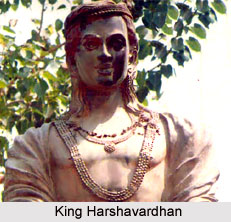 The subjugation of Bengal, was the immediate task of Harshavardhana after he ascended the throne of Thaneswar. Harshavardhana`s military campaign against Sasanka in Bengal was led by the idea to take revenge on Sasanka and the recovery of his sister Rajyashri from the clasp of the enemy. The campaign and conquest of Bengal by Harshavardhana is known from the narratives of Bana. From the accounts of Bana it is known that while Harshavardhana was marching against Sasanka, he had received a proposal from the king Bhaskarvarmana of Kamrupa, for forming an alliance against Sasanka, the then king of Bengal. Harshavardhana readily courted the alliance of the king of Kamrupa. According to Dr. R.D. Bannerjee, Harsha and the Kamrupa king had formed a confederacy against Sasanka, because they had a common enmity factor, Sasanka. However after gaining fortification with the alliance of Kamrupa, Harshavardhana hastened to lead the campaign against Sasanka. On the way he came to know that his sister had been released and she had taken shelter in the Vindhya forest. Harsha right at that time ordered his minister Bhandi to lead the army and he himself entered the Vindhya forest in order to rescue his sister. However Harsha managed to rescue her and later joined his army on the banks of the Ganges. Though Bana`s account could not draw clear conclusion about the result of Harsha`s campaign against Sasanka, yet it is clear that in the course of his campaign against Sasanka, Harsha had occupied Kanauj. Though the conquest of Kanauj by Harshavardhana is a hypothetical theory, because different historians have provided various opinions, yet it is generally believed that Harshavardhana had actually occupied Kanauj in the course of his campaign against Sasanka in Bengal. Sasanka however had prepared a masterly retreat after the army of Harshavardhana advanced in Kanauj.
The hostility between Harsha and Sasanka did not end with Sasanka`s withdrawal from Kanauj. It had continued for a lengthy period of time. Since there are no specific evidences about the result of the war of Harsha against Sasanka, it is pretty difficult for historians to determine whether Harsha ever came in real conflict with Sasanka. According to the "Arya Manjusri Mula Kalpa", Harsha had marched against the capital of Sasanka, defeated him and forbade him to move out of the country. But according to Dr. R.C Majumdar, the records available from epigraphic evidences and the medieval Buddha chronicle are vague and obscure. It does not provide clear information about the battle. Later evidences proved that Sasanka had reigned over Gauda without any reduction of power, definitely upto 619 A.D. Thus it is concluded by later historians that Harsha`s campaign against Sasanka was futile. When the tide of Harsha`s invasion rolled back, Sasanka seemed to have recovered his position and reigned in undiminished glory till his death.
According to some scholars, the closing years of Sasanka`s reign was full of trouble and chaos. Harsha and Bhaskarvarmana conjointly had defeated him and had reduced him to a subordinate chief. This is endorsed by the "Midnapore inscription" of 629 A.D., where Sasanka did not use the title "Maharajadhiraja". As a result of this victory, Harsha had included Kanvasuvarna and part of Bengal within his Empire, which was originally within the territory of Sasanka. Dr. R.G. Basak has also suggested that Sasanka`s defeat was indicated by his debased gold coins and his lost of overlordship of Ganjam district. But Dr. R.C. Majumdar has refuted the theory that Sasanka`s powers were curtailed by Harshavardhana. He rather holds that Sasanka had ruled in undiminished glory till his death. During his lifetime Harsha could not project any successful campaign against him and it was probably after his death that Harsha had captured Magadha. Dr. Majumdar has based his theories on the evidences provided by the "Ganjam inscription". The inscription delineates that Sasanka had enjoyed full sway of his Empire, consisting of Bengal, South Bihar and Orissa. The accounts of Hiuen Tsang who had visited Magadha in 637 A.D., also corroborates the theory that Sasanka had ruled in undiminished glory till his death.
After the death of Sasanka, Harsha conquered the kingdom of his adversaries, consisting of the regions of Magadha, West Bengal, Orissa and Kangada. Harsha had conquered Orissa and Kangada and the remaining part of Sasanka`s dominion by 643 A.D. However there is still controversy among scholars that whether Harshavardhana had actually captured east Bengal or not. The other groups of historians have pointed out that though Harsha had conquered Bengal, he did not rule over the entire part. Harsha`s ally Bhaskarvarmana had received a portion of Bengal, comprising the northeastern part, lying between east of Bhagirathi and north of Padma.
The Chalukya War of Harshavardhana
Harshavardhana after consolidating his Empire under his own supremacy had conducted his campaign of "Digvijay" to become the paramount lord of north India. At that time emperor Pulakeshin II was busy achieving conquests, in order to win the status of supreme aristocracy down south. Harsha however could not willingly endure the powerful existence of a rival in the neighbourhood and wanted to overthrow him. But to depose such a powerful enemy like Pulakeshin II was not an easy task for Harshavardhana. Since the kingdoms of Gujrat, Malava and Gurjaras were hostile towards Pushyabhuti house, hence they voluntarily allied with the Chalukya king Pulakeshin II, in order to protect themselves from the aggression of Harsha against them. Thus circumstantial situations made the war between Harshavardhana and Pulakeshin II inevitable. From the accounts of Hiuen Tsang it is known that Harsha had taken aggressive attitude in his campaign against Pulakeshin II. He had raised an army, trained them and personally also had led the army against Pulakeshin II. However it appears that Harsha had failed to overpower the Chalukya king Pulakeshin II. Whether Harsha himself had suffered a defeat in Pulakeshin`s hand is however not clear because Hiuen Tsang`s accounts, which are the chief source of the Chalukya War of Harshavardhana, are too vague on this point. However there is controversy again regarding this issue. Later V. Smith has provided a satisfactory theory that Harsha had led his army southward upto the passes of Narmada, where he was resisted by Pulakeshin. According to him Harsha`s Empire was limited upto the northern part of river Narmada. The kingdoms of Gurjaras, Gujrat and Malavas, though were situated in the northern part of Narmada, never had submitted themselves to Harsha; rather they existed as feudatories of Pulakeshin II.