Ahananuru- Sangam Literary Work of India - Informative & researched article on Ahananuru- Sangam Literary Work of India
  Indianetzone: Largest Free Encyclopedia of India with thousand of articles Indian Literature


in  
Art & Culture | Entertainment | Health | Reference | Sports | Society | Travel
Forum  | RSS Feeds  | Free E-magazine
Indian Literature : Indian Literature l History of Indian Literature l Sanskrit Literature l English Literature in India l Regional Indian Literature l Indian comics l Indian Poetry l Indian Literary Personalities l Indian Epic Poetry l Renaissance in Indian Literature l Indian Novels l Indian Literary Organisations l Indian Literary Movements l Contemporary Indian Literature l Medieval Indian Literature l Ancient Indian Literature l Themes In Indian Literature l Genres in Indian Literature l Influencing Factors On Indian Literature l Forms of Indian Literature l Religious Influence on Indian Literature l Modern Indian Literature
Home > Reference > Indian Literature > Regional Indian Literature > Tamil Literature > Ahananuru- Sangam Literary Work of India
Ahananuru- Sangam Literary Work of India
Ahananuru is a literary work which takes you to historic journey during the Sangam period.

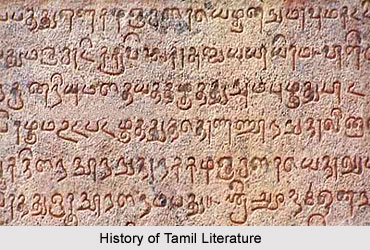
A rich and one among the earliest Tamil classic, the Ahananuru was written in the Sangam period. Historians usually date as extending from the 2nd century B.C. up to the 3rd century A.D. There are four hundred stanzas in the Ahananuru which were composed by different poets at various times and places and were compiled by Rudrasarman, son of Madurai Uppurikkudikkilan.

The Ahananuru is replete with references to historical events, mainly about battles and kings and chieftains. In addition to this there is a large amount of information related to social history like the customs and manners of the people of that age - their religion, status of women, marriage customs, food, dress, ornaments, and so forth.

The Ahananuru also includes lifestyle of more than a dozen occupational groups like the agriculturists, hunters, fisherfolk, Brahmins who lived mainly by the performance of Vedic rituals and sacrifices, potters, smiths, etc., are presented here. Interesting details like the salt vendors who moved from place to place in carts drawn by buffaloes and the washermen who washed the clothes using a type of sand are given here.

One can get a clear picture of trade and commerce that prevailed during those days. Gold coins were in vogue and the barter system was also in place. Angadis or the market places where the goods were sold are graphically described as also the modes of transport like mules, which were used as beasts of burden and the swift-moving chariots. The five geographical areas into which the ancient Tamil country was divided, namely Kurinji, Marudam, Palai, Mullai and Neidal are clearly given here. Descriptions of dwellings from the modest hut to tall, storied buildings provide a very interesting picture of the villages, cities and towns of the time. The superstitions prevalent then, the festivals celebrated the art of painting and sculpture, dance and music, all find mention in this work which provides students of ancient Tamil culture and history with a fund of authentic data.
(Last Updated on : 6/01/2009)
  More on Tamil Literature...
 
Subramaniam Bharati Subrahmanya Bharathi Vedanayagam Pillai
Dr U.Ve. Swaminatha Iyer Kamban Medieval Tamil Literature
Purananuru- Sangam Literary Work of India Ahananuru- Sangam Literary Work of India Tiruvalluvar
Sangam Literature of Tamil Nadu Ottakuttar Tolkappiyam
Sekkizhar Musicological Literature of South India Chintamani
Kural Sangam Age in Tamil Literature Post-Sangam Age in Tamil literature
Vijayanagar and Nayak Age in Tamil Literature Modern Era in Tamil literature  
Recently Updated Articles in Indian Literature
  • Arun Kolatkar
    Arun Kolatkar was a famous Marathi poet and had showed equal expertise in modern English poetry.
  •  
  • Ranjit Hoskote
    Ranjit Hoskote, a Mumbai-based poet, is a new age Indian poet with abundant contributions to Indian English poetry.
  •  
  • Henry Louis Vivian Derozio
    Henry Louis Vivian Derozio was a major influence in the ushering of Bengal Renaissance Movement.
  •  
  • Dilip Chitre
    Dilip Chitre was a popular, modern bilingual poet who wrote both in Marathi as well as English.
  •  
E-mail this Article | Post a Comment
Free E-magazine
Subscribe to Free
E-Magazine on Indian Literature

 
Ahananuru- Sangam Literary Work of India - Informative & researched article on Ahananuru- Sangam Literary Work of India
Sitemap
Contact Us   |   RSS Feeds
Copyright © 2008 Jupiter Infomedia Pvt. Ltd. All rights reserved including the right to reproduce the contents in whole or in part in any form or medium without the express written permission of Jupiter Infomedia Pvt. Ltd.