Rajasimha , Pallava Dynasty - Informative & researched article on Rajasimha , Pallava Dynasty
  Indianetzone: Largest Free Encyclopedia of India with thousand of articles History of India


in  
Art & Culture | Entertainment | Health | Reference | Sports | Society | Travel
Forum  | Free E-magazine
History of India : Sources of History of India l Ancient History of India l Medieval History of India l Modern History of India l Indian Historical Dynasties l Indian Battles l Sepoy Mutiny 1857 l Indian Rulers l History of India l Indian Freedom Struggle l Indian Governor- Generals l British Indian Acts l Post Independence India l Iron Age in India
Home > Reference > History of India > History of South India > Pallava Dynasty > Rajasimha
Rajasimha , Pallava Dynasty
Rajasimha Pallava was an appreciated king of the Pallava dynasty, well-known for his peaceful approach in administration

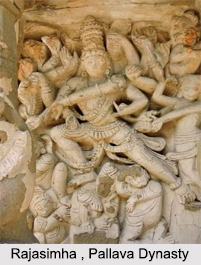
One of the most cherished kings of the Pallava dynasty, Narasimhavarman II fondly known as Rajasimha Pallava is remembered more than a thousand years later, for his supremacy and administration. His reign is known to be one of the most peaceful and secure times for its people. Rajasimha ruled from his capital-city of Kanchi over a vast kingdom bequeathed to him by his forefathers. Although he did wage a few battles, these were not in the league of those before or after, and his times are known for their undisturbed peace and prosperity.

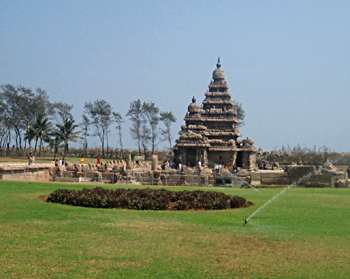
One of his inscriptions mentions that he ruled over a thousand islands, and this perhaps could be Lakshadweep. According to some scholars, Rajasimha provided some military assistance to the emperor of China who fought with the Arabs at that point of time. Named after his great-grandfather, Narasimhavarman I (Mamalla), he shared his ancestor`s fervor for temple architecture. He initiated the concept of constructing structural temples out of stone. One among these was the famous Shore Temple at Mamallapuram and another Talagirishwara temple at Panamalai (near Viluppuram). But the grandest was the Kailasa-natha temple at Kanchipuram, built of sandstone.

Rajasimha Pallava`s court at Kanchi sheltered several scholars and is well known from the works of Dandin, the famous Sanskrit scholar that he was honoured at Rajasimha`s assembly.
(Last Updated on : 31/01/2009)
  More Articles in Pallava Dynasty
 
Civilization and Culture of the Pallavas Origins of the Pallava Dynasty Architecture Under Pallava Dynasty
Kings of Pallava Dynasty Religion in the Pallava Period in India Mahendravarman I
Narasimhavarman I Rajasimha Nandivarman II
Kadava Kingdom    
Recently Updated Articles in History of India
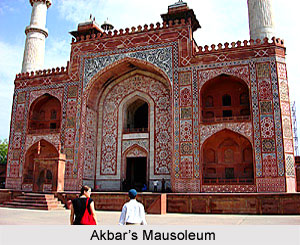
  • Mughal Architecture
    Mughal architecture is a combination of Islamic, Persian, Turkish and Indian architecture. It is a style that was developed under the Mughal dynasty in the sixteenth and seventeenth centuries.
  •  
  • Mansabdari System in Mughal Dynasty
    Akbar introduced the Mansabdari System in the Mughal army which primarily meant the ranking of officers on decimal system.
  •  
     
  • Deccan Policy of Mughal Dynasty
    Deccan Policy of the Mughal dynasty was weak during the reign of Babur and Humayun but after the accession of Akbar on the throne, the political situation changed and the Deccan policy was a success.
  •  
  • Coins of Pandyas
    Coins of Pandyas bear the legend of different Pandya ruler in different times.
  •  
  • Art and Architecture of Mughal Empire
    Art and architecture of Mughal Art offers an aesthetic degree to all art lovers. The subtlety of the finesse and the dazzle of the aura create huge amount of interest among tourist.
  •  
    E-mail this Article | Post a Comment
    RSS Feeds
    Forum
    Forum on History of India

    Free E-magazine
    Subscribe to Free
    E-Magazine on Indian Crafts
     
     
    Rajasimha , Pallava Dynasty - Informative & researched article on Rajasimha , Pallava Dynasty
    Sitemap
    Contact Us   |   RSS Feeds
    Copyright © 2008 Jupiter Infomedia Pvt. Ltd. All rights reserved including the right to reproduce the contents in whole or in part in any form or medium without the express written permission of Jupiter Infomedia Pvt. Ltd.