
Kulottunga Chola I was the son of Vengi king Rajaraja Narendra. The accession marks the end of the direct lineage of the Cholas and the beginning of the dynasty of the Chalukya-Cholas. Kundavai, sister of Rajendra Chola I, was married to king Vimaladitya of the dynasty of the Eastern Chalukyas of Andhra. Their son Rajaraja I Narendra married Rajendra`s daughter, Ammangadevi, who gave birth to a son Kulottunga Chola I. the latter went on to become one of the greatest rulers of the later Cholas.
Early Life of Kulottunga Chola I
Kulothunga I was an able fighter in the wars and fought bravely by the side of kings like Rajendra Chola, his successors, Rajadhiraja, Rajendra II and Virarajendra Chola. His heroism attracted the Chola kings and he was given the control of north-west Telugu regions and the Bastar districts of erstwhile Madhya Pradesh.
Conquests of Kulottunga Chola I
He played a major role in repulsing the Western Chalukyas and earned the title `Viruduraja Bhayankara` meaning the `reason for the frightening of Viruduraja, the Chalukyan prince. He succeeded in keeping up the supremacy of the Cholas over the Chalukyas. There was only the temporary loss of Vengi in 1118 AD to Vikramaditya VI when Kulothunga I was unwell.
Kulothunga`s initial years of rule was spent in fighting the war and rebellion that had sprung up in the Chola Empire. There was trouble in Sri Lanka where the southern provinces had declared themselves as independent kingdoms. He had to deal with the Chalukya Vikramaditya.
The Pandyas never accepted the suzerainty of the Cholas. Pandyas took the advantage of inner conflicts of Chola Empire and tried to declare them as independent. As soon as the war with the Chalukyas ended, Kulothunga turned to suppress the revolts in the Pandyan and the Kerala territories. The records say that vanquished the armies of Cheras and Pandyas and burned down the Tirunelveli fort. He placed the victory pillar in Sahyadri hills. It further says that the Cholas had crushed Pandyas and were in complete control of the south. The Chola kingdom remained intact except for the loose control of Srilanka. The boundary between the Cholas and the Western Chalukyas was the Tungabhadra River. Vengi and Kalinga were under the Chola rule.
Kulothunga visited so many villages in that period and made many temples in those villages. Kulothunga Chola made two important temples, the first one of Lord Shiva and the second one belonging to Lord Vinava Perumal.
Sri Lanka, which had been brought into the Chola fold by the might of Rajaraja I and Rajendra I, slipped from the grip of the Cholas during the reign of Kulottunga. Subsequently, he and his successors were able to rule only a part of northern Lanka. Although the empire shrunk during his period he succeeded in holding much of it by improving the economic condition of his subjects. He abolished some tolls and taxes and also brought about improvement in agriculture, which was the predominant occupation of his subjects.
Kulottunga was a diplomat. This can be clearly observed from his inscriptions. He maintained good relations with the kingdom of Sri Vijaya of Malaysia and also the Gahadavala rulers of Kannauj in North India.
Kulottunga Chola I as a Patron of Art
His interest in temple architecture is underpinned by his enormous contribution to the Nataraja temple at Chidambaram, which experienced a six-fold expansion during his reign. The architecture of this temple seen today first took shape during the time of Kulottunga.
Kulottunga-Chola-Tirumaligai was the name given to the first wall of the enclosure of the Nataraja temple, while the second wall of the enclosure was called Vikrama-Chola-Tirumaligai, after his son who also contributed to this temple-complex.
Kulottunga was succeeded by his son Vikrama Chola, who was made crown prince in 1118 A.D. and who ruled jointly with his father till 1122 A.D. when the latter passed away.
Kulottunga Chola I
Kulottunga Chola I ascended the throne of the Chola Empire in 1070 AD when it was facing lot of internal and external troubles.
Recently updated articles in History of India
Suhungmung
Suhungmung was the fourteenth ruler of the Ahom dynasty who ruled from the period 1497 to 1539 AD. His reign was significant in terms of expansion of...
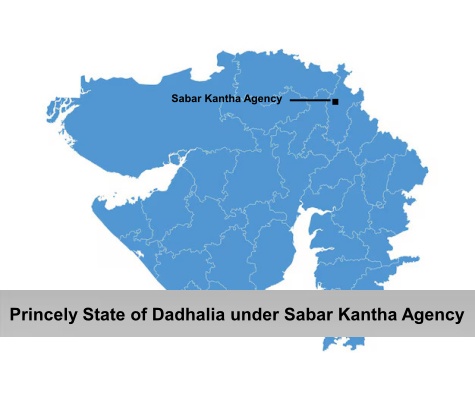
Princely State of Dadhalia
Princely State of Dadhalia was located in the present state of Gujarat. The state covered a total area of 28 sq miles and comprised of 15 villages. Th...
Princely State of Rupal
Princely State of Rupal was a part of the Baroda Agency, a sub division of Western India States Agency. It was under the administrative control of the...
Archaeological Sites of West Bengal
Archaeological sites of West Bengal reveal several aspects of ancient India. Excavations by the Archaeological Survey of India have furnished artefact...

Princely State of Gabat
Princely State of Gabat was one of the native states of India during the Brtish period. Thakors were the native rulers of this state. After India gain...
Related articles in History of India

Mughal Architecture during Babur
Mughal architecture during Babur marked the foundation of a new architectural era in India, blending Timurid, Persian, and local influences. His reign...

Architecture during Sayyid and Lodi Dynasty
Architectures during the Sayyid and Lodi dynasty were mainly the tombs and monuments for the dead rulers. It were carefully designed and meticulously...

Brahmanical Sources of Ancient History
Brahmanical Sources of ancient history are contained in the Vedas and they constitute one of the most important literary sources of information about...

Coins of Chola Empire
Coins of Chola Empire were issued in gold, silver and copper and carried the Chola emblem.

Coins of Khilji Dynasty
Coins of Khilji Dynasty had an influential feature that was followed by the other dynasties.