


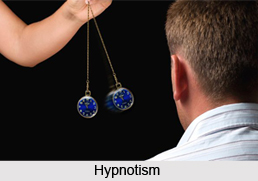
 Hypnosis is a trance-like state in which one has heightened focus and concentration. This state is generally created with the support of a hypnotist who guides the person to focus only on one thing. The term "hypnosis" is derived from the Greek word 'hypnos' which means "sleep". The experience of hypnosis can vary from one person to another. There are two schools of thoughts regarding the general effects of hypnosis which includes focused attention and hypnosis and suggestibility. Hypnosis is a trance-like state in which one has heightened focus and concentration. This state is generally created with the support of a hypnotist who guides the person to focus only on one thing. The term "hypnosis" is derived from the Greek word 'hypnos' which means "sleep". The experience of hypnosis can vary from one person to another. There are two schools of thoughts regarding the general effects of hypnosis which includes focused attention and hypnosis and suggestibility.
Focused Attention According to this theory, hypnosis is a state, which is very similar to other states of extreme concentration, where a person becomes unaware to the surroundings while lost in the thought. It is the state of concentrating on one stimulus to the exclusion of all others. The mind actively focuses on one thing without being distracted by other stimuli. This state can be physically and mentally tiring. There are many examples of focused attention in the daily life. A driver often finds himself or herself much further down the road without any memory of driving the intervening distance. Sometimes, a person watches television so intensely that he/ she forgets to be aware of the sides of the screen or when a person thinks much about another subject while reading, suddenly he/ she realizes that he/ she has read several pages without consciously doing so, or without understanding any of the contents. Hypnosis and Suggestibility The act of hypnosis is actually the act of deliberately or mechanically inducing a similar state. Psychologists have developed studies that show a strong correlation between how easily a person can be put in a state of hypnosis and their level of suggestibility. Hypnosis was further described as the suspension of the critical factor that further elaborates the idea of 'increased suggestibility'. A person who is under hypnotism might accept the statements as true which he/ she would normally have denied. This can be illustrated further by example. For instance, if a subject has been told that he/ she has forgotten his/ her name he/ she would deny the fact in normal condition but hypnotic individuals would easily accept the fact and indeed start to believe that he/ she has forgotten the name. |
| |||



General Effects of Hypnosis
| The general effects of hypnosis can be explained by two theories viz. focused attention and hypnosis and suggestibility. |
| ||||||||||||||||||||||||||||

