 Education has been the core to gain knowledge. From the Vedic age downwards the central conception of education of the Indians has been that it is a source of illumination giving us a correct lead in the various spheres of life. The kings and emperors of the South India in the ancient and medievals ages, in addition to their numerous duties, paid much attention to the propogation of education in their land. The pallava kings of the ancient Tamil country who ruled from their capital city Kanchipuram (75 km from Chennai) from the 4th-9th centuries A.D were known as patrons of scholars. The ghatikas were the most important educational institutions of this time and the most important ghatika of the pallavas was located in Kanchipuram. Inscriptions reveal that many of these kings looked after this institution with great care. It was well-known as an important educational centre even in the 4th century A.D and an epigraph of a Kadamba king (of ancient Karnataka) records that his ancestors, a scholar named Mayura Sharman, along with his teacher Vira Sharman came to this institution from faraway Goa.
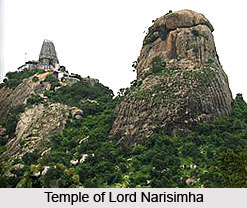
Many other ghatikas were functioning at this time. One of these was at Ghatikachala , hill in Sholingur (famous for its temple to Lord Narisimha), which was and still is so called, as there once existed an important ghatika there. The kings encouraged scholars of the Vedas and other scriptures (Shastras) by giving them money and grants of land, sometimes whole villages, where they colud study in peace and teach their students. These villages where the Vedas and the ancillary scriptures were thus taught came to be called chaturvedimangalams, brahmadeyas or agraharas.
The mathas were another type of educational institution of great importance in South India. Each matha was presided over by a preceptor who was a sanyasi, who not only taught the students but was also entrusted with the management of the institution. The pupils who lived at the matha were fed and taken care of by this institution. The mathas were usually attached to temples and were sustained by royal patronage and by gifts of money and kind from the common people. They were considered as centres not only of education but moral and spiritual instruction.
The temples of south India were not only religious centres but also played the role of educational institutions. Many subjects were taught by learned scholars in the `temple-colleges` which were attached to these shrines. Some of the more famous `temple-colleges` are described in the inscriptions of the Cholas of the 11th-12th centuries A D. One of the best known of this type was functioning in the premises of the Narsimha temple at Ennayiram (erstwhile South Arcot district). The inscription here gives minute details about the number of teaching staff, students, subjects taught, remuneration of the teachers, number of teachers and students for each subject, etc. Some of the subjects taught here were the Rig Veda, yajur Veda, Atharva Veda, Vyakarana (grammar), Vedanta (Upanishads), and many others. A similar type of college was attached to thee Vishnu temple at Tirumukkudal, near Chengalput.
Other then these important centres of Vedic learning, there were large and small educational centres for the Bhuddists and Jains all over South India. Some were for primary education while others were for advanced higher education. A very large number of Buddhist monasteries (viharas) functioned in places like Kachipuram and Dhanakataka (modern Amaravati) in Andhra Pradesh.
The Jaina educational centress called pallis played a pivotal role in spreading jaina tenets. They consisted of large numbers of monks and nuns and were mostly residential colleges. Most of the kings of ancient South India donated liberally to all education institutions, be they of the Vedic, Buddhist or Jaina tradition.