
 Tastes in Ayurveda have a prominent role in the digestive and metabolic processes (Vipaka) of an individual. Digestion of heavy tastes needs more energy generation, while lighter tastes can be easily assimilated. According to Ayurveda, each of the food items contains a particular taste or "Rasa" that is correlated to its digestive action. The different tastes have a connection with the balance of elements like space, air, fire, water and earth. These tastes are not a mere coincidence, but it is a direct manifestation of biochemical traits of the food which therefore reveals its pharmaceutical properties.
Tastes in Ayurveda
Tastes in Ayurveda are of six types that are closely associated with fundamental elements. The six tastes described in Ayurveda are sweet, sour, salty, pungent, bitter and astringent.
Introduction
Tastes in Ayurveda have a prominent role in the digestive and metabolic processes (Vipaka) of an individual. Digestion of heavy tastes needs more energy generation, while lighter tastes can be easily assimilated. According to Ayurveda, each of the food items contains a particular taste or "Rasa" that is correlated to its digestive action. The different tastes have a connection with the balance of elements like space, air, fire, water and earth. These tastes are not a mere coincidence, but it is a direct manifestation of biochemical traits of the food which therefore reveals its pharmaceutical properties.Types of tastes in Ayurveda
Ayurveda identifies six types of tastes. They are :
- Madhura Rasa or sweet taste
- Amla Rasa or sour taste
- Lavana Rasa or salty taste
- Katu Rasa or pungent taste
- Tikta Rasa or bitter taste
- Kashava Rasa or astringent Taste
Madhura Rasa or sweet taste in Ayurveda
 Sweet taste in Ayurveda is primarily related to water element and secondarily to earth element. The sweet taste is predominant in carbohydrates, especially starches, sugars, fats and amino acids. Most of these food are anabolic i.e. body building. It also helps to build the body tissue. So foods with sweet taste are absolutely necessary in the diet of gaunt people who are mainly air type individuals.
According to Ayurveda the sweet taste acts quickly on the taste buds and saliva. The nature is cold, heavy and viscous i.e. oily and gelatinous. When sweet taste is used in excess, it has a tendency to clog. The taste is tonifying, stabilizing and pacifying. The sweet taste is therefore remedial for air and fire types who are irritable in nature. The taste might also promote fertility and longevity of an individual. Whenever there is a problem of overweight, mucus congestion, coldness or chills, excessive consumption of sweet food is not recommended Anything watery in nature is anti-fire, so it should be kept in mind that where the fire element is already low, sweets will cause considerable harm that might have short or long term effect.
All staple foods, vegetable oils, nuts, sugars and syrups, dairy products and meat belong to the group of foods having this sweet taste. These are all that provide nourishment if not consumed in excess. The exception to this rule is honey which has slightly drying or astringent taste, which does not increase weight to the same extent as cane or beet sugar or maple syrup do.
Sweets have fattening properties also. They also contribute to mucus formation and thereby congestion and coughs occur. They may be soothing where the disposition is overly excitable. In cases where there is dryness, brittleness and or burning sensations sweets can be turned into lethal for those who have weak fire elements. Therefore sweet foods contribute to lethargy and drowsiness and other symptoms that is caused by excess water and earth, including poor digestion, sweetness of breath, intestinal worms, vomiting, difficulty in breathing, urinary disorders, eye diseases and in extreme cases it causes headaches, diabetes, elephantiasis and tumours.
Amla Rasa ot Sour Taste in Ayurveda
 Ayurveda says that fire is the predominant element in sour foods. Sourness is found predominantly in fruits, fermented foods like yogurt and organic acids like oxalic acids. Oxalic acid is poisonous and should not be eaten in large amounts. Sour taste is similar to the sweet except that sour is hot but sweet is cold.
Both are heavy and somewhat oily. Fermentation yields heat, as this is the process of combustion. Earth is the second predominant element in the sour taste and there is also some water present in this kind of food. Sour taste tends to increase all elements but air. It is thus the choice of air type persons.
The sour taste enhances salivation. The first step is the digestive process. Sour foods generally cleanse the internal system and also stimulate the appetite. The sour type of food is often carminative and causes perspiration also due to the heat producing qualities. Over consumption of fruits can perturb the fire element, which leads to excess catabolism. The first evidence of this is usually the muscle weakness and/or diarrhea. Dark circles around the eyes are another indication that has been carried too far and should be balanced by proper tonifying of the food, particularly those that are related to kidney-adrenal functioning. One of the most popular sour foods in India is Tamarind. This is prepared as chutney, juice or a paste that is often used for alcoholism. In western countries rose hips, lemons, limes, raspberries etc used as the main sour foods while in India the mangoes and tamarinds are used mainly in India. It is important to note that each fruit has some specific properties as well as the general ones.
Fruit is more eliminative than building. According to Ayurveda, the predominantly catabolic effects of fruit, the body begins to consume its own earthiest parts, joints and bones, which gives the benefit of essential elements. So, fruit fast is good for people who have constantly consumed heavy and junk foods. Sour foods are generally purifying and they help in digestion and impart strength to heart and other organs of the body.
Lavana rasa or Salty Taste in Ayurveda
 Ayurveda holds a fairly lofty opinion for salt, while the medical science is against the use of sodium. Salt is also like sour foods and elevates all elements but the air element. Salt is very effective for the people who are nervous by nature.
Salt aids in digestion as well as in circulation. It also affects the fluid action of the body by increasing saliva and diluting the sputum. Salt aids in opening up the blocked channels. When used in excess salt causes contraction and can lead to general feebleness including wrinkles, hyperacidity, high blood pressure, impurities in the blood, burning and itching sensations, inflammation of the lymph glands, gout, heart conditions, impotency, loose teeth, baldness, darkening of the skin, pigmentation etc.
The salt is heavy, hot and pungent. Its sharpness stimulates the appetite, changes and consistency of saliva and softens food. Though as per Ayurveda Salt is hot, it has capacity for retaining fluids and it gives it a fairly balanced firewater action. Salt`s hygroscopic action or the action of salt on fluids is very soothing and has a cleansing effect as salt helps to loosen denser materials that has a impact and tendency to clogging the vital organs and ducts of the body. When salt is consumed in high doses is causes vomiting.
It is evident that intake of salt should be controlled when there is excessive thirst. Salt is prescribed when there is any kind of skin disease, loose teeth, signs of premature aging like graying or balding of hair.
The Ayurvedic teachings originated in a time much before the modern era where processed, devitalized and chemically altered foods are of much use. According to the Indian idea salts are sea salts and rock salts and alkaline foods. These form of salts are often rich in other trace minerals. These types of salts are also available in the western countries. But the taste of these salts is stronger and salivary secretions are much when these salts are consumed. It is important to realize that salts are required to make the foods taste sharper.
Salts pacify the people who are highly excitable but the excess use of salt is harmful to the arteries as doctors say.
Katu Rasa or Pungent Taste in Ayurveda
 The pungent taste comes from essential oils from the herbs and spices. The taste stimulates the appetite and helps in the assimilation of food in the digestive tract. The pungent taste causes the enhancement of air and fire elements and thereby dries and excites all organs. Pungent foods are light, hot and dry. The volatile oils render the aromatic spices as well as causes tingling sensation on the tongue, which promotes salivation and also causes lachrymation sometimes. Thus the pungent tastes sometimes are indicated in cases of excess water. But the pungent taste also have drying effects and it have to be used somewhat more carefully in case of air types and more judicially in case of fire types. Each type generally gets benefit from the use of spices as long as the moisture in the food compensates their dryness.
Hot spices often have repairing and medicinal effect. They can be used to drain the sinuses and to increase the expectorations of phlegm. The pungent taste often helps to decongest the arteries, which are clogged by cholesterol. It assists to treat obesity and diabetes. Since the people from western countries use relatively lesser number of hot spices in their cooking and even less number is used for medicinal ways, the pharmacological properties of such spices can be easily understood. For Example, some people use herbs like thyme, marjoram and oregano in sauces and salad dressings but they do not know the effectiveness of ginger root and black pepper, which are very useful to clear up cold. It is important to realize that water-born disorders are the major causes of ill health all over the world.
The refined sugar and other processed food are the causes of many health hazards in the modern world. People with excess water level in their body tend to develop high level of mucus, serum cholesterol, high level of fatty acids and also excess body weight, which inhibits the efficient functioning of the body. Spices help to relieve many such problems and the sweet foods like pastries, ice creams and others should be substituted by using spices with pungent taste. Many snacks can be prepared with the spices though the people with watery types do not need snacks between meals. A spicy trail mix can be the substitute for a chocolate. These types of spicy foods reduce craving for sugar and alcohol.

The spice foods enhance the fat metabolism and reduce the tendency of arteriosclerosis and myocardial infraction. Apart from this, many spices are antifungal, antibacterial and vermicide. These types of spicy foods prevent low-grade infections like candida albicans and intestinal parasites. The essential oils of spices also stimulate peristaltic action of the intestines, aid in assimilation and elimination of food and clears up the congestion of the body.
Most of the spices are irradiated. Gamma radiation levels for these spices do not exceed thirty thousand Gray, which is thirty times the irradiation permitted for other food products. It is generally considered that thousand gray would kill a person. So it is wiser to find non-radiating spices. Many herbs and spices are available which are free of radiation and taste lot better.
Air element of the spices is deranged and the molecular structure is changed by the radiation. The oils are also affected so that the irradiated spices are drier and more irritating in taste. So using irradiated spices have no medicinal benefits.
Spices also have slimming effects. Many spices can be chewed after the meals as cardamom and fennel seeds, which also cleanse the mouth and gives freshness to breath. Pungent foods are excellent except in the cases of fever or other indication of the elevated fire elements or where the palate is not accustomed to this taste and the spices have to be introduced slowly and gradually. When used in excess spices can produce symptoms of too much of fire and air, which manifests through various symptoms like trembling, dizziness, burning sensations in throat, spots before eyes, impotency, ulcers and haemorrhoids.
Tikta Rasa or Bitter Taste in Ayurveda
 The air element is predominant in foods with bitter taste and this reduces the excesses of the other elements. Bitter foods help to increase the intellect. These types of food are light, cold and dry. The characteristic taste of bitter food comes from the presence of alkaloids like caffeine, nicotine etc, bitter principles like berberine and glycosides. There is dryness in bitter foods that help to relieve mucus, pus and watery accumulations. Bitter taste is very strong and generally overpowers the other types of tastes. These types of foods are slimming. As per Ayurvedic opinion, bitter foods reduce flesh, fat and marrow. In diabetic patients the bitter foods are much effective. Bitter foods absorb mucus. The minuteness of bitterness, which is characteristic of air and ether, enables the molecules of bitter taste to move through narrow channels and clear the way for better circulation.
Bitter taste is most common in herbals used in west. The herbs having bitter tastes are gentian, dandelion, aloe vera, goldenseal etc. Bitter tastes are used for treating the predominant conditions associated with the liver diseases. Bitter taste also contains purifying and detoxifying properties that aids in removing poison from blood as well as from milk of mothers. Bitter elements cure maturating wounds. They are thus helpful in skin disorders, especially in the case of fever, jaundice or loss of appetite. Bitter foods have germicidal, anti bacterial and anti-inflammatory properties.
Bitter taste has a catabolic property, which can cause weakness. Bitter plants are poisonous and are well appreciated in pharmaceutical uses like foxglove that is used for making digitalis. Bitter herbs make very strong medicines, which should be used with care. There are many bitter herbal formulae that are sold in the market. The most common of them is Swedish Bitters. This is quite intense and but very well accepted. The Floradix formula can be used relatively safer way to regulate appetite and digestion.
Among the most widely used spices, the turmeric is probably most common and most beneficial internally and externally. Corriander is another bitter spice that is used in the curry, which helps to provide energetic balance as it is slightly cooling in comparison to other ingredients of curry, which are generally heating.
The average person can be benefited from the occasional use of bitters and also from its detoxifying effect that is most beneficial, especially in autumn and winter. Bitter taste tonifies the liver and also the gall bladder and bloodstream and thereby promotes the flow of bile. Thus, in this way the intestinal worms are killed. Bitter treatment should be applied annually but excessive use of bitter in the mouth makes it too dry and cause constipation in the person. Bitters are recommended when there is headache, dizziness, and loss of muscular strength or reduction of stamina.
Kashava Rasa or Astringent Taste in Ayurveda
 Astringent taste is most uncommon among the tastes. Astringents foods are drying in nature. Thereby the astringent taste causes elevation in air and also to the earth element to a lesser extent.
Astringent foods are light, cold and dry and thus they have many similarities to pungent foods except that they are cold in nature where spicy foods are hot. Both pungent and astringent foods act on air but pungent foods are mostly catabolic while the astringent ones are slightly anabolic. The astringent foods cause dryness, which reduces water whereas its coldness reduces fire element. The presence of tannins causes the astringent taste, which is usually found in the bark of the trees.
Astringent is absorptive. These foods have haemostatic properties that arrest bleeding and vulnerary i.e. aids in healing. These can be used if there is diarrhea or hemorrhage. Such astringent foods also reduce the flow of urine when there is an excessive loss of fluid due to frequent urination.
Tannins are effective in reducing irritability. These are slightly anaesthetic and therefore have a pacifying effect on body and also help in reducing sensitivity. They are helpful in controlling excessive perspiration and to neutralize putrefaction. The herbs with astringent taste have antiseptic property also. The most common astringent that is used in the kitchen is old honey, which has both sweet and astringent taste. Ayurvedic doctors always warn against heating honey and never recommend mixing honey with salt.
Astringent foods should be avoided in case of cardiac pain, hoarseness, flatulence, constipation, haemorrhoids, debility, paralysis or impotency.
Recently updated articles in Ayurveda in India
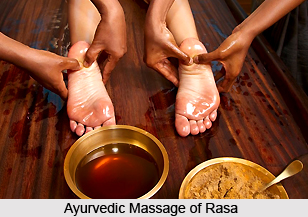
Rasa, Dhatu of Ayurveda
Rasa, the preliminary dhatu of Ayurveda, refers to the matter that is produced after the digestion of food in the human body. Rasa Dhatu provides nour...
Classification of Medicine, Sushruta Samhita
Sushruta divides medicines into 37 classes in his medical text ‘Sushruta Samhita’.
Ayurveda - Traditional Medical System
Ayurveda is an elaborated holistic medical system of India with a rich history of more than 5000 years.

Impact of Meditation
The psychological and physiological effects of meditation have been studied.

Therapeutic Massage
Therapeutic Massage is a therapy to mobilise soft tissues to restore the normal mechanical activities in human body.
Related articles in Ayurveda in India
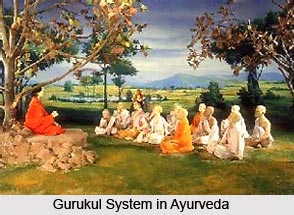
Gurukul System of Ayurveda
Gurukul system of Ayurveda used to teach the students in a way so that they can become an expert physician.
Origin of Ayurveda
With a history of more than five thousand years, Ayurveda is the most ancient Indian medical science
Ashtanga Ayurveda
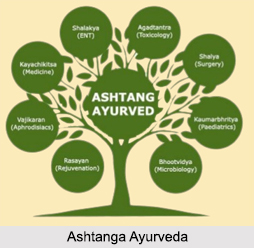
Ashtanga Ayurveda refers to the eight limbs of Ayurveda. Ayurveda was divided by great Indian seers into destine eight branches.