 Tourism in West Sikkim District covers the places of interest of archaeological importance. Snuggled within the lap of the Himalayas, the state of Sikkim is the least peopled one in India. Sikkim is the perfect amalgamation of idyllic, majestic and spectacular beauty. Divided into subdivisions of east, west, north and south, Sikkim hides wonder in each corner.
West Sikkim is a haven for trekkers, owing to its high altitude. This beautiful land, characterized by great tracts of virgin forests and deep river valleys, is home to ancient monasteries. This beautiful land is the hive of leisure tourism activities like history tours and the wildlife safari. Pemayangste Monastery, Sangachoeling Monastery, Darap village, Geyzing, Yuksom, Tashiding Monastery, Khecheolpalri Lake, Dubdi Monastery, Archaeological ruins of Rabdentse, Kanchengjunga National Park, Goecha La, Barsey Rhododendron Sanctuary, Legship, Biksthang, Pelling and Yangtey are the popular hot spots in West Sikkim District.
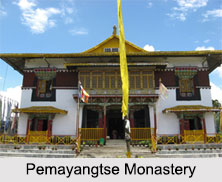
Pemayangtse Monastery
Pemayangtse monastery is considered one of the oldest monasteries of Sikkim. It is situated within 137 km from Gangtok, the capital of Sikkim. Lhatsun Chempo regarded as one of the worthy clergymen, to idolise established the Pemayangtse monastery. The monastery was established with the aim to give it a classy feel, meant only for the chaste monks. A wooden structure is present inside the Pemayangtse Monastery. This structure generates heavenly peace of the Maha Guru. It is however reckoned as the masterpiece created by late Dungzin Rimpoche.
Pelling
Pelling is another picturesque place to visit in West Sikkim District. This magnificent landscape is situated at an elevation of 6,800 ft from sea level. Previously it was a small village. But today it has transformed into a fast growing urban settlement like Gangtok. The focal attracter of Pelling is its natural pictorial landscape and a magnified view of the overwhelming snow-capped Mount Khangchendzonga. Pelling is situated high above the forest-embraced hills.
Archaeological Ruins of Rabdentse
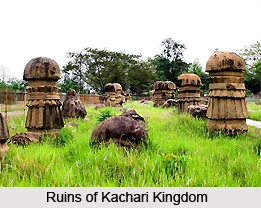
Archaeological Ruins of Rabdentse shows the existence of primitive men in Sikkim. It was 1814, when this site was known as the second capital of Kingdom of Sikkim after Yuksom. The royalty ruled the state from Rabdentse. The ruins have become enshrouded from the main road. The scenic view from the top is awe-inspiring.
Sanga-Choling Monastery
Sangacholing monastery is situated on a crest above Pelling. Sangacholing monastery is also considered one of the oldest monasteries of Sikkim. Sangacholing Monastery was established in 1697 AD. It takes a walk of 40 minutes through the steep hilly slopes.
Khecheopalri Lake
Khecheopalri Lake bears sacred significance to both the Buddhists and Hindus. The lake is covered with rich, dense forest. This lake is locally known as Sho Dzo Sho. The Tourism Department of Sikkim has provided a trekker`s hut to spend a night or two in the amicable environment of the Khecheopalri Lake.
Yuksom
 Yuksom is regarded the first capital city of Sikkim. The historical accounts have cited evidences, proving that the first Chogyal of the Sikkim Empire was consecrated there. The Chogyal, established in 1641 AD was presided by three highly educated lamas. Evidences of the Chogyal are preserved in the form of `stone seats and a footprint of the Head Lama on the stone` at Norbugang Chorten. It is believed that history of Sikkim started from this place. Yuksom is well connected with roads. The Pemayangtse monastery is situated at a distance of 32 kms from Yuksom.
Dubdi Monastery
Dubdi Monastery is situated above the Yuksom on a hilltop. It was formed soon after the `consecration ceremony of the first Chogyal`. Dubdi Monastery is considered the first Monastery established after the first Chogyal.
Tashiding Monastery
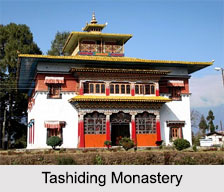
Tashiding Monastery is situated truly on a premier location on the foot hills of Mt Kanchenjunga. It was established on a summit of a heart-shaped hill. According to Buddhist scriptures, Guru Padma Sambhava (Guru Rimpoche) blessed the land of Sikkim with his divine grace in 8th century A.D. Tashiding Monastery eventually was established by Ngadak Sempa Chempo in 18th Century A.D. Ngadak Sempa Chempo is regarded as one of the three lamas who had executed `the consecration ceremony of the first Chogyal`. Tashiding Monastery is far-famed for housing the most holy `chorten`. This holy `Chorten` is known as `Thong-Wa-rang-Dol`. Here Bhumchu Ceremony is observed with gaiety.
Ghezing and Legship
Ghezing and Legship are busy residential and shopping destinations in West Sikkim. The bustling market town of Ghezing is the administration centre and transport hub of western Sikkim. Legship is a gate to western Sikkim. It sits in the deep Rangit Valley, which is located about 14km south to Ghezing. It is an important regional road junction.
Kanchenjunga Biosphere Reserve
Kanchenjunga Biosphere Reserve is a national park situated on the foothills of Mt Kanchenjunga. This national park is home to musk deer, snow leopard, clouded Leopard and Himalayan tahr.
Goecha La
Goecha La is regarded as the highest mountain pass in western Sikkim. This splendid place is a favourite destination for the trekkers. It can be trekked from Yuksom.