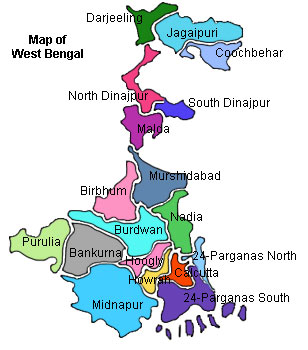
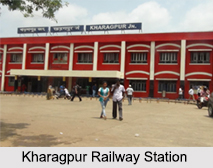
 Kharagpur Railway Station is located in the Kharagpur subdivision of Paschim Medinipur district of West Bengal. Kharagpur Junction Railway Station is administered by the South Eastern Railways. The station is situated at a distance of 5 km from the enormous campus of the indian Institute of Technology, Kharagpur. Kharagpur Junction Railway Station has accomplished the honour of having the third longest platform in the world. From Kharagpur the city of Kolkata is approximately 120 km.
History of Kharagpur Railway Station
Kharagpur Junction was established in 1898-99. Bengal Nagpur Railway"s Kharagpur-Cuttack line was opened on New Year"s Day in 1899. And the opening of the bridge over the Rupnarayan River at Kolaghat, on 19th April 1900, connected Howrah with Kharagpur. Kharagpur was also linked with Sini on the same year. The line was ready in 1898-1899. The Kharagpur-Midnapore branch line was opened to traffic in 1901.
Infrastructure of Kharagpur Railway Station
Kharagpur has the third longest railway platform in the world with a length of 1,072.5 meters after Gorakhpur and Kollam junction of Kerala. Kharagpur boasted of the longest platform in the world for many years till the inauguration of the new platform in the Gorakhpur railway station. Kharagpur also has the Asia`s largest Railway Solid State Interlocking (SSI) system.
Kharagpur Railway Station in Current Days
Today Kharagpur Railway Station has been modernised with computerised reservation facility. The Interactive Voice Response System (IVRS) is also available at the station. Gitanjali Express, Coromandel Express, Puri-New Delhi Express, Dhauli Express, Rajdhani Express and Azad Hind Express run through this station. Suburban railway services to Kolkata are available frequently from Kharagpur Railway Station. Today it is the busiest junction station in South Eastern Railway Zone after Howrah. Hence, it is considered to be the Gateway to South Eastern Railway. It is one of the 50 highest railway reservation centres in India. Kharagpur railway station connects Howrah to Mumbai, New Delhi and Bhubaneshwar to New Delhi. Everyday approximately 275 trains pass through this station. In near future, most of the new trains coming from Balasore side and going towards Adra or Tatanagar will stop at Hijli and bypass Kharagpur. To increase passenger commute between Kharagpur and Hijli, new EMU services have been introduced between these two railway stations.