


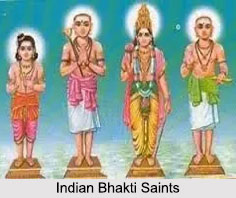
 Indian Bhakti Saints are the teachers who strongly preach the need for tolerance among humans and religions. They belonged to various backgrounds, but mainly from the lower castes. The Bhakti Movement was the outcome of rigidity in religion and the objects of worship. Indian Bhakti Saints are the teachers who strongly preach the need for tolerance among humans and religions. They belonged to various backgrounds, but mainly from the lower castes. The Bhakti Movement was the outcome of rigidity in religion and the objects of worship.
Indian Bhakti Saints largely rejected the hereditary caste system and its emphasis on prescribed ritual, stressing instead the need for morality, purity of heart and an attitude of selfless service. They expressed their sentiments through song, poetry and music, often attracting thousands of followers. They believed in the unity of God, and they regarded true devotion ‘Bhakti’ as means of attaining God; denounced caste system, idol worship and pilgrimages; bought about socio-religious reforms in Hindu society. The following are the popular Saints of Bhakti Movement. They are: Ramanujacharya: Sri Ramanuja Acharya was an Indian philosopher and is recognized as the most important saint of Vaishnavism. His most outstanding contribution is the abolition of distinctions of caste among his followers. Nimbarka: Sri Nimbarka was the embodiment of mercy, piety, love, kindness, liberality and other divine qualities. He did rigorous austerities at Neemgram and had Darshan of Lord Krishna in that place. He is believed to be the incarnation of the Sudarshana Chakra of Lord Vishnu.
 Madhvacharya: Madhvacharya was a great religious reformer and an orthodox commentator on the Brahma Sutras and the 10 Upanishads. He propounded the philosophy of Dvaita or Dualism. He declared that the path to salvation was open to all and was not limited by birth. Madhvacharya: Madhvacharya was a great religious reformer and an orthodox commentator on the Brahma Sutras and the 10 Upanishads. He propounded the philosophy of Dvaita or Dualism. He declared that the path to salvation was open to all and was not limited by birth.
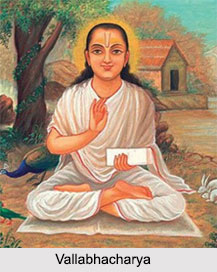
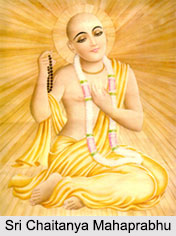
Vallabhacharya (1481-1533): A Telugu Brahmin, he founded the Pushti-Marg (path of nourishment), which affirms the role of grace in reaching salvation. He taught that Sannyasa is not possible in the current age. Ramananda: The leader of the Bhakti movement focusing on the Lord as Rama was Ramananda. He taught that Lord Rama is the supreme Lord, and that salvation could be attained only through love for and devotion to him, and through the repetition of his sacred name. Sri Chaitanya (1486-1534): Founder of Bengali Vaishnavism, Sri Chaitanya Mahaprabhu was an ascetic Hindu monk and social reformer in 16th century Bengal. A great proponent of love and devotion for God, Bhakti yoga, Chaitanya worshiped the Lord in the form of Krishna. Kabir (1440-1518): He is famous for his songs and poems used by Hindus, Sikhs and Muslims alike. His followers are called the Kabir Panthis. He made the most earnest efforts to create a spirit of harmony between Hindus and Muslims. Guru Nanak: Guru Nanak, the first Sikh Guru and founder of the Sikhism, too was a Nirguna Bhakti Saint and social reformer. He was opposed to all distinctions of caste as well as the religious rivalries and rituals. He preached the unity of God and condemned formalism and ritualism of both Islam and Hinduism. Dadu Dayal (1554-1603): Dadu Dayal was a religious reformer, a poet-mystic and spiritual Master of Nirguna Bhakti from Rajasthan. Despite the fact that hailing from the lower rungs of society like Kabir, he was persuasive in making a more prominent effect upon the general public.
 Mira Bai (1547-1614): Possibly the most famous woman saint within Hinduism. She was a Rajasthani princess who considered Krishna her real husband and was consequently persecuted by her own family. Her songs and poems are still recited by Krishna devotees. Mira Bai (1547-1614): Possibly the most famous woman saint within Hinduism. She was a Rajasthani princess who considered Krishna her real husband and was consequently persecuted by her own family. Her songs and poems are still recited by Krishna devotees.
Tulsidas (1511-1637): He wrote the popular version of the Ramayana known as the ‘Rama Charita Manas’ perhaps the most popular book of North India. Tukaram (1608-1649): A saint from Western India who worshipped the famous deity of Vishnu known as Vithala or Vithoba in Pandharpur, Maharashtra. He was part of an important Vaishnava tradition known as Dasa Kuta. |
| |||



Home > Reference > History of India > Medieval History of India > Bhakti Movement > Indian Bhakti Saints
Indian Bhakti Saints
| Indian Bhakti Saints are the preachers who believed to unite with God and disregarded caste. They laid stress on love or devotion as the basis of the relationship with God. |
| ||||||||||||||||||||||||||||

