Indian Renaissance in Nineteenth Century - Informative & researched article on Indian Renaissance in Nineteenth Century
  Indianetzone: Largest Free Encyclopedia of India with thousand of articles History of India


in  
Art & Culture | Entertainment | Health | Reference | Sports | Society | Travel
Forum  | Free E-magazine
History of India : Sources of History of India l Ancient History of India l Medieval History of India l Modern History of India l Indian Historical Dynasties l Indian Battles l Sepoy Mutiny 1857 l Indian Rulers l History of India l Indian Freedom Struggle l Indian Governor- Generals l British Indian Acts l Post Independence India l Iron Age in India
Home > Reference > History of India > Modern History of India > Indian Renaissance > Indian Renaissance in Nineteenth Century
Indian Renaissance in Nineteenth Century
The Renaissance brought change in almost every domain while sowing the seed of modernity in India.

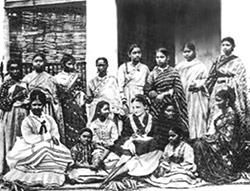
All the reform movements of modern India have advocated the upliftment of women. More or less all of them have succeeded in this attempt. The custom of Sati was declared illegal in 1829. Evils like child marriage have now almost disappeared from the educated classes of Hindu society. Widow remarriage was legalized in 1856. There has been a steady growth of education among women in modern times. Women are now taking active part in political sphere as well.

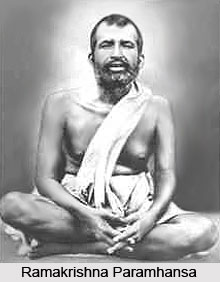
Sustained efforts have been made to improve the condition of the depressed classes, the Scheduled Castes and Scheduled tribes. The Government and many voluntary organizations are imparting free education. Various attempts have also being made to improve their economic condition. All these are the results of the Renaissance, which started with Ram Mohun Roy, sustained by organizations like Brahmo Samaj, Arya Samaj and Ramkrishna Mission and accelerated by the teachings of Swami Dayananda, Vivekananda and Gandhiji.

Increasing contacts with the outside world stimulated deep and creative thought and have inspired Literature and Art with stirring ideals and set up fresh and higher standards. In the path some other helping agents were a revived and finer appreciation of the national culture of past ages, the urge of thorough reformation in all aspects of life and society, and the development of new situations and problems in the country.

The mingling of the old and the new was a characteristic feature of nineteenth century. History is nicely illustrated in the works of Bankim Chandra Chattopadhyaya and Rabindranath Tagore. Tagore was given the Nobel Prize for literature. Prem Chand wrote about the misery of the poor and oppressed in India`s villages. Important developments also took place in the field of art. Abanidranath Tagore and others tried to revive the classical Indian tradition of painting; Nandalal Bose painted scenes from the ancient legends as well as from the daily life of artisans and craftsmen. They were also drawn attention into the struggle for freedom.
(Last Updated on : 22/01/2009)
  More Articles in Indian Renaissance
 
Advent of Indian Renaissance Indian Renaissance in Nineteenth Century Oriental Studies and Indian Renaissance
Muslim Renaissance Bengal Renaissance Ramakrishna Math
Influence of Renaissance on Bengali Paintings Impact of Renaissance on Indian Music Impact of Renaissance on Indian Painting
Impact of Renaissance on Indian Dances Impact of Renaissance on Indian Economy Indian Society During Renaissance
Impact of Renaissance on Bengali Literature    
Recently Updated Articles in History of India
  • Mughal Architecture
    Mughal architecture is a combination of Islamic, Persian, Turkish and Indian architecture. It is a style that was developed under the Mughal dynasty in the sixteenth and seventeenth centuries.
  •  
  • Mansabdari System in Mughal Dynasty
    Akbar introduced the Mansabdari System in the Mughal army which primarily meant the ranking of officers on decimal system.
  •  
     
  • Deccan Policy of Mughal Dynasty
    Deccan Policy of the Mughal dynasty was weak during the reign of Babur and Humayun but after the accession of Akbar on the throne, the political situation changed and the Deccan policy was a success.
  •  
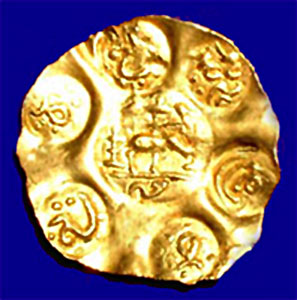
  • Coins of Pandyas
    Coins of Pandyas bear the legend of different Pandya ruler in different times.
  •  
  • Art and Architecture of Mughal Empire
    Art and architecture of Mughal Art offers an aesthetic degree to all art lovers. The subtlety of the finesse and the dazzle of the aura create huge amount of interest among tourist.
  •  
    E-mail this Article | Post a Comment
    RSS Feeds
    Forum
    Forum on History of India

    Free E-magazine
    Subscribe to Free
    E-Magazine on Indian Crafts
     
     
    Indian Renaissance in Nineteenth Century - Informative & researched article on Indian Renaissance in Nineteenth Century
    Sitemap
    Contact Us   |   RSS Feeds
    Copyright © 2008 Jupiter Infomedia Pvt. Ltd. All rights reserved including the right to reproduce the contents in whole or in part in any form or medium without the express written permission of Jupiter Infomedia Pvt. Ltd.