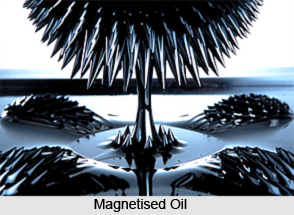
History of Magnetic Therapy deals with the science of the most ancient times. The curiosity of the human race in concern with magnets has been inevitable. Several civilizations have conferred utmost eminence to the use of magnets with the ability to create a difference in our life as well as well being.
The first record of the discovery of a magnet dates back to 600 B.C. It is believed that a boy-shepherd named Magnes, while roving about on Mount Ida was awe-struck with the effects of a lodestone on his iron-capped staff. The word Magnet is said to be derived from that his name. Another theory states that the word "Magnet" is derived from the place Magnesia in Asia Minor, where this stone was discovered in abundance. The early centuries of the Christian era witnessed the emergence of a magnet compass in China for navigation.

Ancient Egyptians referred to "Magnets" as "lodestones", and vividly used them to prolong life and improve vigour. It is held that, Cleopatra wore a polished lodestone on her third eye, with a conviction that it helped maintain her youth and beauty. In 46 AD, the physician Scribonius Largus suggested the use of the electric torpedo fish to cure headaches and gouty arthritis. The ancient Romans also used magnetic therapy to treat eye disease. The French physician Marcel used it to treat headaches, and the Islamic physician Avicenna (980 - 1037) used magnetic treatment to treat depression of the patient. In more recent times, Paracelsus (1493-15410), considered the father of modern medicine, believed that the force found in magnets mainly influenced the life force of the body. The belief underwent several, sturdy manifestations in Europe, Russia, China, Japan and other countries. Scores of civilizations are replete with the incorporation of Magnetic stones in their daily and therapeutic life. The ancient times provide countless references to Magnetic Healing. Several anecdotal accounts in the Bible vouch for a variety of such happenings as miracles.
During the time of
Vedic Civilisation, around 4000 BC, the
Vedas came into being. This set forth assistance on all aspects of life, religion, customs, traditions and cures of diseases through various healing agents. The ancient Indians trusted the healing properties of magnet and therefore, employed it for curing several diseases. Several ancient Vedic scriptures include references to the use of magnets in the treatment of various diseases. They also provide explicit guidelines for the use of north and south poles of magnets, each pole dealing with a certain specific disease.
Similarly,
Atharva Veda, a scholarly treatise which formed the basis for
Ayurveda (also called as science of life), involves a number of mantras in chapters 1 to 4, which provides particulars for the usage of magnets for arresting bleeding in women, sterility, etc. The magnets in
Sanskrit are referred as Ashman or Ashna.

Similarly, many advanced civilizations were also dealt with the exploration and usage of magnets. The Greeks in 800 BC were familiar with the properties of the magnet or the lodestone as it was termed earlier. The Greek scholars like Plato, Homer and Aristotle in their masterly works detail these healing properties out. A famous Swiss alchemist and mystic, Parcelsus profoundly studied the subject of Magnetism. He attributed numerous properties to the magnet and emphasized on the magnetic treatment. He also said that the magnet has certain qualities to cure patients. The magnet attracts all tumours that are in the human system. The magnet, is therefore, highly useful in inflammations, influxes and ulceration, in diseases of intestine and uterus and in internal as well as external diseases.
Parcelus, with his systematic experiments and observations paved way for the modern art of magnetic healing. Therefore he is often and correctly described as the `father of Magnetotherapy`.
The ancients attribute some more qualities to Magnets as:
* The lodestone could draw out path from the body by dilating the vessels.
* They could act as a purgative agent.
* Magnets could help in quickly healing wounds.
* They could also cure several diseases like gout, dropsy and hernia.
The king of Zeilan went upto the extent of demanding that his meat be served only in the lodestone dishes. He staunchly believed that this act maintained his youth and vigour.

One of the most interesting beliefs of ancient times remains that; the magnet has a `soul` as it moved iron. Therefore it was used to detect infidelity in women, who, according to the ancient belief, could not lie comfortably in bed with their husbands when the magnet was placed under their pillows.
The magnet and magnetism were a common application in the life of the early Egyptians. The Egyptian mummies of Pharaoh, who have been the restorers of culture through the ages, possess a strategic arrangement of magnetism that prevents their degeneration and decay. Not only that, a legion of wondrous phenomena has been attributed to the pyramidal dimensions, which are based on certain subtle laws of magnetism.
On further research, it was discovered that even the curd, wines and other foodstuffs capable of perishing, kept in the man-made wooden pyramids made with dimensional accuracy derived from the knowledge of the ancient pyramids, are kept intact for incredibly long periods.
The magnetic harmony of the human body has been studied and incorporated in a very ancient Hindu custom, according to which, a person in his final days, should be tied down to the ground (not on the cot) in the north-south direction-head towards north and feet towards south to induce magnetic parallelism between the earth and the body. This was believed to bring peace, tranquillity, and mitigation of pain and less suffering while leaving the ephemeral world. The custom is even practiced in modern times, though in much rarity.
The ancient work of literature clearly details the nature and quality of magnetism of the earth and other celestial bodies in the universe along with their effects on human beings. The age-old custom of fasting on new moon and full moon days stems from the observation that the lunar effect on human brain on these days when all the martial tumours in the body are greatly attracted by the moon is tremendous. This can lead to severe mental or emotional problems.
Magnetic healing in medieval times
Although the magnet was considered a powerful entity, it had settled into oblivion due to many reasons. The use of the magnet was almost forgotten until the fourteenth century A.D. The period following the fifteenth century saw a variety of constructive discoveries concerning the earth`s magnetism and the inventions of electricity, electromagnetism, electromagnetic inductions, etc.
Renowned scientists such as Michael Faraday (1791-1867), A.M. Ampere (1775-1836), H.C. Oersted (1777-1851) and others made some of the most significant contributions in the fields of electricity and magnetism. These discoveries constituted the base for further utilization of these natural forces in a number of modern electronic gadgets such as loud-speakers, motors, radios, scooters, calculators, computers, etc.
Apart from these, the therapeutic properties of magnets in modern times saw a major milestone in the era of Paracelsus. It was he who announced that the stars and magnets emitted a subtle force, which saturated space and influenced man.
His observations inspired modern scientists to conduct bio magnetic experiments on plants, animals and human beings. Uan Helmont (1577-1664 A.D.) believed that a magnetic fluid radiates from men and may be guided by their will to influence the minds and bodies of others. It was Uan who propounded the doctrine of animal magnetism.
During the eighteenth century A.D., Dr
Hahnemann, the founder of
Homeopathy, and Dr F.A. Mesmer discovered ways to generate various cures by stroking people`s body with magnets. They directed their efforts in constructing systematic use of magnets in the treatment of human ailments and came up with astounding results. The former used magnetic rods in the cure of diseases and concluded after a great deal of experimentation that, a magnetic rod can speedily and permanently cure the severe most disease.
Dr Hahnemann also prepared three homoeopathic medicines by saturating the sugar within milk and alcohol with the omnipotent emanations of the North Pole, South Pole and the entire magnet. He named these medicines as "Magnetui polus arclicus", "Mugnelus polus ousiralis" and "Magnetus polus ambo" respectively, which are brought into use even today by homeopaths the world over.
Magnetic Healing in Modern Times
Although magnetic healing resolved into oblivion due to several reasons, in the past decades, nevertheless, an interest was aroused in the scientific temperament of the modern man as it offered an assurance of cure of some recent diseases like cancer which have defied the conventional modes of treatment.
The modern scientists, physicists, pharmacists, physicians and surgeons planned and set out statistically designed experiments on the biological effects of magnets. But their conclusions only corroborated the observations of the ancient times. Additionally, the experts also formulated these studies into sound and scientific theories of bio magnetism.
Various scientists, specially the ones from USA, USSR, Puerto Rico, Japan and Germany, have published numerous reports, establishing the therapeutic effects of different types of magnets. An extensive research on the effects of magnets on bacteria, glands, etc. has been conducted. The research on the use of magnets on human beings has obtained following conclusions:
* Magnets are found useful for the treatment of heart and other allied conditions.
* Few results are obtained on the control of tumours and
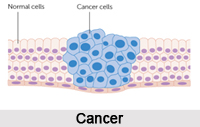
cancers with the help of strong magnetic fields. In fact, many cases of advanced cancer have found to be cured with the use of magnets.
* Magnets also influence innumerable morbid affections.
The Russians have conducted experiments on magnetized water and its application in dissolving the deposits of unwanted salts in radiators and boiler water pipes, and subsequently in dissolving
kidney stones and
gall bladder stones. Also, irrigating the plants with magnetized water produces large-sized tomatoes and brinjals. Similarly, the cows were observed to provide more milk with the aid of magnets.
In Italy, the systematic experiments on clinical effects of magnets of painful afflictions like rheumatism revealed that a magnet was an infallible tool in mitigation of pain and enhancing mobility in patients suffering from crippling diseases.
In India, a number of Magneto-therapists, through systematic and well-experimented records, have proved beyond doubt that the magnet is highly useful in healing painful afflictions like cervical
Spondylosis (degenerative changes in the neck),
sciatica, rheumatism, eczema, urinary disorders, etc.
All the above cases are an irrevocable proof of the possibilities that magnetic healing can offer and a new hope to the patients suffering from grave diseases. Besides, superior results have been obtained in the treatment of
leucoderma, dysmenorrhoea (painful menses in women), blood pressure,
asthma and rheumatoid
arthritis. Even under incurable conditions called enclosing Spondylosis (in which the entire spine is fused and stiff like a wooden plank) the magnet helps in reducing pain and enhancing the mobility of the spine.
First Treatise on Magnetochemistry in India

First treatise on Magneto chemistry in India was written in English by Dr. S.S. Bhatnagar and Dr. K.N. Mathur, in the year 1935. This dealt with the physical principles and the application of Magneto chemistry. In this particular subject, they studied mainly on oxidation.
This particular book on Magneto chemistry provides an excellent summary of the work on Magneto chemistry. The notable contributions of Dr. S.S. Bhatnagar, M. Sc. (
Punjab), D. Sc. (London) in the field of Magneto chemistry are also discussed here. For this work on Magneto chemistry, he won an award of rupees one lakh which he later donated to a University. This work earned him the title `knight` in 1941 and was awarded `
Padma Vibhushana` in 1954. He expired on the 1st January, 1955. Thereafter, many further experiments in Isomagnetics and other aspects of Magnetotherapy or
Magnetic Therapy are going on in India.
This book on Magneto chemistry inspired the modern time people to use this ancient knowledge about the therapeutic quality of the magnet. Thus, the magnet treatment has been revived during the last 200 years and is being developed now with the hope of increasing the utility of magnet as a healer of human sufferings.

 Magnetic Therapy is a science as well as an art, postulating knowledge of human organisms and the expertise to cure through the appropriate application of Magnets. This alternative branch of medicine, also known as "Magnet Therapy", "Bio Magnet Therapy" or "Magno Therapy", is evidently, far-reaching in terms of possibilities in physical as well as mental disorder treatment through exposure to the magnetic fields. Magnetic therapy utilizes the natural energy of magnetism that is important to human existence and overall health.
 Advantages of Magnetic Therapy or `Magnetotherapy` are innumerable and known to have benefited people suffering from various ailments. Magnetotherapy does not require any other medicine when it is employed to treat other people. Magnetotherapy is a natural treatment, based on natural laws and works in conformity with the nature and is an aid to natural processes of healing. Therefore, it has no harmful effects, which could endanger the life of a patient. The Magnetotherapy can be taken alone or along with any other treatment. It does not hamper any medical treatment but helps to accelerate the action of all medicines, which have the effect of restoring the ailing body to its normal state in a natural way. Moreover, this medical treatment is inexpensive and easy to apply on the different body parts.

 In general practice of Magnetotherapy or Magnet Therapy, common ailments such as pain and swelling in one part or simple
  Interrogation of the Patient by Magnet Therapy
 Duration of Magnet Therapy
 The magneto therapists have found that various acupuncture points can be utilised for Magnetotherapy or Magnetic Therapy. It can be then used for treatment of various internal ailments. In India, several physicians have now started practicing it.
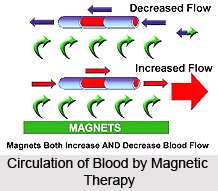
 Studies in bio-magnetism reveal that a maximum drop in blood cholesterol from 222 milligrams to 141 milligrams occurred as a result of magnetic application. When the magnet was applied for a few weeks in another set of clinical trials, a positive effect on reduction of the blood pressure to the extent of 20 to 30 millimetres of mercury was observed. Many marvellous effects of magnetic treatment on the instant lowering of
  Magnetic Therapy is a pseudoscientific alternative medicine practice involving the use of static magnetic fields. Practitioners claim that subjecting certain parts of the body to magneto static fields produced by permanent magnets has beneficial health effects. According to the observation of the Swiss alchemist and physician P.A. Paracelsus, the magnet is highly useful in inflammations. This observation has been corroborated, through experiments and clinical findings by a number of bio-magnetic scientists around the world.
 Magnetic Therapy for Skin and Hair Pigmentation is one of the most conventional treatments in India and also in abroad. Skin and hair, like any other organ in the body, happen to remain at the receiving end of magnetic properties. Similar to their effects on glands, magnets exercise a corrective effect on the function of the skin and hair.