
 Malayalam literature over the centuries has developed a tradition which, even while rooted in the locality, is truly universal in taste. It is remarkably free from the provincialisms and parochial prejudices that have bedevilled the literature of certain other areas. To its basic Dravidian stock have been added elements borrowed or adopted from non-Dravidian literatures such as Sanskrit, Arabic, French, Portuguese and English. The earliest of these associations was inevitably with Tamil language. Sanskrit, however, accounts for the largest of the foreign influences, followed closely in recent times by English. This broad based cosmopolitanism has indeed become a distinctive feature of Malayalam literature.
Malayalam Literature
Malayalam Literature was profoundly influenced by the ancient language scripts, divided into distinct phases. Malayalam Literature comprises various genres ranging from poetry to various types of songs and compositions.
Introduction
Malayalam literature over the centuries has developed a tradition which, even while rooted in the locality, is truly universal in taste. It is remarkably free from the provincialisms and parochial prejudices that have bedevilled the literature of certain other areas. To its basic Dravidian stock have been added elements borrowed or adopted from non-Dravidian literatures such as Sanskrit, Arabic, French, Portuguese and English. The earliest of these associations was inevitably with Tamil language. Sanskrit, however, accounts for the largest of the foreign influences, followed closely in recent times by English. This broad based cosmopolitanism has indeed become a distinctive feature of Malayalam literature.History of Malayalam Literature
According to historical evidences, Malayalam literature is at least a thousand years old. A comprehensive literary history of Kerala should take into account the works produced in the region not only in Malayalam language, but also in Tamil, beginning with the fourth century B.C. and continuing to the end of the first millennium A.D. The early period of Malayalam literature comprised mainly three phases namely Pacha-Malayalam stream, Tamil stream and Sanskrit stream.
History of Malayalam literature is generally classified and separated into three phases. The first phase is counted as the phase of retreating Tamil ascendancy and forward-moving Sanskrit influence. Elitist poets of the age were hugely inquisitive to introduce Sanskrit literary forms like Champu and Sandesa Kavya and Sanskrit oriented linguistic and stylistic introductions and initiations. On one hand, an uncanny recoiling within erotic themes and on the other, a magnification of the resources of language and style could be witnessed. The succeeding period witnessed the birth of sage-poets, for whom poetry was an exceedingly solemn enterprise with a high-ceilinged moral rationale. These men had amalgamated and integrated the formal accomplishments of the former age of Malayalam literature and veered towards the Indian Puranas for dignified and righteous themes. Malayalam poetry reached its zenith of grandeur during this phase, manifestly influenced by Bhakti renaissance and united with the mainstream of national literature.
The third phase of the Malayalam literature is marked by the incredible bang of liberal-democratic spirit. It arrived in the consequence of the first encounter with the west and distribution and propagation of modern education. It can also be observed that modern and innovative radical ideologies started to wield influence upon writers in this phase. The origin and development of the art of prose, circularisation of journalism, birth of radically new forms such as fiction, drama, lyric and literary criticism, could be witnessed gradually. In the present decades of unmatched curiosity, the visualisation broadens and creativity seeks novel pastures. Prose takes preference over verse and becomes the medium for both imaginative creation and intellectual exploration.
The early period of Malayalam literature (precisely, prior to the 15th century) consisted of - Pacha-Malayalam stream, by which the literary expression in Malayalam language without any admixture is intended (Bhadrakali Pattu and Pulluvan Pattu), Tamil stream (Malayalam with liberated utilisation of Tamil words (Kannassa Ramayanam and Bharatamala) and, Sanskrit stream (Sanskritised Malayalam). The first stream consists of ballads and folk songs, which are knotty and complicated to date. Songs associated with religious customs and rituals such as Bhadrakali Pattu, Thiyattupattu, Sastrakali, Thottampattu and in the later point of time, Margamkalipattu are substantial varieties. Then there also existed the umpteen assorted festive songs like Onappattu and Krishipattu and ballads of North Malabar and South Malabar. In the Tamil stream, the most outstanding work is considered as Ramacharitham (12th century A.D.) composed in a language, which is an admixture of Tamil and Malayalam. This poem is followed by the works of Niranam poets, Kannasa Ramayanam, Bhagavad Gita and Bharatamala. The Niranam poets (Kannassan group) within Malayalam literature were nifty and grand scholars and represented literary luminescence.
Due to the incredible endeavours of the Namboodiris, the powerful feudal aristocrats of Kerala, Aryan Sanskrit had almost replaced Malayalam in its own land. The Mani-pravalam or `ruby and coral style` was the child of such a pile-up, a style which meant employing as many Sanskrit words as was possible. The linguistic result of the two dominions, however, had been a well-chosen one; the orchestral resources of Malayalam literature have been immeasurably enriched. But while Tamil and Sanskrit took turns in destroying their authority, a third kind of Malayalam had evolved and survived - the `pure Malayalam`. This was the folk stream of lullabies, wedding songs and requiems, which flowed through the centuries and became a crucial source of Malayalam literature later.
History of Malayalam literature is generally classified and separated into three phases. The first phase is counted as the phase of retreating Tamil ascendancy and forward-moving Sanskrit influence. Elitist poets of the age were hugely inquisitive to introduce Sanskrit literary forms like Champu and Sandesa Kavya and Sanskrit oriented linguistic and stylistic introductions and initiations. On one hand, an uncanny recoiling within erotic themes and on the other, a magnification of the resources of language and style could be witnessed. The succeeding period witnessed the birth of sage-poets, for whom poetry was an exceedingly solemn enterprise with a high-ceilinged moral rationale. These men had amalgamated and integrated the formal accomplishments of the former age of Malayalam literature and veered towards the Indian Puranas for dignified and righteous themes. Malayalam poetry reached its zenith of grandeur during this phase, manifestly influenced by Bhakti renaissance and united with the mainstream of national literature.
The third phase of the Malayalam literature is marked by the incredible bang of liberal-democratic spirit. It arrived in the consequence of the first encounter with the west and distribution and propagation of modern education. It can also be observed that modern and innovative radical ideologies started to wield influence upon writers in this phase. The origin and development of the art of prose, circularisation of journalism, birth of radically new forms such as fiction, drama, lyric and literary criticism, could be witnessed gradually. In the present decades of unmatched curiosity, the visualisation broadens and creativity seeks novel pastures. Prose takes preference over verse and becomes the medium for both imaginative creation and intellectual exploration.
The early period of Malayalam literature (precisely, prior to the 15th century) consisted of - Pacha-Malayalam stream, by which the literary expression in Malayalam language without any admixture is intended (Bhadrakali Pattu and Pulluvan Pattu), Tamil stream (Malayalam with liberated utilisation of Tamil words (Kannassa Ramayanam and Bharatamala) and, Sanskrit stream (Sanskritised Malayalam). The first stream consists of ballads and folk songs, which are knotty and complicated to date. Songs associated with religious customs and rituals such as Bhadrakali Pattu, Thiyattupattu, Sastrakali, Thottampattu and in the later point of time, Margamkalipattu are substantial varieties. Then there also existed the umpteen assorted festive songs like Onappattu and Krishipattu and ballads of North Malabar and South Malabar. In the Tamil stream, the most outstanding work is considered as Ramacharitham (12th century A.D.) composed in a language, which is an admixture of Tamil and Malayalam. This poem is followed by the works of Niranam poets, Kannasa Ramayanam, Bhagavad Gita and Bharatamala. The Niranam poets (Kannassan group) within Malayalam literature were nifty and grand scholars and represented literary luminescence.
Due to the incredible endeavours of the Namboodiris, the powerful feudal aristocrats of Kerala, Aryan Sanskrit had almost replaced Malayalam in its own land. The Mani-pravalam or `ruby and coral style` was the child of such a pile-up, a style which meant employing as many Sanskrit words as was possible. The linguistic result of the two dominions, however, had been a well-chosen one; the orchestral resources of Malayalam literature have been immeasurably enriched. But while Tamil and Sanskrit took turns in destroying their authority, a third kind of Malayalam had evolved and survived - the `pure Malayalam`. This was the folk stream of lullabies, wedding songs and requiems, which flowed through the centuries and became a crucial source of Malayalam literature later.
Influences on Malayalam Literature
The three streams (Pacha-Malayalam stream, Tamil stream and Sanskrit stream) were influencing each other in a complementary manner. Even Sanskrit language and literature had an overriding and forever influence on Malayalam literature at large. Lilatilakam is the earliest recorded book, dealing with particular aspects of Malayalam grammar, dedicating most of its space to the grammar and rhetoric of Manipravala compositions. Such compositions fall under two principal literary forms, namely - Sandesha Kavyas and Champus. Amongst the many Sandesha (message) poems in Malayalam literature, the most outstanding is Unnunili Sandesam, whose authorship however remains unknown.
Development of Novel in Malayalam Literature
 Development of novel in Malayalam literature was made possible by the rise of a sufficiently independent class of readers and writers. Appu Nedungadi`s `Kundalatha` (1887) is arguably the first original novel in Malayalam. However, the first significant novel in Malayalam literature is Chandu Menon`s `Indulekha` (1889). The English lineage of the novel is acknowledged in the novel`s subtitle: English novel Matiriyilulla Oru Katha (A Story in the Manner of the English Novel). Chandu Menon has written that he initially meant to translate Benjamin Disraeli`s `Henrietta Temple` (1836) into Malayalam, but, having struggled with the subtleties of an alien culture, he abandoned the project in favor of writing one on his own, depicting a familiar story. The fact that Chandu Menon`s novel deals with the decline of the feudal, Brahminical culture in Kerala also explains the rise of the novel form in Malayalam. This is because one of the necessary pre-conditions for the flourishing of the novel genre is the emergence of an educated middle class. Menon`s Indulekha dramatizes the resistance of a progressive woman named Indulekha, who is being pressured into marrying the lecherous Brahmin Suri Namboothiri, who represents the corruption of feudalism, its caste oppression, and polygamy. While feudalism controlled art and kept it limited to self-serving ritual forms, caste prohibited literary production because education itself was prohibited to the lower castes. The Brahmins maintained a belief that the untouchables would pollute the sacred language, Sanskrit. The gradual breakdown of such structures of oppression opened up the culture and made the rise of the novel possible. Chandu Menon`s heroine persists in her educated belief (she is an ardent student of the English language) and eventually weds her lover, Madhavan, in the process defeating the Brahmin, who is shown as an ineffective oppressor. Many of the social evils depicted in the novel have disappeared in independent India, partly due to the forceful representation of these problems in new literary forms.
Chandu Menon`s Indulekha set the tone for the future development of the novel in Malayalam. Novelists now began debating social issues through their elaborate probing into the individual experience of characters who were drawn from contemporary society. This literary trend had shown its first signs in Malayalam as early as during the eighteenth century (as it did in Europe), when the poet Kunchan Nambiar satirized society and its mannerisms and inequities. Had he written a prose narrative, it would have been called it a novel. In the absence of the print culture, prose fiction had to wait until the final years of the nineteenth century.
 C. V. Raman Pillai was the second major novelist to emerge in Malayalam literature. His Walter Scott-inspired historical novels about the Travancore dynasty, Marthanda Varma (1891) and Dharmaraja (1911), made up for the late blooming of the genre. He produced grand historical romances about the different Travancore kings and war heroes who stood up to British imperialism. In his Dharmaraja, actually a sequel to Marthanda Varma, C. V. Raman Pillai follows up on the historical events that ended with the execution of a clan of King Marthanda Varma`s enemies.
In Dharmaraja, two descendants from the clan return disguised as wandering monks seeking revenge at the new king and to take over the throne of Travancore, but the conspiracy is spoiled by the king`s lieutenant, Kesava Pillai, who himself becomes the central character in the third part of the saga, Rama Raja Bahadur. The historical context is that of the various annexations and incursions of Tipu Sultan into the kingdom and the persistence of ethnic dissent, which leads Travancore into accepting the hegemony of the British. Very much in the manner of Walter Scott`s romances, C. V. Raman Pillai also creates an elaborate human drama grounded in history, yet full of realistic characters.
Following in the tradition of C. V. Raman Pillai, several historical novels were written. Pallath Raman`s `Amrita Pulinam` and Appan Thampuran`s `Bhoota Rayar` and Bhaskara Menon (the first detective novel) deserve mention. Sardar K. M. Panikkar`s `Paranki Padayali` (The Portuguese Soldier), `Dhumakethuvinte Udayam` (The Comet of 111 Omen), and `Kerala Simham` (The Lion of Kerala) are also important works of lower sensibility in presenting Kerala`s encounter with the colonizers and imperialists. The range and popularity of the early novels helped the construction of a culture of the novel in Malayalam literature.
C.V.Raman Pillai`s first satirical novel, `Premamrutam`, led to the generation of yet another series of limitations. During this time, translations of novels from world literature began to appear, further enhancing the credibility of the genre. Besides Nalappat`s classic translation of `Les Miserables`, several other translations of John Bunyan, Maxim Gorky, Thomas Hardy, Dostoevsky, Tolstoy, and Rabindranath Tagore elevated the position of the novel in Malayalam.
The resurgence of the novels as an important literary genre was the result of the various political transformations that were taking place as a reaction to Western Humanist tradition, increasingly drawing its energy from Marxist philosophy and aesthetics. By the 1930s, a whole new school of writers, known as progressive writers, had come into existence. Three young critics, Kesari Balakrishna Pillai, M. P. Paul, and Joseph Muntasseri, became the theorists of the school. Having understood the great potential of realistic fiction, these critics theorized about the new role of Malayalam literature in an era of Western literary and cultural paradigms.
Late Romantics in Malayalam Literature
Late Romantics in Malayalam literature were a group of extreme idealists and dreamers. They seemed to be obsessed with death and the awareness of the brevity and futility of life. Thus they were not merely a group of immoral aesthetics creating art for art`s sake. Among the Romantic poets who followed in the footsteps of the Great Trio of Malayalam literature, the most important figure was Nalappat Narayana Menon (1887-1955), but his poetic works were limited. From his earlier phase of poetic works, he went on to shift his attention to criticism, psychology, and ancient Indian philosophy. He also published a number of translations from European writers. His best-known poetic work, Kannunirthulli (Teardrop), is an elegy on the death of his wife. Written in a terse, lucid style, the poem is still popular, as it possesses a rare nostalgic intensity and a new brand of metaphysical reflection. For a literature that thrived on convincing invocations of fatalism, Nalappat`s poetry opened up a new way of looking at the experience of suffering.
 Changanpuzha (1914-48) and Idappally (1909-36) are two younger late Romantic poets of equal importance who stand out in the field of Malayalam literature. Ramanan, the former poet`s Lycidas-like pastoral elegy about the latter`s suicide at a young age, continues to produce generations of younger poets who freely demonstrate their high idealism and passion of romantic suffering. Though Changanpuzha himself died at the age of 34, he left behind a large volume of intensely lyrical, romantic poetry. His Vazhakkula (A Stalk of Plantains) is a small poetic gem. The poet narrates the story of an untouchable tenant who nurtures a plantain tree in his backyard. Their father`s work enables the children to dream about the sweet nourishment the tree will render them when the fruit is ripe. But the landlord arrives. He claims the fruit. The fruit of the poor man`s labors is snatched away because the rich landlord claimed ownership on the patch of land. In many ways, Changanpuzha`s Vazhakkula exemplifies the core of Malayalam Romanticism, which begins with the Great Trio and ends with the late Romantics. It is a profound sorrow about the human failure in acknowledging the dignity of all, even though all individuals must face the certainty of death. This poetic knowledge emboldens the poet to speak for a revolution of the heart.
Romantic poetry weakened with the death of Changanpuzha, whom Vallathol outlived by a whole decade. Romanticism in Malayalam contributed greatly toward developing a native poetic voice that is modern and at the same time does not imitate the Western models and styles. Post Romantic and late Romantic poets, in general, sought to strike a truly Malayalam note in their poetry. G. Sankara Kurup was one among the dozens of poets who did hit the right note. Writing in the 1950s and 1960s, Sankara Kurup attained a voice independent of the one set by Europeans. Kurup`s collection of symbolist lyrics, Odakkuzhal (Bamboo Flute, 1950), won him the first Jnanpith Award in 1965, India`s top literary honor. Inspired more by Rabindranath Tagore than Wordsworth, G. Sankara Kurup played an important role as a poet of the Indian Independence movement, and he championed a poetry of humanism. He is probably the only poet of Kerala who is known as a bard of science, for he refers to the advancements in science in his meditations of the human potential, but his approach has to be understood as the beginnings of a postmodern sensibility, and the best example of this trend is his famous narrative poem "The Master Carpenter," in which he uses a Kerala legend about a master carpenter`s envy for his son, who excels in the father`s art. To give a post-modern spin to the Western notion of the oedipal story, the poet offers a vivid character study of a father who kills his rival in art, his own son.
The legacy of the poets of the first half of the twentieth century such as Kunjikuttan Thampuran, Rajaraja Varma, Kattakkayam, K. V. Simon, the two Naduvath poets Oravankara and Kundoor, and K. C. Kesava Pillai was enhanced by the poets of the post Romantic period. Among the large number of the post-Romantics who have made significant contributions are Kunjiraman Nair, Balamani Amma, Edassery, Mary Benigna, Mary John Koothattukulam, Palai Narayanan Nair, Vennikulam, Vayalar Rama Varma, Mathan Tharakan, Vailoppilli, Krishna Warrier, M. P. Appan, Nalankal Krishna Pillai, G. Kumara Pillai, O.N.V. Kurup, P. Bhaskaran, Kadavadu Kuttikrishnan, K. V. Ramakrishnan, Sugatha Kumari, and Yusuf Ali Kecheri. It is interesting that Romantics like O.N.V. Kurup (Ujjaini, 1995), Sugatha Kumari (Ambalamani, 1993), and Naiv Madhusudhan (Naranath Bhranthan, 1995) are best sellers.
Changanpuzha (1914-48) and Idappally (1909-36) are two younger late Romantic poets of equal importance who stand out in the field of Malayalam literature. Ramanan, the former poet`s Lycidas-like pastoral elegy about the latter`s suicide at a young age, continues to produce generations of younger poets who freely demonstrate their high idealism and passion of romantic suffering. Though Changanpuzha himself died at the age of 34, he left behind a large volume of intensely lyrical, romantic poetry. His Vazhakkula (A Stalk of Plantains) is a small poetic gem. The poet narrates the story of an untouchable tenant who nurtures a plantain tree in his backyard. Their father`s work enables the children to dream about the sweet nourishment the tree will render them when the fruit is ripe. But the landlord arrives. He claims the fruit. The fruit of the poor man`s labors is snatched away because the rich landlord claimed ownership on the patch of land. In many ways, Changanpuzha`s Vazhakkula exemplifies the core of Malayalam Romanticism, which begins with the Great Trio and ends with the late Romantics. It is a profound sorrow about the human failure in acknowledging the dignity of all, even though all individuals must face the certainty of death. This poetic knowledge emboldens the poet to speak for a revolution of the heart.
Romantic poetry weakened with the death of Changanpuzha, whom Vallathol outlived by a whole decade. Romanticism in Malayalam contributed greatly toward developing a native poetic voice that is modern and at the same time does not imitate the Western models and styles. Post Romantic and late Romantic poets, in general, sought to strike a truly Malayalam note in their poetry. G. Sankara Kurup was one among the dozens of poets who did hit the right note. Writing in the 1950s and 1960s, Sankara Kurup attained a voice independent of the one set by Europeans. Kurup`s collection of symbolist lyrics, Odakkuzhal (Bamboo Flute, 1950), won him the first Jnanpith Award in 1965, India`s top literary honor. Inspired more by Rabindranath Tagore than Wordsworth, G. Sankara Kurup played an important role as a poet of the Indian Independence movement, and he championed a poetry of humanism. He is probably the only poet of Kerala who is known as a bard of science, for he refers to the advancements in science in his meditations of the human potential, but his approach has to be understood as the beginnings of a postmodern sensibility, and the best example of this trend is his famous narrative poem "The Master Carpenter," in which he uses a Kerala legend about a master carpenter`s envy for his son, who excels in the father`s art. To give a post-modern spin to the Western notion of the oedipal story, the poet offers a vivid character study of a father who kills his rival in art, his own son.
The legacy of the poets of the first half of the twentieth century such as Kunjikuttan Thampuran, Rajaraja Varma, Kattakkayam, K. V. Simon, the two Naduvath poets Oravankara and Kundoor, and K. C. Kesava Pillai was enhanced by the poets of the post Romantic period. Among the large number of the post-Romantics who have made significant contributions are Kunjiraman Nair, Balamani Amma, Edassery, Mary Benigna, Mary John Koothattukulam, Palai Narayanan Nair, Vennikulam, Vayalar Rama Varma, Mathan Tharakan, Vailoppilli, Krishna Warrier, M. P. Appan, Nalankal Krishna Pillai, G. Kumara Pillai, O.N.V. Kurup, P. Bhaskaran, Kadavadu Kuttikrishnan, K. V. Ramakrishnan, Sugatha Kumari, and Yusuf Ali Kecheri. It is interesting that Romantics like O.N.V. Kurup (Ujjaini, 1995), Sugatha Kumari (Ambalamani, 1993), and Naiv Madhusudhan (Naranath Bhranthan, 1995) are best sellers.
Post Modernism in Malayalam Literature
Post Modernism in Malayalam literature brought Malayalam literature onto the world-stage. As varied as their backgrounds and contributions, some of the late Romantics continued the Vallathol school of poetry; conservative and lyrical in style, yet progressive in terms of the poetic vision. Thus their poems were region-specific and not easily translatable. Some of their work seemed like products of a region that was too distant from the larger world. The postmodern poets and fiction writers connected Malayalam literature to a world larger than Kerala.
Post-modernism in the West is primarily an engagement with form, but in Malayalam, besides its subversion of form, novelists and poets appear to be reinstating some of the irrationalities and beliefs that modernism worked so hard to get rid of. In many ways, this trend is an extension of social post-modernity. The persistence of caste consciousness, the puzzling co-existence of tribalism and individualism, the rise of consumerism and liberalization of capitalist enterprise, the rise of religious fundamentalism, the decline of the Left, and various anxieties about the future of modernity and nationality (all these are seen from the region, from Kerala`s peripheral position) are factors that are yet to be played out fully. However, the immediate course for post-modernist writing has been the habitualization of modern literary forms (socialist realism). Among the more profound cultural reasons we can include the general breakdown of idealism, the excesses of political organizations (Marxist Party, the Naxalites), and the rise of communal and fascist organizations.
With the death of Sankara Kurup, Idassery, and Kunjiraman Nair, what was known initially as a strange generation of "ultra-moderns" came to take Malayalam poetry in a new direction. They were actually the post-moderns, and their landmark publication was Ayyappa Paniker`s long poem Kuruskhetra (1961). With its echoes of `The Waste Land` and The Bhagavad Gita, this long poem gathers together varied strands of Indian post-modernity. The East and the West merge in this era of late capitalism; poverty lingers; revolution has failed; no certainties are left to offer the people solace, not even the old tribal rhythms, because modernity has disturbed them. Paniker`s poem voices the sense of guilt and terror an individual has to bear with living in an unbounded historical moment in which, according to Paniker, the World Bank becomes the custodian of truth.
 In spite of the wide difference in terms of their age, the post-modernist poets like Kadammanitta Ramakrishnan, M. Govindan, A. Ayyappan, O. V. Usha, Satchidanandan, Balachandran Chullikkad, Chemmanam Chacko, Cherian K. Cherian, N. N. Kakkad, Madhavan Ayyppath, K. G. Sankara Pillai, Vinayachandran, and three dozen other poets have created a sustained poetic culture in Kerala. Some of these poets have also brought poetry into the public culture through street performances and campus readings, ushering in a new golden age of poetry.
The category postmodernists encompass a large number of poets, novelists, short story writers, critics, and historians. Among the most significant fiction writers who are making lasting contributions are Madhavikutty (Manasi), Anand (Alkoottam, Marana Certificate, Marubhmikal Vndavunnathu Engane), Sethu (Pandava Puram), Punathil Kunjabdulla (Smaraka Shilakal, Marunnu), Kakanadan (Ushna Mekhala, Parankimala, Aru-deyo Oru Nagaram), M. Mukundan (Mayyazhippuzhayude Thirangalil, Elokam Athil Orun Manushyari), Padmarajan (Nakshatrangale Kaval), M. P. Narayana Pillai (Parinamam), V. K. N. (Pithamahan and Payyan Kathakal), C. V. Balakrishnan (Ayusinte Pusthakam), Gracy (Padiyirangippoya Parvathi), Sarah Joseph (Papathara), U. A. Khader (Khuraissikoottam), and K. L. Mohana Varma (Nakshatrangalu.de Thadavukari). A list of important emerging writers to watch for in the years to come includes Nalini Bakal, Unnikrishnan Thiruvazhyodu, Madambu Kunhikuttan, K. B. Sridevi, M. D. Ratnamma, Sarah Thomas, T. V. Kochubava, Harikumar, N. S. Madhavan, V. G. Maramuttam, U. K. Kumaran, Jayanarayanan, C. V. Sreeraman, Ipe Paramel, P. T. Rajalakshmi, Thomas Joseph, K. P. Nirmal Kumar, and Joseph Vytilla.
Thus post-modernism in Malayalam literature did the immense work of bringing Malayalam literature onto the world stage. Works that were initially regionalized now got propelled into wider regions thus earning it a bigger audience and greater acceptability.
Post-modernism in the West is primarily an engagement with form, but in Malayalam, besides its subversion of form, novelists and poets appear to be reinstating some of the irrationalities and beliefs that modernism worked so hard to get rid of. In many ways, this trend is an extension of social post-modernity. The persistence of caste consciousness, the puzzling co-existence of tribalism and individualism, the rise of consumerism and liberalization of capitalist enterprise, the rise of religious fundamentalism, the decline of the Left, and various anxieties about the future of modernity and nationality (all these are seen from the region, from Kerala`s peripheral position) are factors that are yet to be played out fully. However, the immediate course for post-modernist writing has been the habitualization of modern literary forms (socialist realism). Among the more profound cultural reasons we can include the general breakdown of idealism, the excesses of political organizations (Marxist Party, the Naxalites), and the rise of communal and fascist organizations.
With the death of Sankara Kurup, Idassery, and Kunjiraman Nair, what was known initially as a strange generation of "ultra-moderns" came to take Malayalam poetry in a new direction. They were actually the post-moderns, and their landmark publication was Ayyappa Paniker`s long poem Kuruskhetra (1961). With its echoes of `The Waste Land` and The Bhagavad Gita, this long poem gathers together varied strands of Indian post-modernity. The East and the West merge in this era of late capitalism; poverty lingers; revolution has failed; no certainties are left to offer the people solace, not even the old tribal rhythms, because modernity has disturbed them. Paniker`s poem voices the sense of guilt and terror an individual has to bear with living in an unbounded historical moment in which, according to Paniker, the World Bank becomes the custodian of truth.
In spite of the wide difference in terms of their age, the post-modernist poets like Kadammanitta Ramakrishnan, M. Govindan, A. Ayyappan, O. V. Usha, Satchidanandan, Balachandran Chullikkad, Chemmanam Chacko, Cherian K. Cherian, N. N. Kakkad, Madhavan Ayyppath, K. G. Sankara Pillai, Vinayachandran, and three dozen other poets have created a sustained poetic culture in Kerala. Some of these poets have also brought poetry into the public culture through street performances and campus readings, ushering in a new golden age of poetry.
The category postmodernists encompass a large number of poets, novelists, short story writers, critics, and historians. Among the most significant fiction writers who are making lasting contributions are Madhavikutty (Manasi), Anand (Alkoottam, Marana Certificate, Marubhmikal Vndavunnathu Engane), Sethu (Pandava Puram), Punathil Kunjabdulla (Smaraka Shilakal, Marunnu), Kakanadan (Ushna Mekhala, Parankimala, Aru-deyo Oru Nagaram), M. Mukundan (Mayyazhippuzhayude Thirangalil, Elokam Athil Orun Manushyari), Padmarajan (Nakshatrangale Kaval), M. P. Narayana Pillai (Parinamam), V. K. N. (Pithamahan and Payyan Kathakal), C. V. Balakrishnan (Ayusinte Pusthakam), Gracy (Padiyirangippoya Parvathi), Sarah Joseph (Papathara), U. A. Khader (Khuraissikoottam), and K. L. Mohana Varma (Nakshatrangalu.de Thadavukari). A list of important emerging writers to watch for in the years to come includes Nalini Bakal, Unnikrishnan Thiruvazhyodu, Madambu Kunhikuttan, K. B. Sridevi, M. D. Ratnamma, Sarah Thomas, T. V. Kochubava, Harikumar, N. S. Madhavan, V. G. Maramuttam, U. K. Kumaran, Jayanarayanan, C. V. Sreeraman, Ipe Paramel, P. T. Rajalakshmi, Thomas Joseph, K. P. Nirmal Kumar, and Joseph Vytilla.
Thus post-modernism in Malayalam literature did the immense work of bringing Malayalam literature onto the world stage. Works that were initially regionalized now got propelled into wider regions thus earning it a bigger audience and greater acceptability.
Recently updated articles in Indian Literature
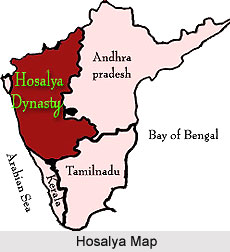
Gadyakarnamrita
Gadyakarnamrita is a 13th-century Sanskrit literary work written mainly in prose. It describes the ninety-day battle at Srirangam between the Hoysala...
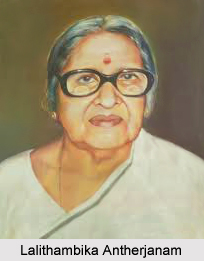
Women Writers in Malayalam Literature
Women writers in Malayalam literature have worked incessantly to make a place for their literary works. In the earlier periods, they were completely o...
Comrade Kirillov, Novel by Raja Rao
Comrade Kirillov, a distinctive creation of Raja Rao, is presented as a brief yet incisive novelette that offers an ironic portrayal of the self-contr...
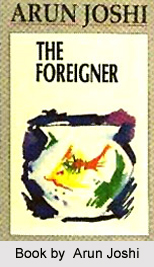
The Foreigner, Novel by Arun Joshi
“The Foreigner” is a book authored by Arun Joshi and published by Vision. It is an illustrious creation in the entire career of Arun Joshi, the famous...
Short Story in Telugu Literature
Short Story in twentieth century Telugu Literature was extremely popular and growing in and developing in a major way. Their popularity was greatly fa...
Related articles in Indian Literature
Mythological Themes in Indian Literature
Mythological themes in Indian literature have been integral to every ancient and contemporary writer and their path to f
Literature During Gupta Age
It is during the Gupta Age literature in the form of poetry, epos and drama gained a colossal importance.
Literature of Aravidu Dynasty
Sanskrit and Telugu were the popular literary medium of communication during Aravidu dynasty.
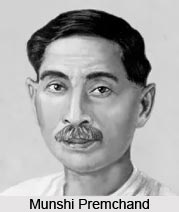
Munshi Premchand
Munshi Premchand was a legendary Indian writer notable for his modern Hindustani literature. A writer of a very high caliber, Premchand`s writings hav...
Sanskrit Poets
The names of some of the Sanskrit Poets are Bharavi, Devarshi Ramanath Shastri, Jayadeva and Srinivas Rath.