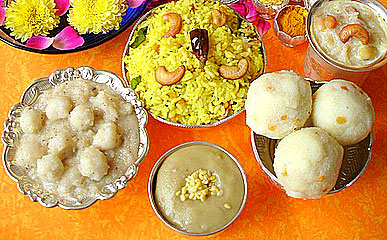
Indian Sweets, locally known as "Mithai", are a form of confectionery, usually made with milk, ghee, cottage cheese, sugar and other ingredients. The use of ingredients differs from one region to the other. Indian sweets are plentiful in number and nature and are most delicious dessert item. In fact, Indian cuisine is known throughout the world as a sweet cuisine because almost half of its dishes are either sweets or desserts. Many popular Indian sweets are common throughout South Asia, while others are specific to a certain region and are typical to only an ethnic group in India.
Sweets are also significant in Indian culture. Sweets are generally presented during festive occasions and ceremonies and also signify good omen, happiness and prosperity. In India every happy occasion is marked with the distribution of sweets.
History of Indian Sweet
India not only has a rich cultural history, its association with sweets is also millennia old. Indians were the first to refine sugar, at around 500 BC and by 300 BC, five different kinds of sugar were being processed in India. The oldest reference to Jalebi was made in the 13th century.
Types of India Sweets
Sweets of India come in various flavours, shapes, colours and sizes. There are various types of Indian Sweets. Most Indian sweets are also made of "Khoya" or "Mawa" that is milk boiled to remove moisture. Adding ghee, sugar and many other ingredients to enhance flavour, these are made into various kinds of sweets. Sweets of India are garnished with Raisins, Almond, Pistachio and the likes. Some of the common Indian sweets are Rasgulla, Gulab Jamun, Kulfi, Son Papdi, Jilebi, Sandesh, Khaja,
 Chena Murki, Imarti, Kheer, Chikki, Shrikhand, Patishapta, Rasmalai, Motichoor, Mohan Thal, Laddoo, Halwa, Rabri, Pedha, Burfi, Parwal Ki Mithai, Narkel Naru, etc.
Besides this classification, Indian sweets can be said to have another division which is ethnic and traditional Indian dessert. Traditional Indian sweets are those which were made in Indian households since long back. These sweets have their reference in the historical records and in certain epics as well. They are made in households even today during festivals and functions.
Significance of Indian Sweets
The festivals and other traditional celebrations are incomplete without the alluring taste of Indian sweets. The essential sweet dishes that are dished out during Diwali include Vermicelli Kheer, Rice Kheer, Carrot Halwa, Besan Ka Ladoo and many more. Holi and Durga Puja, Baisakhi are other Hindu festivals where sweets play a major role. The mouth-watering dessert of India has not only enthralled the Hindu society, it has also been making other social and religious festivals such as Id ul Zuha and Id ul Fitr, marriage ceremonies or rice ceremonies.
Indian Sweets like Pedhas, Barfis, Gulab Jamuns, Rassagollas, Jalebi, Halwa and a host of other sweets are in great demand today not only in India but also in foreign countries. When one plans to visit friends or relatives, a packet of sweet is the easiest and unanimous choice. Mithai has been associated with Indian tradition and custom and has become an integral part of any occasion or festival. Indian Sweets have become increasingly popular and are found in almost all corners of the world. Hence, one can see that Indian sweet makers are experimenting with new and improved delicacies and serving it to the sweet lovers.