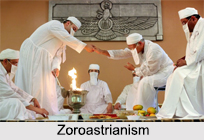
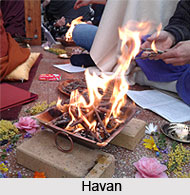
 A Havan is a sacred purifying ritual (Yajna) in Hinduism that involves a fire ceremony. It is a ritual of sacrifice made to the fire god (Agni), cosisting of prayers, chanting and offerings. These are done with a team of dasas. Such havans are held at weddings and many other ceremonial occasions. Havans may be held to bless and purify a new house when people move in. The ceremony will be followed by a large family meal and celebration. It is also believed that this sacrifice brings health, happiness, luck and prosperity.
Such Havan ceremonies in Hindus are conducted by a priest in a person`s house or in a temple. After lighting a fire, objects such as fruits, honey, or wooden goods are put into the sacred fire and prayers from the Vedas are recited. Incense and rice may be sprinkled into the fire as well, and prayers are said to Agni, the god of fire. If there are any spirits that are evil around, they are supposed to get burned off in the sacred fire.
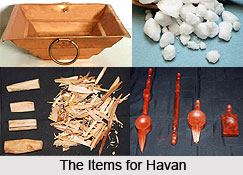
The items needed for a Havan are as follows:
1. A Havan kund made of copper, widely square shaped on top, narrowing in size towards the bottom, and is the vessel that contains the fire. If not available, one may create a container by building a brick base enclosed on four sides by several rows of bricks in a cleared space outdoors. (This can be sealed with cow dung or mud). Some other appropriate container, e.g. a new iron or stainless steel wok, can also be used and should be purified first (sprinkled with Gangajal). Make sure that there is good ventilation if the kund is used indoors. Raise the kund off the ground on bricks or flat rocks. This honors the sacredness of the kund, and also makes it easier to reach and work with the fire. Never place the kund directly on carpet or other material as that may burn and start a fire.
2. Cow dung is used as the fuel. It is taken from cows, since they are considered holy and mixed with straw and prayers, patted into a large, flat pancake shape and then dried in the sun. In some places in the west, which do not have access to cow dung can also possibly use small pieces of wood.
3. Camphor, ghee-amount may range from over 8 ounces and up. Thus, appropriate size bowl for ghee and teaspoon for ghee are needed. Also required are small twigs or matches.
4. Bricks, flat rocks or whatever is available to raise the ghee bowl and puja tray off the ground.
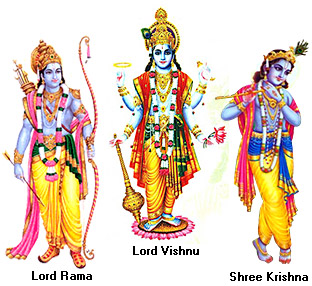
5. One can also set up the altar or puja area, with pictures or the statues of deities. However, this is not mandatory but it helps to evoke a sacred environment. Thus, whatever objects are felt to be sacred can be brought here. Flowers and candles may adorn and honor the altar.
6. Sandalwood paste made by rubbing in a circular motion a piece of the wood on a flat stone wetted with Ganga water. Sandalwood powder diluted with the water can also be used. If not available sandalwood oil may be used. Amount needed depends on the number of people attending.
7. Puja tray placed within easy reach holding lights and offerings.
 8. For the Offerings:
•Small container and small copper or brass spoon for holding Ganga water. But if Ganga water is not available, one can use accessible water.
•Four flower heads.
•Tiny bowl of sandalwood paste.
•One or more sticks of incense and incense holder.
•Small light made from cotton and ghee, or a small candle.
A bell.
•Ghee lamp for the Arati with five lights, or a larger regular candle.
•Small dish with sweets- possible mixture of sugar, rice, raisins, cloves, cardamom, and cinnamon.
9. A small thin stick for moving and rearranging the fire.
10. A hand towel, this can get messy sometimes.
11. A mala for counting recitations of mantras.
12. Prasad (divine gift of food, usually sweets) can be distributed after the ceremony if wished.
Preparation for the Havan
1. Before performing any havan, one should take a bath and get dressed in clean clothes. The site of the havan should be cleaned and made inviting for guests who might join. All implements used should also be cleaned and purified prior to the ceremony.
2. Place the kund in a central location, easy to be seen by participants.
3. Place your cushion or seat close enough so that it is easy to reach and work with the fire.
4. Place around your seat in a way that is most convenient for you: a basket or some kind of container for the cow dung broken into pieces or a supply of wood, matches, the puja tray filled with the offerings and lights, the mala, a hand towel and prasad.
5. Next to the kund place the bowl of ghee and the spoon. The ghee can either be melted before the havan on a stove or once the fire begins quickly place the bowl over it melting the ghee. Also have handy the thin stick for working with the fire.
6. In the bottom of the kund you may build up the small twigs, scattering among them small pieces of camphor and wooden matches.
7. If the ghee has already been melted, a few pieces of cow dung may be stood up surrounding the twigs, coating them with a few spoonfuls of ghee.
Procedure of the Havan
1. The fire can now be lit, with the matches and camphor igniting the wood. This initial fire will then ignite the ghee, which will then set off the cow dung or wood, whichever is used. During the havan whenever the syllables "Swaha" are chanted (usually at the end of a prayer or blessing).
2. Then a few drops of ghee must be then added to the fire, which is known as feeding the fire.
3. While adding ghee keeps the fire going you must also be aware of when it becomes necessary to add on fresh pieces of dung or wood.
4. With practice you can become adept at spooning ghee and feeding and arranging the fire with your right hand and counting mantra recitations on the mala with your left hand.
5. By the time the Arati is finished the fire is no longer fed until the havan has concluded and all remaining ghee lights, incense and sweets are placed in the fire left to burn to ash.