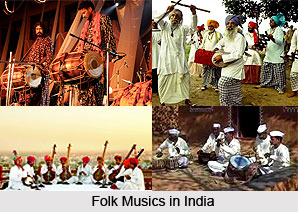
Ghazal is a poetic form consisting of couplets, which are two line stanzas that share a rhyme and a refrain (a repeated word or phrase). However, with no specific pattern of the rhyme scheme to these couplets and a poem can contain any of them. It is very easy for a verse in a ghazal to be understood since every couplet is different from the other. Though the refrain provides a link among the couplets, there should be an epigrammatic terseness, yet each couplet should be lyric and evocative. Thus, a ghazal can stand alone, but it becomes a recurring theme, when arranged together. Thus, each couplet explains or illustrates or speaks about one piece of the whole, forming something more meaningful.
A ghazal is a form of an ancient verse that originatinsted in the 10th century Persion verse. It is derived from the Persian qasida. It used to formally be a short lyric composed in a single metre throughout with a single rhyme, in its style and content. The unique of all genres, it is capable of an extraordinary variety of expression around its central theme of love. Later, the ghazal spread into South Asia in the 12th century under the influence of the new Moghul courts and Sufi mystics. Although the ghazal is most prominently a form of Urdu poetry, today, it has influenced the poetry of many languages. The ghazal is a common song form in India and Pakistan today. Strictly speaking, it is not a musical form, but a poetic recitation. Today, however, it is commonly conceived of as an Urdu song, with prime importance given to the lyrics.
Ghazal Forms
A Ghazal, in short, is a collection of couplets (called sher), following the rules of Matla, Maqta, Beher, Qafiya, Radif, Khayal and Wazan. The second line of each couplet in a ghazal ends with the repetition of a refrain of one or a few words, known as a Radif. This is preceded by a rhyme, known as a Qafiya. The first couplet that introduces the theme, end in the rhyme and the refrain. All the couplets, and each line of each couplet, must also share the same meter. The traditional complete ghazal has a Matla, a Maqta, and three other Shers in between. The first two shers of a ghazal have the form of a Qatha. In some modernized ghazals the poet`s name is hidden somewhere in the last verse, usually between the front and end of a word.
However, a ghazal is only the name of a form, and is not language-specific. Ghazals also exist, for example in the Pashto, Marathi and even in the Braj-Basha dialect. Amir Khusro did compose ghazals in the braj dialect. In modern Urdu poetry, there are lots of Ghazals which do not follow the restriction of same Beher on both the lines of Sher. But even in these Ghazals, the Qafiya and Radif are present. Many modern Ghazals do not have a Maqta or, many Ghazals have a Maqta just for the sake of conforming to the structure or tradition, hence the usage has become rather loose in the today`s ghazals. The name of the Shayar is sometimes placed unnaturally in the last Sher of the Ghazal.
Gair Muraddaf Ghazal: It is a rare case where a ghazal does not have a radif; but the same cannot be impossible. And such Ghazals are called "gair-muraddaf" Ghazal.
Musalsal Ghazal: Every sher can be an independent poem, but it is also possible for all the Shers to be on the same theme, or have the same continuity of thought. This is called a "musalsal ghazal", or "continuous ghazal".
Themes of Ghazals
It is not possible to get a full understanding of ghazal poetry without at least being familiar with some concepts of Sufism. All ghazal poets were either avowed Sufis themselves or were sympathizers of Sufi ideas. Every ghazal has a single theme - Love and more specifically unattainable love. The subcontinental ghazals have an influence of Islamic Mysticism and the subject of love can usually be interpreted as a spiritual love rather than sexual love with sexual desires. Thus, this love is more for a higher being than the love for the mortal being. The theme always sings about love as something that will complete the being, and if attained will ascend the ranks of wisdom, or will bring satisfaction to the soul of the poet. It is the intense Divine Love of sufism that serves as a model for all the forms of love found in ghazal poetry. Most ghazals can be viewed in a spiritual context, with the Beloved being a metaphor for God, or the poet`s spiritual master.
The ghazal is always written from the point of view of the lover who is unable to attain his beloved, because either the beloved is just playing with the poet`s feelings, or because the societal circumstances do not allow it. The lover is aware and resigned to this fate, but continues loving nonetheless. The beloved is often portrayed in exaggerated terms, with extended metaphors about the "arrows of her eyes", or referring to the beloved as an assassin or a killer.