Bengali or Bangla, is essentially a member of the Indo-European family of languages. The ancient language has developed from a form of Prakrit or Middle Indo-Aryan language, to finally materialize from the Apabhramsa-Avahatta in the 10th century. The modern-day Bengali script has been derived from the Brahmi alphabet of the Ashoka`s inscriptions (273 to 232 B.C.).
History of Bengali literature
In this context, Bengali literature has been divided into three distinct eras, Old Bengali (950-1350), Medieval Bengali (1350-1800) and Modern Bengali (1800 to the present day).
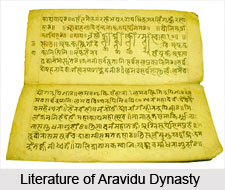
Ancient Bengali Literature (950-1350): The first evidence of Bengali literature is acceptable as Charyapada or Charyageeti, a compilation of 8th-12th century C.E. Buddhist spiritualist poems from eastern India. This mystical compilation furnishes authentic early examples of Assamese, Oriya and Bengali languages. Poets of these Charyapadas, the Siddhas or Siddhacharyas are known to have come from the various regions of Assam, Bengal, Odisha and Bihar. Charyapada is also the oldest recognized scripted form of Bengali. The legendary Bengali linguist Harprashad Shastri had chanced upon the palm leaf Charyapada manuscript in the Nepal Royal Court Library in 1907. Another view of ancient history of Indian literature is that, Old Bengali literature is survived only through a collection of forty-eight poems (1050-1200), acknowledged as the charva songs. These were composed by the siddhacharyas (enlightened ones) who were basically Buddhists.
Medieval Bengali Literature (1350-1800): The time period of medieval Bengali literature covers a mammoth time span in the history of Indian literature. The 15th century mostly dealt with the narrative poetry genre, the theme being mainly of religious content. Among these, Krittivas`s Ramayana has been accredited to own a classical position. Other narrative poems include Srikrishnavijaya by Maladhar Basu and Srikrishnakirttan by Baru Chandidas. With passing time, precisely during the 16th century, Bengali literature began to comprise narrative epic poems dealing principally with lores of popular goddesses like Chandi (Chandimangal by Kavikanan Mukundaram Chakravarti) and Manasa. During the 12th and the 13th centuries, a new kind of religious literature came to view, which assembled its themes from popular tales, and came to be acknowledged as Panchali or Mangala literature in Bengal. Examples of this form of literature are yielded by Krttivasa`s Sri Rama-panchali (15th century), Maladhara Vasu`s Sri Krishna Vijaya (1480), Vipradasa of Manasa-vijaya (1495) and Vijaya Gupta`s Manasa-mangala (1494).
Modern Bengali Literature (1800 to the present day): The 17th century Bengali literature possessed and was equipped with the secular romantic verse tales, penned solely by the Islamic community. Even the Muslims of Arrakan, who maintained close intellectual contacts with Bengal, were active in literary pursuits in Bengali literature. Daulat Kazi, the first Bengali Arrakanese poet actually had authored the romantic verse tale Sati Mayana. Rameshvar Bhattacharya`s Sivasankirttan portrayed Shiva as a poor farmer and Gauri, his wife, as a human heroine. The climax of 18th century saw two more new forms of poetry come into age, the `Kavi` and the `Panchali` respectively.
Jayadeva was one of the earliest and the most famous Bengali poets. His chef-d`oeuvre Geet Govinda remains an appropriate testimony of the classical Puranic traditions of the Vaishnava poetry. The Dharma-mangala poems of the 18th century comprehend under this category. The Chaitanya Movement also led to the materialisation of extensive narrative devotional poetry. Illustrations of this kind comprise Murari Gupta`s Kadcha, Paramananda Sena`s Chaitanya-chandrodaya and Chaitanya-charitamrata, Vrindavana Dasa`s Chaitanya-bhagavata, Madhava Acharya`s Sri Krishna-mangala and Syamadasa`s Govinda-mangala.
 In the light of this Sepoy Mutiny, a magnum opus drama was issued from Dhaka in the name of `Neel Dorpon` (The Indigo Mirror). Dinabandhu Mitra was the writer of this play, absolutely turning the tables in Indian Independence Movement, looking towards its prolonged fighting future.
In 1814, Raja Ram Mohan Roy made his entry in literature by translating from Sanskrit to Bengali, scripting essays on religious subjects and issuing magazines were just a few of the domains Raja Ram Mohan Roy had focused on. He also had established a cultural group in the name of `Atmiya Sabha` (Club of Kins) in 1815. Michael Madhusudan Dutt (1834-1873) and Bankim Chandra Chatterjee (1838-1898) were the other crucial founders of this so-called modern epoch in Bengali literature. Madhusudan Dutt was the first Bengali poet to pen in blank verse and had combined western influences into the quintessential of Indian literature. His Meghnadvadhkavya (1861), written in blank verse possesses the same flavour of Milton`s Paradise Lost.
Belonging to a similar category of blood-boiling and flaming poetry in Bengali literature is Kazi Nazrul Islam. He indeed was invited to be a part of post-partition Bangladesh as the National Poet and whose work surpasses even the sectarian restrictions. Treasured by Bengalis both in Bangladesh and West Bengal, Kazi Nazrul Islam`s work virtually comprises 3000 songs, celebrated both as nazrul geeti and "nazrul sangeet". Though he is admitted as the rebel poet, Nazrul Islam quite competently had contributed in all branches of Bengali literature.
The era of Bengali novel began in the later half of the 19th century. The first out-and-out romantic Bengali novel is Bankim Chandra Chatterjee`s Durgeshnandini (1865), while the first Bengali novel of social realism is Peary Chand Mitra`s Alaler Gharer Dulal (1858). The leading novelist of the age however unanimously was Bankim Chandra Chatterjee, who gave the nation its national song Vande Mataram from his political novel Ananda Math, a masterpiece of Bengali literature to this date. This century also witnessed the advent of the periodical press in the form of Digdarshan (a monthly magazine) and Samachar Darpan (a weekly), both published by the Serampore missionaries. Drama and literary prose also saw a huge renewal during the pre-independence era in India, practically with every Bengali literature fighting for the nation`s freedom, either directly or indirectly. The great dramatists of the 19th century were Girish Chandra Ghosh (1844-1911), Amritlal Bose (1853-1929) and D L Ray (1863-1913), and the great prose writers were Debendranath Tagore and Ishwar Chandra Vidyasagar.
Even the popularity of poetry in Bengali literature witnessed its sweeping rise during this period. Biharilal Chakravarti`s (1834-94) Saradamangal (1879) and Sadhar Asan (1888-1889) brought in a breath of fresh air by its tender and refined lyrics. This style of writing even had influenced Rabindranath Tagore, who himself gave a new meaning to Bengali literature. He was the first Indian to bring home the Nobel Prize in 1913, which he had received for his book of poems, Gitanjali. In fact, Bengali literature and its contribution to Indian literature can never ever be complete without the mention of the man known as `Rabindranath Tagore`. Rabindranath Tagore is the author of the national anthems of both India and Bangladesh, both framed in Bangla.
 The post Tagore age sadly had few writers of his calibre, some of whom were Sarat Chandra Chatterjee (1876-1938), Prabhatkumar Mukherjee (1873-1932) and Abanindranath Tagore (1871-1951). The modern era in Bengali literature begins with a group of writers who had scripted for Kallol, a modernist movement magazine, founded in 1923. The most popular among the group were Kazi Nazrul Islam and Mohitlal Majumdar. During this age, two people who possessed nearly the same literary potentiality as Tagore were Jibananda Das (poet) and Bibhutibhushan Bandopadhyay (novelist). Pramathanath Bisi and Rajshekhar Basu (Parashuram) were exponents in literary criticism and humorous writings respectively. Tarashankar Bandyopadhay is yet another notable and respected personality of Bengali literature, known for his novels, while Annadashankar for his prose of ideas.
The contemporary period of Bengali literature is led undoubtedly by several modernist thinkers with a fresh view to West Bengal under globalisation, like Sunil Gangopadhyay - a poet, novelist, children`s story writer, Buddhadev Guha - a fiction writer dealing mainly with jungle stories, Mahashweta Devi, Nirendranath Chakraborty, Samaresh Majumdar, Samaresh Basu, Suchitra Bhattacharya, Nabaneeta Dev Sen, Syed Mustafa Siraj, Baren Gangopadhyay, Shirshendu Mukhopadhyay, Amiya Bhushan Mazumdar, Debesh Roy, Atin Bandyopadhyay, Shankha Ghosh, Shakti Chattopadhyay, Moti Nandi, Kamal Kumar Majumdar, Shankar, Malay Roy Choudhury, Bani Basu.
It was in 20th century renaissance in Bengali literature that made its presence felt. Bengal was the heart of renaissance uprising in India. A number of social movements were taking place in Bengal in the disturbed and anxious scenario of Bengal.