
 Bengali or Bangla is an Indo-Aryan language of the eastern Indian subcontinent. It has evolved from Prakrit, Pali and Sanskrit. Bengali is native to the region of eastern South Asia known as Bengal, which comprises present day Bangladesh and the Indian state of West Bengal. With nearly 230 million native speakers, Bengali is one of the most widely spoken languages in the world it is ranked fourth in the world. Bengali is the main language spoken in Bangladesh. In India, it is ranked as the second most spoken language. Along with Assamese, it is geographically the most eastern of the Indo-European languages.
Bengali Language
Bengali Language evolved from Prakrit, Pali and Sanskrit and an Indo-Aryan language of the eastern India.
Introduction
Bengali or Bangla is an Indo-Aryan language of the eastern Indian subcontinent. It has evolved from Prakrit, Pali and Sanskrit. Bengali is native to the region of eastern South Asia known as Bengal, which comprises present day Bangladesh and the Indian state of West Bengal. With nearly 230 million native speakers, Bengali is one of the most widely spoken languages in the world it is ranked fourth in the world. Bengali is the main language spoken in Bangladesh. In India, it is ranked as the second most spoken language. Along with Assamese, it is geographically the most eastern of the Indo-European languages.Origin of Bengali Language
 Origin of Bengali language lies in Prakrit which has also been influenced by Sanskrit language. The Bengali language comes from the Austro Asiatic family. The language had been absorbed in the Dravidian language as well as the later races that have conquered them. Dravidian and Mongolian languages have been absorbed in Bengali. There is difference between the pronunciation of western and eastern Bengal which is due to the predominating Dravidian influence in the west and that of the Mongolian influence in the east.
Bengali is a constituent of the Indo-European family of languages as it represents the easternmost branch of that family. Bengali language originated from the Prakrit. So it can be considered that Prakrit considered as their mother and Sanskrit as their father. The non-Aryan elements in Bengali language are due to direct and indirect non-Aryan influence.
From the eastern branch of the Aryan language originates the Magadhi Prakrit which is the parent of the modern languages Bihari, Oriya, Assamese and Bengali. Magadhi Prakrit developed in the third or the fourth century A.D. However the exact date of the origin of Bengali language cannot be affirmed. The Aryan language that was spoken in Bengal in the seventh century was most probably the Apabhramsa of Magadhi Prakrit. This language represented the transitional stage before the final emergence of Bengali language. There is a probability that finally the language emerged in the tenth century.
The Old Bengali had the influence of Sauraseni Apabhramsa on Old Bengali. Sauraseni is a western Indian language that had spread in eastern India under the influence of the Rajput kings of central India. This was the language that was used on the royal courts. It was the language of the royal courts and was cultivated by the professional bards.
There was a prevalence of Prakrit words in Old Bengali too. This is tadbhava in Indian philology that forms the bulk of the vocabulary of Bengali language. Bengali language from its birth has a large number of Sanskrit words which is known as tatsama. These were toughened by later borrowings from Sanskrit during the classical revivals between the fifteenth and the nineteenth centuries.
Dravidian Influence on Bengali Language
Bengali has a large number of desi words which are borrowed from the non-Aryan languages through Sanskrit and Magadhi Prakrit. A non-Aryan influence is also seen direct and indirectly in its phonetics, grammar and syntax. Cerebral sounds in Bengali are due to Dravidian influence. The syntax of Bengali is Dravidian. Onomatopoeic words are used in Bengali that represents a Kol-Dravidian characteristic. Dravidian influence is visible in Bengali place-names and suffixes. The East Bengali language due to Mongolian influence adds aspirated to unaspirated sounds and drop nasalization. On the contrary West Bengali language drop aspirated sounds and add nasalization to it.
Influence of foreign invaders on Bengali language
The Islamic conquest of Bengal in about 1200 A.D. introduced many Persian, Arabic, and Turkish words especially in related to administration. Post Akbar`s conquest of Bengal there was a further influx of Persian words. However in the present language it is seen that many Persian words have dropped out of use. There are about three thousand Persian words presently which have inherited a small number of ancient Iranian words. The Portuguese, the Dutch and the French who came to India in the sixteenth and seventeenth centuries also gave a few words to the Bengali vocabulary. Bengali is also indebted to Greek as it has also contributed around three percent contributed a little over three per cent, of the Bengali vocabulary, and English and other European languages have contributed a little over one per cent.
The English rule has contributed to the Bengali Language. Bengali language and literature is supposed to have been born during the Pala rule. Bengali mode of poetic compositions gained recognition in Sanskrit poetics in the seventh century.
History of Bengali Language
Like other Eastern Indo-Aryan languages, Bengali arose from the eastern Middle Indian languages of the Indian Subcontinent. Magadhi Prakrit, the earliest recorded spoken language in the region and the language of the Buddha, had evolved into Ardhamagadhi ("Half Magadhi") in the early part of the first millennium. Ardhamagadhi, as with all of the Prakrits of North India, began to give way to what are called Apabhramsa languages just before the turn of the first millennium.The local Apabhramsa language of the eastern Subcontinent, Purvi Apabhramsa or Apabhramsa Abahatta, eventually evolved into regional dialects, which in turn formed three groups: the Bihari languages, the Oriya languages, and the Bengali-Assamese languages. Some argue for much earlier points of divergence going back to even 500 CE but the language was not static; different varieties coexisted and authors often wrote in multiple dialects. For example, Magadhi Prakrit is believed to have evolved into Apabhramsa Abahatta around the 6th century which competed with Bengali for a period of time.
Usually three periods are identified in the history of Bengali:
1. Old Bengali texts include Charyapada, devotional songs; emergence of pronouns Ami, tumi, etc. Oriya and Assamese branch out in this period.
2. Middle Bengali major texts of the period include Chandidas`s Srikrishnakirtan elision of word-final ô sound; spread of compound verbs; Persian influence.
3. New Bengali shortening of verbs and pronouns, among other.
Historically closer to Pali, Bengali saw an increase in Sanskrit influence during the Middle Bengali (Chaitanya era), and also during the Bengal Renaissance. Of the modern Indo-European languages in South Asia, Bengali and Marathi retain a largely Sanskrit vocabulary base while Hindi and others are more influenced by Arabic and Persian. Until the 18th century, there was no attempt to document the grammar for Bengali. The first written Bengali dictionary or grammar, was written by the Portuguese missionary Manoel da Assumpcam between 1734 and 1742 while he was serving in Bhawal. Raja Ram Mohan Roy, the great Bengali Reformer, also wrote a "Grammar of the Bengali Language". Bengali was the focus, in 1951-52, of the Language movement in what was then East Pakistan (now Bangladesh). Inspite of the fact that Bengali speakers were more in number in the population of Pakistan, Urdu was legislated as the sole national language.
 Geographical Distribution
Bengali is native to the region of eastern South Asia known as Bengal, which comprises Bangladesh and the Indian state of West Bengal. Around 98% of the total population of Bangladesh speak Bengali as their mother tongue. There are also significant Bengali-speaking communities in immigrant populations in the Middle East, West and Malaysia.
Usually three periods are identified in the history of Bengali:
1. Old Bengali texts include Charyapada, devotional songs; emergence of pronouns Ami, tumi, etc. Oriya and Assamese branch out in this period.
2. Middle Bengali major texts of the period include Chandidas`s Srikrishnakirtan elision of word-final ô sound; spread of compound verbs; Persian influence.
3. New Bengali shortening of verbs and pronouns, among other.
Historically closer to Pali, Bengali saw an increase in Sanskrit influence during the Middle Bengali (Chaitanya era), and also during the Bengal Renaissance. Of the modern Indo-European languages in South Asia, Bengali and Marathi retain a largely Sanskrit vocabulary base while Hindi and others are more influenced by Arabic and Persian. Until the 18th century, there was no attempt to document the grammar for Bengali. The first written Bengali dictionary or grammar, was written by the Portuguese missionary Manoel da Assumpcam between 1734 and 1742 while he was serving in Bhawal. Raja Ram Mohan Roy, the great Bengali Reformer, also wrote a "Grammar of the Bengali Language". Bengali was the focus, in 1951-52, of the Language movement in what was then East Pakistan (now Bangladesh). Inspite of the fact that Bengali speakers were more in number in the population of Pakistan, Urdu was legislated as the sole national language.
Geographical Distribution
Bengali is native to the region of eastern South Asia known as Bengal, which comprises Bangladesh and the Indian state of West Bengal. Around 98% of the total population of Bangladesh speak Bengali as their mother tongue. There are also significant Bengali-speaking communities in immigrant populations in the Middle East, West and Malaysia.
Official status of Bengali Language
Bengali is the national and official language of Bangladesh and one of the 23 national languages recognised by the Union of India. It is the official language of the state of West Bengal and the co-official language of the state of Tripura, Cachar District of southern Assam and the union territory of Andaman and Nicobar Islands. Bengali speakers make the majority in Neil Island and Havelock Island. It was made an official language of Sierra Leone in order to honour the Bangladeshi peacekeeping force from the United Nations stationed there. It is also the co-official language of Assam, which has three predominantly Sylheti speaking districts of southern Assam Silchar, Karimganj, and Hailakandi. The national anthems of both India and Bangladesh were written in Bengali by Rabindranath Tagore.
Dialects of Bengali Language
Regional variation in spoken Bengali constitutes a dialect continuum. Linguist Suniti Kumar Chatterjee grouped these dialects into four large clusters Radh, Banga, Kamarupa and Varendra but many alternative grouping schemes have also been proposed. The south-western dialects (Radh) form the basis of standard colloquial Bangla, while Bangali is the dominant dialect group in Bangladesh. The influence of Tibeto-Burman language on the phonology of Eastern Bengali is seen through the lack of nasalized vowels. Some variants of Bengali, particularly Chittagonian and Chakma Bengali, have contrastive tone, differences in the pitch of the speaker`s voice can distinguish words. Rajbangsi, Kharia Thar and Mal Paharia are closely related to Western Bengali dialects, but are typically classified as separate languages. During standardization of Bengali in the late 19th and early 20th century, the cultural center of Bengal was its capital Kolkata (then Calcutta). What is accepted as the standard form today in both West Bengal and Bangladesh is based on the West Central dialect of Nadia, a district located near Kolkata. There are cases where speakers of Standard Bengali in West Bengal will use a different word than a speaker of Standard Bengali in Bangladesh, even though both words are of native Bengali descent. For example, nun (salt) in the west corresponds to lobon in the east.
Recently updated articles in Languages in India
Linguistic History of India
Linguistic history of India traces down two basic kinds of literary styles still prevalent in the country.
Ancient Sanskrit Grammarians
Ancient Sanskrit grammarians were pioneering scholars who considered factors like pronunciation and euphonic combination and the discrimination of par...
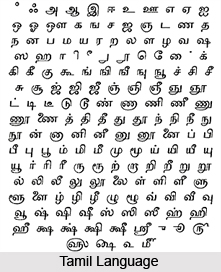
Tamil Language
Tamil is a Dravidian language spoken primarily in India and other countries of South Asia. It is one of the official languages of Tamil Nadu. With a r...
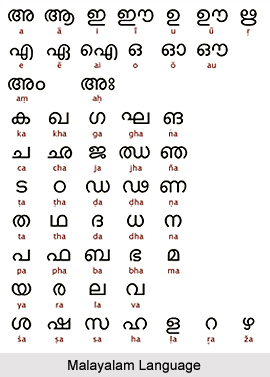
Malayalam Language
Malayalam language, one of 22 scheduled languages of India, is mostly concentrated in Kerala, Lakhswadeep and Puducherry. A Dravidian language, Malaya...
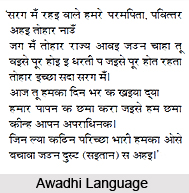
Awadhi Language
Awadhi is one of the enriched languages of India, Hindi too originated from it. Awadhi, an Indo-Aryan language from the Indo-European family, originat...
Related articles in Languages in India
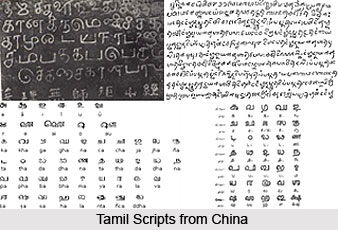
Development of Tamil Scripts
Development of Tamil scripts can be traced to the period just after the reign of Asoka. The Tamil script is believed to have developed from the Brahmi...
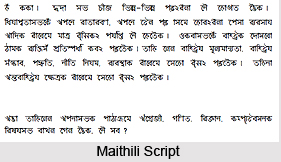
History of Maithili Language
History of Maithili Language can be dated back to the early fourteenth century. Maithili is now one of the national languages of India.
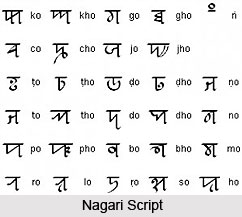
Nagari Script
Nagari script today is classified as Devanagari, believed to have served as the ancestor of various modern-day writing.
Pali Language
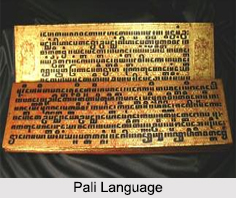
Pali Language owes its origination to Gautama Buddha and his disciples, who were chief to propagate it.
Origin of Prakrit Language
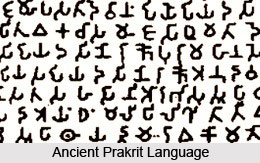
Origin of Prakrit language can be attributed to Sanskrit according to some historians. Some consider it as nature’s gift which is easily comprehensibl...