Tirumala Deva Raya, Ruler of Aravidu dynasty - Informative & researched article on Tirumala Deva Raya, Ruler of Aravidu dynasty
  Indianetzone: Largest Free Encyclopedia of India with thousand of articles History of India


in  
Art & Culture | Entertainment | Health | Reference | Sports | Society | Travel
Forum  | Free E-magazine
History of India : Sources of History of India l Ancient History of India l Medieval History of India l Modern History of India l Indian Historical Dynasties l Indian Battles l Sepoy Mutiny 1857 l Indian Rulers l History of India l Indian Freedom Struggle l Indian Governor- Generals l British Indian Acts l Post Independence India l Iron Age in India
Home > Reference > History of India > History of South India > Aravidu Dynasty > Tirumala Deva Raya
Tirumala Deva Raya, Ruler of Aravidu dynasty
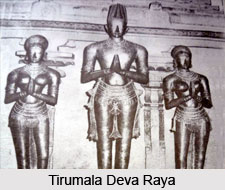
Tirumala Deva Raya was the brother of the Aliya Rama Raya and son-in-law of Krishna Deva Raya.

When Rama Raya was slayed in the Talikonda battle in 1565, he instantly vacated the treasury and fled the capital, captivating with him the Royal family and the minor crown prince Sadasiva Raya. Few years down the line, he reestablished the Vijaynagar rule in Penukonda with hardships, in present day Andhra Pradesh. During this time the Southern Nayakas of Madurai and Gingee, declared limited independence, while some others rebelled over Tirumala Deva Raya`s authority.

In 1567 he encountered another attack by the Bijapur Sultan, this time the Sultan was defeated but also losing some territories. Tirumala Deva Raya later tactfully approved the new status of Southern Nayaks, who still paid some tributes and held him as their emperor.Tanjore and Mysore rulers still paid the annual tributes while Madurai and Gingee rulers grudgingly followed. Tirumala Deva Raya also retained most of the Vijaynagar territories and assumed the Title "Reviver of the Decadent Karnataka Empire". In 1570 he split the Viceroyalty among his three sons, and nominated Srinranga I in Penukonda in charge of Telugu country,Rama (father of Sriranga II) in Sritrangapatna in charge of the Kannada country and Venkatapathi (Venkata II) in Chandragiri in charge of Tamil country. Penukonda was the Capital of the empire. The King retired in 1572 after feeling too old to rule and retired to a religious life of living till 1578.
(Last Updated on : 31/12/2008)
  More Articles in Aravidu Dynasty
 
Ruler of Aravidu Dynasty Administartion of Aravidu Dynasty Architecture of Aravidu Dynasty
Literature of Aravidu Dynasty Language of Aravidu Dynasty Economy of Aravidu Dynasty
Sriranga Deva Raya I Sriranga II Sriranga III
Tirumala Deva Raya    
Recently Updated Articles in History of India
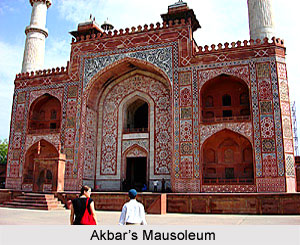
  • Mughal Architecture
    Mughal architecture is a combination of Islamic, Persian, Turkish and Indian architecture. It is a style that was developed under the Mughal dynasty in the sixteenth and seventeenth centuries.
  •  
  • Mansabdari System in Mughal Dynasty
    Akbar introduced the Mansabdari System in the Mughal army which primarily meant the ranking of officers on decimal system.
  •  
     
  • Deccan Policy of Mughal Dynasty
    Deccan Policy of the Mughal dynasty was weak during the reign of Babur and Humayun but after the accession of Akbar on the throne, the political situation changed and the Deccan policy was a success.
  •  
  • Coins of Pandyas
    Coins of Pandyas bear the legend of different Pandya ruler in different times.
  •  
  • Art and Architecture of Mughal Empire
    Art and architecture of Mughal Art offers an aesthetic degree to all art lovers. The subtlety of the finesse and the dazzle of the aura create huge amount of interest among tourist.
  •  
    E-mail this Article | Post a Comment
    RSS Feeds
    Forum
    Forum on History of India

    Free E-magazine
    Subscribe to Free
    E-Magazine on Indian Crafts
     
     
    Tirumala Deva Raya, Ruler of Aravidu dynasty - Informative & researched article on Tirumala Deva Raya, Ruler of Aravidu dynasty
    Sitemap
    Contact Us   |   RSS Feeds
    Copyright © 2008 Jupiter Infomedia Pvt. Ltd. All rights reserved including the right to reproduce the contents in whole or in part in any form or medium without the express written permission of Jupiter Infomedia Pvt. Ltd.