
Esoteric Moving Mudra is a posture done to receive several health benefits. The practitioner performs this Mudra to get relief from acute illnesses like headache, brain tumor and brain atrophy. This Mudra has to be done carefully and its effects are considered effective widely. Practicing this mudra is said to unfold all blockages and improve circulation throughout the body. After practicing this mudra, the body of the practitioner may feel hot. This mudra is supposed to cleanse every illness out of the body.
Practice of Esoteric Moving Mudra
Practicing esoteric mudra is simple. The thumb tip and the middle finger tip are placed lightly together. Then slowly a circle is rubbed in about ten times on the first section of the middle fingers of the other hand. This action of rubbing circle is reversed for ten times. When esoteric mudra is performed correctly, a warm flow from hands to the wrists, forearms, elbows, upper arms, shoulders and spine is felt by the practitioner.
When the spine is getting warm, the thumb is advised to move to the midsection of the middle finger. Then the procedure is repeated. The warm flow moves along the spine down to the end. After this, the thumb is moved to the base section of the middle finger and rubbed accordingly. The warm flow moves from the pelvic to the upper legs, knees, lower legs, and ankles and to the bottom of the feet.
Benefits of Esoteric Mudra
This mudra is practiced to get relief from acute illnesses like headache, brain tumor and brain atrophy. To cure these diseases, the practitioner should do the following:
•The thumb is to be placed on the side of the mid-section of the ring finger on both hands.
•Then slowly rub up and down along the mid-section and the lighter it is rubbed, the better it works.
•After working out this mudra, the practitioner will feel an expanding, warming sensation on the back of head.
Caution about Esoteric Moving Mudra
If not practiced accurately, then this mudra might have negative impact on the health of the practitioner. So, beginners are advised to practice under the guidance of an expert yoga teacher.
Esoteric Moving Mudra
Esoteric Moving Mudra provides relief from acute illnesses like headache, brain tumor and brain atrophy. It is said to cleanse every illness out of the body.
Recently updated articles in Yoga
Khanda Manda Yoga
Khanda Manda Yoga is a difficult form of yoga where the Yogi cuts off his own arms and legs with a sharp cleaver, that is axe-like knife, and throws t...
Kaivalya Pada
Kaivalya Pada, the fourth chapter of Patanjali Yoga Sutra denotes an absolute, indivisible state of existence of the Yogi. The Kaivalya Pada is someti...
Vibhuti Pada
Vibhuti is the Sanskrit term for “power” or “manifestation.” In this third chapter, Patanjali introduces the final three limbs of Aṣṭanga Yoga, collec...
Sadhana Pada
Sadhana Pada in Patanjali Yoga Sutra denotes the idea of practicing yoga that leads to spiritual illumination. Sadhana, the Sanskrit term for “practic...
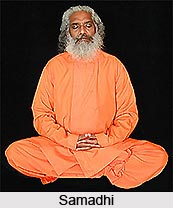
Samadhi Pada
Samadhi Pada is the first chapter of Patanjali Yoga Sutra. In this chapter, the author explains the essence of yoga, the nature of samadhi, and the me...
Related articles in Yoga
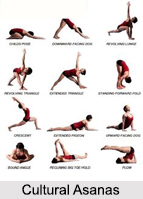
Cultural Asanas
Cultural Asanas refer to the daily physical exercise postures that train the body and mind in Yoga Practice.
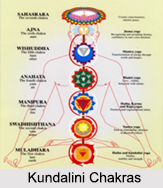
Kundalini Chakras
Kundalini Chakras are psychic energy centres or vortices, which connect between our psychic and physical energy systems.
Patanjali Yoga Sutras
Patanjali’s Yoga Sutras presents a foundational guide to the philosophy and practice of yoga. Through concise aphorisms, it outlines the nature of the...
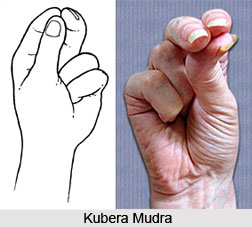
Kubera Mudra
Kubera Mudra, a form of Hatha Yoga, leads to the elevation of mental peace and physical relief by proper practice and cleanses frontal sinuses.