Architecture of Aravidu Dynasty
|
The legacy of sculpture, architecture and painting inclined the expansion of the arts long after the empire terminated.
|
|
|
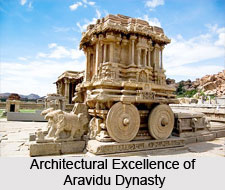 Vijayanagara architecture is a vivacious amalgamation of the Chalukya, Hoysala, Pandya and Chola styles, phrases that flourished in previous centuries.Its stylistic trademark is the ornate pillared Kalyanamantapa (marriage hall), Vasanthamantapa (open pillared halls) and the Rayagopura (tower). Artisans used the locally accessible hard granite considering its resilience as the kingdom was under unvarying hazard of incursion. While the empire's monuments are fanned out over the entire Southern India, nothing surpasses the vast al fresco theatre of monuments at its capital at Vijayanagara, a UNESCO World Heritage Site. Vijayanagara architecture is a vivacious amalgamation of the Chalukya, Hoysala, Pandya and Chola styles, phrases that flourished in previous centuries.Its stylistic trademark is the ornate pillared Kalyanamantapa (marriage hall), Vasanthamantapa (open pillared halls) and the Rayagopura (tower). Artisans used the locally accessible hard granite considering its resilience as the kingdom was under unvarying hazard of incursion. While the empire's monuments are fanned out over the entire Southern India, nothing surpasses the vast al fresco theatre of monuments at its capital at Vijayanagara, a UNESCO World Heritage Site.
In the 14th century the kings sustained the construction of Vesara or Deccan style monuments but later incorporated Dravidic-style gopurams to convene their ritualistic needs. The Prasanna Virupaksha temple (underground temple) of Bukka Raya I and the Hazare Rama temple of Deva Raya I are examples of Deccan architecture. The varied and intricate ornamentation of the pillars is a mark of their work. At Hampi, though the Vitthala shrine is the finest illustration of pillared Kalyanamantapa style while the Hazara Ramaswamy temple is a self-effacing but perfectly finished example. A visible aspect of their style is their return to the simplistic and serene art developed by the Chalukya dynasty. A magnificent example of Vijayanagara art, the Vitthala temple, took numerous decades to absolute during the supremacy of the Tuluva kings. 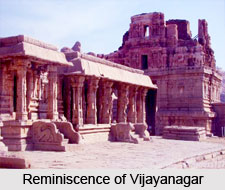
An additional constituent of the Vijayanagara style is the carving of large monoliths such as the Sasivekalu (mustard) Ganesha and Kadalekalu (Ground nut) Ganesha at Hampi, the Gomateshwara statues in Karkala and Venur, and the Nandi bull in Lepakshi. The Vijayanagara temples of Bhatkal, Kanakagiri, Sringeri and other towns of coastal Karnataka, also Tadpatri, Lepakshi, Ahobilam, Tirupati and Srikalahasti in Andhra Pradesh, and Vellore, Kumbakonam, Kanchi and Srirangam in Tamil Nadu are instances of this style. Vijayanagara art comprises of wall-paintings such as Dasavathara (ten avatars of Vishnu) and Girijakalyana (marriage of Goddess Parvati) in the Virupaksha temple at Hampi, the Shivapurana paintings (tales of Shiva) at the Virabhadra temple at Lepakshi, and those at the Jain basadi (temple) and the Kamaskshi and Varadaraja temple at Kanchi.
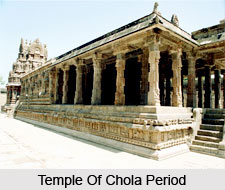 A characteristic of Vijayanagara architecture exhibiting the multi-ethnicity of the great conurbation is the occurrence of several secular structures bearing Islamic features.While political history concentrates on the ongoing conflict amid the Vijayanagara Empire and the Deccan Sultanates, the architectural record reflects a more creative interaction. There are several arches, domes and vaults that show these influences. The concentration of structures like pavilions, stables and towers suggests they were for use by royalty. A characteristic of Vijayanagara architecture exhibiting the multi-ethnicity of the great conurbation is the occurrence of several secular structures bearing Islamic features.While political history concentrates on the ongoing conflict amid the Vijayanagara Empire and the Deccan Sultanates, the architectural record reflects a more creative interaction. There are several arches, domes and vaults that show these influences. The concentration of structures like pavilions, stables and towers suggests they were for use by royalty.
The decorative details of these structures may have been absorbed into Vijayanagara architecture during the early 15th century, corresponding with the rule of Deva Raya II and I. These kings are identified to have employed scores of Muslims in their army and court, a number of whom may have been Muslim architects. This harmonious barter of architectural ideas must have happened during rare periods of peace between the Hindu and Muslim kingdoms. The "Great Platform" (Mahanavmi dibba) encompasses relief carvings in which the figures seem to have the facial features of central Asian Turks who were known to have been engaged as royal attendants.
|
|
|
|





