 Aptitude was offered priority over age and chronology of birth, demonstrated in the crowning of Govinda III- the third son of king Dhruva Dharavarsha. The Chief Minister (Mahasandhivigrahi) assumed a vital position under the king whose position appeared with five motifs adequate to his position, i.e. a conch, a flag, a fan, a large drum, a white umbrella and five musical instruments called Panchamahashabdas.
The commander (Dandanayaka), the foreign minister (Mahakshapataladhikrita) and a prime minister (Mahamatya or Purnamathya) followed him. They were frequently linked with one of the feudatory kings and are said to have held a position in the government corresponding to a premier.
Aptitude was offered priority over age and chronology of birth, demonstrated in the crowning of Govinda III- the third son of king Dhruva Dharavarsha. The Chief Minister (Mahasandhivigrahi) assumed a vital position under the king whose position appeared with five motifs adequate to his position, i.e. a conch, a flag, a fan, a large drum, a white umbrella and five musical instruments called Panchamahashabdas.
The commander (Dandanayaka), the foreign minister (Mahakshapataladhikrita) and a prime minister (Mahamatya or Purnamathya) followed him. They were frequently linked with one of the feudatory kings and are said to have held a position in the government corresponding to a premier.
A Mahasamantha was a high-ranking noble officer. Every cabinet minister was affluent in political science (Rajneeti) and undertook military training. Cases where women administered considerable areas and Revakanimaddi, daughter of Amoghavarsha I, governed Edathore Vishaya. Mandala or Rashtras (provinces) were the two foremost divisions of the empire. The Rashtrapathi reined the Rashtra who on circumstances functioned as the emperor. Amoghavarsha I`s kingdom comprised of sixteen `Rashtra`. The Vishaya concede the Rashtra, administered by the Vishayapathi. At times, trusted ministers reigned more than a Rashtra. For instance, the commander of Amoghavarsha I, Bankesha, supervised Belvola-300, Kunduru-500, Banavasi-12000 and Kundarge-70. Following the Vishaya was the Nadu administered by the Nadugavunda or Nadugowda. Also at times, there were two such executives, one undertaking the position through inheritance and another through central appointment. The Grama or a village was the lowest division supervised by a Gramapathi or Prabhu Gavunda.
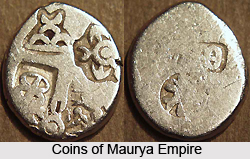
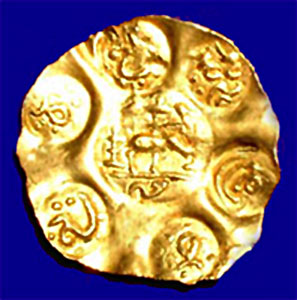
Outsized infantry, countless elephants and several horseman encompassed under the Rashtrakuta Dynasty. The majestic capital of Manyakheta witnessed a footing military geared up for war in a cantonment (Sthirabhuta Kataka). The feudatory kings also preserved enormous defense forces, anticipated to contribute to the military of the kingdom, in case of warfare. Furthermore, the chiefs and administrators served as leaders whose postings were subject to relocate in case the need arose. The Rashtrakutas also issued coins (minted in an Akkashale) like Suvarna, Drammas in silver and gold weighing 65 grains, Kasu weighing 15 grains, Kalanju weighing 48 grains, Manjati with 2.5 grains, Akkam of 1.25 grains and Gadyanaka weighing 96 grains.