Tantric Practices was developed to achieve thoughtful feeling and awareness. Through the practices of Tantra, one can attain mystical powers by deriving the divine faculties that is universal. Tantrism leads one to the path of self surrender. Elevation of inner consciousness is necessary to be successful in Tantra.
If one has to be successful in Tantra, these practices need to be strictly adhered to. The various Tantric practices are discussed below:
Tattvas in Tantric practice
Tattvas in Tantric practice denotes the five elements that make up the world which include air, water, fire, earth and ether. Tattva is conceived as an aspect of deity. The numbers of Tattvas differ according to various schools like that of Jainism, Shaivism, Vaishnavism and Samkhya.
Shakti Sadhana in Tantric Practice
Shakti Sadhana is the worship of the Shakti. Through this Sadhana, the spirit of love and consciousness are aroused in the soul. Shakti is the origin of all creation. Shakti awakens and strengthens the three layers of human body - physical, subtle and casual.
Tapas in Tantric Practice
In Tantric practice, Tapas is the form of Divine energy that exists in the human body. It is a sensitive goal. It is performed to attain perfection in a particular field of knowledge. Tapa is the absorption of senses.
 Transcendence in Tantric Practice
Transcendence is the state where one achieves the eventual happiness and it is the ultimate goal. This transcendental energy of Lord Shiva leads one to the metaphysical state of mind. It is basically the experience of reality.
Yogini in Tantric Practice
Yogini is the female who is an expert in Yoga. Through rigorous yoga, she attains a transcendental state thus gaining the Divine power. Yogini is a female personality who is gifted with mystic powers and possesses energetic passion and deep insight.
Anugraha in Tantric Practice
Anugraha is a grace which awakens the inner soul. This awakening motivates the human minds to progress in the direction of a better future. In Tantrism, Anugraha has an important role to play.
Tantric Mandala
This is a pictorial representation of celestial forces. The Mandala forms of Gods and Goddesses which have been developed into visual symbols. Some Mandala symbols are beautiful, some are provocative, some look kind, some look bizarre and some are fear provoking and some are divine. Mandala possesses spiritual and ritual connotation.
Guru-Shishya Relation in Tantric Practices
The Guru-Shishya Relation plays a vital role in Tantrism. A preceptor is essential for the Tantric practices. This is an intimate relationship. The Guru transmits something of himself to the Shishya. One needs to receive first the Sadhu initiation to become a Tantric Sadhu.
Puja in Tantra
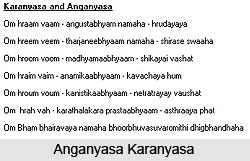
In the Puja that is performed, the worshipper needs to identify himself with the deity he is worshipping. Nyasa is an important element in Puja. The other essentials in a Puja are Dhyana and Japa.