Poha
|
Poha is uncooked rice flakes, which can be easily digested and can be eaten daily with no major side effects.
|
|
|
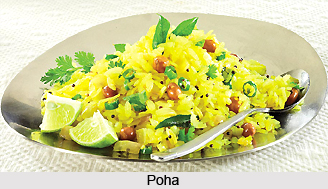 Poha is uncooked rice flakes, which does not need water. It can be digested easily, and can be eaten daily with no major side effects. There is no such tridoshic involvement but it is best for its light digestion properties. Poha is uncooked rice flakes, which does not need water. It can be digested easily, and can be eaten daily with no major side effects. There is no such tridoshic involvement but it is best for its light digestion properties.
Ingredients of Poha
Three cups of poha, (a type of rice flakes, preferably thick)
One teaspoonful of black mustard seeds
One-third cup of safflower oil
One teaspoonful of cumin seeds
Five curry leaves
Half teaspoonful of turmeric
Half teaspoonful of salt
Half coriander leaves finely chopped
A pinch of hing
One small onion finely chopped
One small green chilli finely chopped
Some coconut, coriander and lime for garnish
Method of Preparing Poha
Wash the rice flakes, drain the water and keep it aside.
Heat the oil in a frying pan over medium flame. When hot, add the mustard seeds, cumin seeds and curry leaves. Stir until the seeds pop and put in the turmeric, salt and hing.
Next add the coriander, onions and chilli and cook until soft and slightly brown.
Stir in the rice flakes, cover and turn off the heat.
Lastly garnish with coconut and coriander.
For each serving, squeeze fresh lemon.
Another method of preparing Poha with slight change in the ingredients:
Ingredients of Poha
2 cups poha (flattened rice)
2 tbsps vegetable/ canola/ sunflower cooking oil
1 tsp mustard seeds
5-6 curry leaves
2 green chillies slit lengthwise (optional)
1 medium onion chopped fine
1 large/2medium potatoes quartered and sliced very thin
Handful of unsalted peanuts (skins removed)
Pinch of turmeric powder
Juice of 1/2 a lime
Salt to taste
Chopped coriander to garnish
Method of Preparing Poha
Put the poha in a sieve and wash under running water for 2 minutes. Keep aside to drain.
Heat the oil in a pan on a medium flame and add the mustard seeds, curry leaves and green chillies. Fry till the spluttering stops and then add the onion. Fry till soft and translucent.
Add the peanuts and potatoes and stirring frequently, cook for 2-3 minutes.
Drain the poha completely to remove all water and add it to the above mix. Add the turmeric powder and stir well to blend all ingredients.
Cook for another minute. Turn off the fire. Pour lime juice over the poha and mix well.
Garnish with chopped coriander.
Serve hot.
This dish is generally consumed as a single dish but it also tastes great with mint-coriander chutney.
|
|
|
|





