


 Mohiniattam dancers nurtured the mesmerising dance form of Mohiniattam in the region of Kerala in south western India. The name Mohiniattam literally means 'Dance of the Enchantress,' and the Mohiniattam dancers correctly justify the meaning of their dance with a spellbinding effect. Mohiniyattam also spelled Mohiniattam is one of the classical dances of India which developed and remains trendy in the state of Kerala. An elegant Mohiniyattam dancer in a gold-edged white sari, her hair is decorated with white flowers and her gold jewellery is so well-known for-welcome to a presentation of mohiniattam. Mohiniattam dancers nurtured the mesmerising dance form of Mohiniattam in the region of Kerala in south western India. The name Mohiniattam literally means 'Dance of the Enchantress,' and the Mohiniattam dancers correctly justify the meaning of their dance with a spellbinding effect. Mohiniyattam also spelled Mohiniattam is one of the classical dances of India which developed and remains trendy in the state of Kerala. An elegant Mohiniyattam dancer in a gold-edged white sari, her hair is decorated with white flowers and her gold jewellery is so well-known for-welcome to a presentation of mohiniattam.
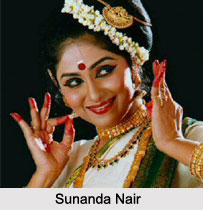
Some of the popular Mohiniattam dancers are as follows: Sunanda Nair: A foremost example of Mohiniattam, Sunanda Nair has appeared as one of the few practising luminaries of this style of classical Indian dancing. She is considered to be "the prime ballerina in the middle of Mohini attam dancers" and also one of the exceptional performers of the younger age group in India today. Kalamandalam Kalyanikutty Amma: She was an era-making Mohiniyattam dancer from Kerala in southern India. She also taught in Shantiniketan under Rabindranath Tagore's request. A winner of both the Kerala Sangeetha Nataka Academy and Kendra Sangeet Natak Akademi Awards, Kalyanikutty Amma died on May 12, 1999. 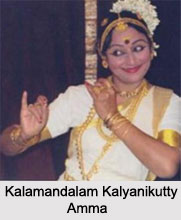
Jayaprabha Menon: Jayaprabha Menon is one of the most talented dancers of the new age group. Her pleasant stage charisma and elegant exhibition have brought a new aesthetics to Mohiniyattam. At present she is researching on the Regional Taala patterns of Kerala under the supervision of Padmabhushan Shri Kavalam Narayana Panikker. Jayaprabha has widely performed in India and abroad and has won innumerable recognitions for her dedication. Pallavi Krishnan: Pallavi Krishnan is a principal promoter of Mohiniyattam. She is known for her efforts to encourage and conserve this style of Indian classical dance as a living tradition. Initially Pallavi trained in Bharatanatyam and Mohiniyattam under Guru Kalamandalam Sankaranarayanan. Gopika Varma: Gopika Varma started learning Mohiniyattam at the age of 10 from Smt. Girija and Smt. Chandrika Kurup, both elder students of Smt. Kalyani Kuttyamma whose student she continued to be for 10 years. She was also lucky to be trained under Abhinaya which is the epitome of Mohiniyattam from Sri. Kalamandalam Krishnan Nair, the doyen of the Kathakali stage. Currently Gopika is running a Mohiniyattam school named 'Dasya' at Adayar, Chennai. Vijayalakshmi: She was initiated into dance at an early age and was slowly drawn towards Mohiniyattam, the reason her mother and Guru Bharati Shivaji has come to become the same with. It is this artistic inheritance, a promise to the cause of Mohiniyattam that Vijayalakshmi has downed. Radha Dutta: A performing traveller, Radha has given performances at "Mandapa" in Paris in the Maharaja's Palace at the Nishagandhi Dance Festival organized by the Kerala Department of Tourism, quite a few television telecasts, to name a few. Radha is an "A" grade artiste of Doordarshan. She was in the celebrated Ananda Shankar Contemporary Dance Troup, in India. 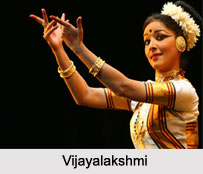
Rema Shrikant: Rema Shrikant is a talented dancer, a recognized teacher and an evolved choreographer. Rema has been presented with the "Gaurav Puraskar" award by the Gujrat State Sangeet Akademi Award for Bharatanatyam in the year 1999-2000. Recently she was honoured by the Kerala State Sangeetha Nataka Akademi with their award, "Kala Sree" for her assistance in classical dance. Rema is a Gold Medalist from Maharaja Sayajirao University, Baroda for Bharatanatyam. She is also empanelled with ICCR, Government of India. The other notable Mohiniattam dancers and Gurus in Kerala Kala Mandalam were Krishna Paniker and Madhavi Amma. In 1950 Thottasseri Chinnammu Amma, the great Mohiniattam dancer promoted this dance style. It was from these Mohiniattam dancers that new generations of dancers were born. These teachers maintained the classical patterns of teaching following text like Natyasastra and Abhinayyadarpana. As of now, Mohiniattam is a widely known and popular dance form. The sari is draped in typical Bharatnatyam form, however the lower portion is heavy pleated in semi circular form. The dancer is adorned with traditional gold jewellery of India, including necklaces, bangles, waistbands and anklets. The tinkling of the jewellery produces music as the dancer performs the dance. The dancer's hair is gathered in a bun that is worn at the side of the head and gorgeously decorated with jasmine flowers. Musical instruments like violin, Veena and Mridangam, accompany Mohiniattam dancers and the dancer gradually narrates episodes from the epics and legends through elegant steps, rhythmic movements of her arms and amazing facial expressions. The Hastha Lakshandeepika is a classical text and offers the details of hands and arms movement in this particular dance form. |
| |||



Home > Art & Culture > Indian Dances > Classical Dances of India > Mohiniattam > Mohiniattam Dancers
Mohiniattam Dancers
| Mohiniattam dancers in India have graced the classical dance stage with their highly charming dancing style. |
| ||||||||||||||||||||||||||||

