 Rituals of Tantra can be divided into the "Ordinary Ritual" and the "Secret Ritual". Rituals are performed to achieve Moksha. As Tantra is a broad term it is difficult to describe Tantric practices definitively.
Ordinary Ritual
This might include any one or both of the `mantra` and `yantra`. These two are very common ingredients in Hindu as well as Buddhist Tantric tradition. The Mantras and yantras are ingredients that invoke specific Hindu deities such as Shiva and Kali. The Puja might involve focussing on a yantra or Mandala associated with a deity.
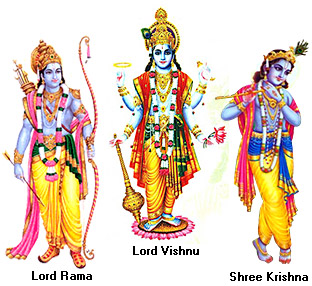
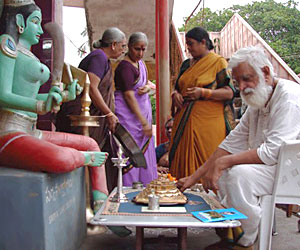
As Tantra evolved from the early Vedic thought, it worships Hindu gods and goddesses, especially Shiva and Shakti. Tantra also follows Advaita philosophy that each represents on the ultimate aspect of Parashiva or Brahman. The deities are worshipped with the flowers, incense and other offerings, but the most important aspect of the Puja is the meditation and Darshan of the deity.
Secret Ritual
The Secret Ritual might include a part of all of the elements of the ordinary ritual either directly or substituted along with other rituals and themes such as a feast, coitus, charnel grounds and defecation, urination and vomiting. The secret ritual is called Panchatattvas, Chakrapuja and Panchamakara. The Panchatattvas is the secret ritual of worshipping the Sakti and the Shakta. This act involves a chakra that consists of men and women who sit in a circle in a manner so that the female practitioner sits on the left of the male practitioner. Hence it is called `Chakrapuja`. There are various types of chakras to serve different purposes. There is a direct correlation of the Tantric five nectars and the Mahabhuta.
Sexual rites in Tantra
Sexual rite is indeed an important part of the Tantric rituals. It is a particular means of generating and transforming the body fluid as these are regarded as the vital oblations to the Tantric deities. Union is here regarded as the divine conjugation and the new born is reckoned as the "Son of the Clan" or the "Kulaputra"; the holy body fluid is then the "Clan Nectar" or "Kulamrita". The Tantric texts thus unveils that sexual practice has three distinct and separate purposes in Hindu Tantra and these are mainly for procreation, pleasure and liberation. In Tantric sexual rites the female and male participants are united physically while representing the form of "Ardhanarishvara". The male is then represented as the Shiva and the Female as the Shakti and thus each participant experiences an unearthly fusion of the energy of Shiva and Shakti. The earthly elements are thus dissolved amidst the union of the cosmic consciousness.