|
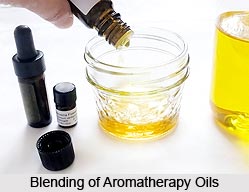 Blending of Aromatherapy oils is a combination of creativity and science. Though, blending is mainly done to create aroma however, it ensures therapeutic benefits. The ten best mixes of oil to be blended are Bergamot, Lavender, Chamomile, Neroli, Frankincense, Rose, Geranium, Sandalwood, Ylang Ylang and Jasmine. The favourite oils for the men are Basil, Bergamot, Eucalyptus, Frankincense, Jasmine, Lavender, Lemon, Patchouli, Pine and Sandalwood. For the women, the favourites are Bergamot, Geranium, Jasmine, Lavender, Neroli, Patchouli, Peppermint, Rose, Sage, and Ylang-Ylang. One should always try the combination before mixing it so that one does not waste the oils. The best way is to cut up some long strips of blotting paper. Given below are some steps to blend the oils. They are as follows: Blending of Aromatherapy oils is a combination of creativity and science. Though, blending is mainly done to create aroma however, it ensures therapeutic benefits. The ten best mixes of oil to be blended are Bergamot, Lavender, Chamomile, Neroli, Frankincense, Rose, Geranium, Sandalwood, Ylang Ylang and Jasmine. The favourite oils for the men are Basil, Bergamot, Eucalyptus, Frankincense, Jasmine, Lavender, Lemon, Patchouli, Pine and Sandalwood. For the women, the favourites are Bergamot, Geranium, Jasmine, Lavender, Neroli, Patchouli, Peppermint, Rose, Sage, and Ylang-Ylang. One should always try the combination before mixing it so that one does not waste the oils. The best way is to cut up some long strips of blotting paper. Given below are some steps to blend the oils. They are as follows:
1) If one is planning to use all the oils in equal amounts then apply one drop of every oils to the tip of one blotter strip. If single oil will dominate the recipe more than the others, put two drops of the dominant oil on the tip of the blotter.
2) Then hold the strips together by the bottom end and fan the oily tips backwards and forwards under the nose while inhaling.
3) Judge the fragrance with nose and if the combination suites the requirement, go ahead and mix it. If the combination is to be made for someone else then it is better to test it with him or her first with blotting paper.
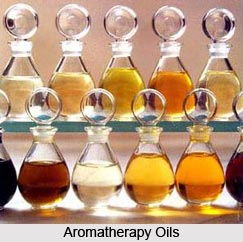 Apart from all these steps, some precautionary steps to be taken are as follows:
Avoid excess use of aromatherapy oils, since they are quite potent. Hence, one should only measure them in drops.
Do not use plastic containers to store essential oils, pure or diluted, or they will become contaminated.
Never apply them directly to skin. (Apart from lavender for minor cuts and burns, and tea tree for spots, fungal infections, etc, and even these two should be used in moderation).
Do not take aromatherapy oils internally since it is unsafe. However, only a professional aroma therapist may prescribe oral treatment.
Increasing the dose of aromatherapy oils does not increase their effectiveness. In fact, some oils in large amounts are toxic.
Strictly follow instructions while using for therapeutic use to treat common ailments. Seek medical advice if symptoms persist.
Keep aromatherapy oils out of reach of children: if any splashes in an eye, rinse it out with a few drops of pure, sweet, almond oil rather than using water, and seek medical advice.
Do not take a shower or bath for two hours after an aromatherapy massage, since it takes that long for some oils to fully penetrate skin.
It is best not to use glass bottles for an aromatherapy massage mix for once one has oily hands, glass bottles are very slippery to hold. Use a bowl instead and dip the hands into it.
Some of the oils to be used in moderate quantity are Basil, Bay, Camphor, Fennel, Ginger, Laurel, Sage, Thyme, Tarragon and Valerian.
Do not expose skin to sunshine for at least six hours if one has used the phototoxic oils, since they can cause skin irritation. Some of the phototoxic oils are Angelica, Bergamot, Citronella, Ginger, Lemon, Lime and Mandarin.
Some oils to be avoided in Pregnancy are Angelica, Citronella, Laurel, Rosemary, Thyme, Basil, Fennel, Marjoram, Sage, Cedarwood, Yarrow, Juniper, Myrrh and Tarragon. Apart from all these steps, some precautionary steps to be taken are as follows:
Avoid excess use of aromatherapy oils, since they are quite potent. Hence, one should only measure them in drops.
Do not use plastic containers to store essential oils, pure or diluted, or they will become contaminated.
Never apply them directly to skin. (Apart from lavender for minor cuts and burns, and tea tree for spots, fungal infections, etc, and even these two should be used in moderation).
Do not take aromatherapy oils internally since it is unsafe. However, only a professional aroma therapist may prescribe oral treatment.
Increasing the dose of aromatherapy oils does not increase their effectiveness. In fact, some oils in large amounts are toxic.
Strictly follow instructions while using for therapeutic use to treat common ailments. Seek medical advice if symptoms persist.
Keep aromatherapy oils out of reach of children: if any splashes in an eye, rinse it out with a few drops of pure, sweet, almond oil rather than using water, and seek medical advice.
Do not take a shower or bath for two hours after an aromatherapy massage, since it takes that long for some oils to fully penetrate skin.
It is best not to use glass bottles for an aromatherapy massage mix for once one has oily hands, glass bottles are very slippery to hold. Use a bowl instead and dip the hands into it.
Some of the oils to be used in moderate quantity are Basil, Bay, Camphor, Fennel, Ginger, Laurel, Sage, Thyme, Tarragon and Valerian.
Do not expose skin to sunshine for at least six hours if one has used the phototoxic oils, since they can cause skin irritation. Some of the phototoxic oils are Angelica, Bergamot, Citronella, Ginger, Lemon, Lime and Mandarin.
Some oils to be avoided in Pregnancy are Angelica, Citronella, Laurel, Rosemary, Thyme, Basil, Fennel, Marjoram, Sage, Cedarwood, Yarrow, Juniper, Myrrh and Tarragon.
|