
 Headaches afflict almost everyone at some time or the other, since during most of the times, they are functional, caused by temporary upsets and is not related to any organic changes in the brain. A headache arises from irritation to nerve endings in the shoulder, neck and scalp muscles and also in the smooth muscles encircling the blood vessels, which serve these areas.
Headache
Headache is a common ailment that usually occurs from irritation to nerve endings in the shoulder, neck and scalp muscles.
Introduction
Headaches afflict almost everyone at some time or the other, since during most of the times, they are functional, caused by temporary upsets and is not related to any organic changes in the brain. A headache arises from irritation to nerve endings in the shoulder, neck and scalp muscles and also in the smooth muscles encircling the blood vessels, which serve these areas.Causes of Headache
Headaches may occur if there is an infection, such as a cold, virus and fever also. The common causes of headaches are allergy, emotional reasons, eyestrain, high blood pressure, hangover, infection, low blood sugar, nutritional deficiency, tension, the presence of poisons and toxins in the body, and migraine. Intense emotion often causes headaches.
Additives in foods and in many cases, cosmetics, skin and hair products are also serious offenders in bringing on headaches. In addition, there are many toxic air contaminants also that accumulate in the body, resulting in headaches.
Additives in foods and in many cases, cosmetics, skin and hair products are also serious offenders in bringing on headaches. In addition, there are many toxic air contaminants also that accumulate in the body, resulting in headaches.
Types of Headache
There are numerous types of headaches. The most common ones are:
• Tension Headaches: Also called stress headaches, chronic daily headaches, or chronic non-progressive headaches, they are the most common type among adults and teens. They cause mild to moderate pain and come and go over time.
• Migraines: These headaches are often described as pounding, throbbing pain. They can last from 4 hours to 3 days and usually happen one to four times per month. Along with the pain, people have other symptoms, such as sensitivity to light, noise, or smells; nausea or vomiting; loss of appetite; and upset stomach or belly pain.
• Mixed Headache Syndrome: Also called transformed migraines, this condition is a mix of migraine and tension headaches. Both adults and children can have it.
• Cluster Headaches: This type is intense and feels like a burning or piercing pain behind the eyes, either throbbing or constant. It"s the least common but the most severe type of headache.
• Sinus Headaches: This type of headache gives a deep and constant pain in the cheekbones, forehead or bridge of the nose. They happen when cavities in the head, called sinuses; get inflamed. The pain usually comes along with other sinus symptoms, such as a runny nose, feeling of fullness in the ears, fever and swelling in face.
• Tension Headaches: Also called stress headaches, chronic daily headaches, or chronic non-progressive headaches, they are the most common type among adults and teens. They cause mild to moderate pain and come and go over time.
• Migraines: These headaches are often described as pounding, throbbing pain. They can last from 4 hours to 3 days and usually happen one to four times per month. Along with the pain, people have other symptoms, such as sensitivity to light, noise, or smells; nausea or vomiting; loss of appetite; and upset stomach or belly pain.
• Mixed Headache Syndrome: Also called transformed migraines, this condition is a mix of migraine and tension headaches. Both adults and children can have it.
• Cluster Headaches: This type is intense and feels like a burning or piercing pain behind the eyes, either throbbing or constant. It"s the least common but the most severe type of headache.
• Sinus Headaches: This type of headache gives a deep and constant pain in the cheekbones, forehead or bridge of the nose. They happen when cavities in the head, called sinuses; get inflamed. The pain usually comes along with other sinus symptoms, such as a runny nose, feeling of fullness in the ears, fever and swelling in face.
Treatment for Headache
Since eyestrain always causes headaches, simple eye exercises should be practised to relieve eyestrain, such as moving the eyes up and down from side to side, palming, rotating the head with neck outstretched, forward and backward three times, then thrice clockwise and thrice anti-clockwise.
Water Treatment is the safest method of headache treatment as it draws the blood away from the head and down to the feet, giving relief from the headache. Aromatherapy oils for the benefit of curing headaches are Lavender, Peppermint, Camomile and Rosemary. Magnetic Therapy is also helpful in curing headache.
Water Treatment is the safest method of headache treatment as it draws the blood away from the head and down to the feet, giving relief from the headache. Aromatherapy oils for the benefit of curing headaches are Lavender, Peppermint, Camomile and Rosemary. Magnetic Therapy is also helpful in curing headache.
Yoga for Headache
 During a headache, yoga postures and pranayama can help to alleviate the pain and release tension and stress. Practice in a tranquil environment with low lights and soft music. One should conclude the yoga practice with savasana using an eye pillow or folded small towel over the eyes and start the savasana with Dirgha pranayama that indicates slow deep breathing in the belly and chest.
The tension-type headache can be extremely bothersome. It is often caused by stress, anxiety, depression, unbalanced activities, and poor diet. But through various yogic techniques a person can avoid and control headaches. `Bhramri Paranayam` is the most efficient Yoga practice to reduce headache. This meditative asana should be practiced in fresh air and a calm environment. One must close both the eyes and inhale deeply and then close ears with both palms. Then, by concentrating on the `Agya Chakra` between the eyebrows, one must raise the head upward; exhale slowly, with mouth closed and make humming sound of a bee, while reciting "OM" mentally.
Yoga provides a holistic approach to the lifestyle of the Yogi. A more holistic approach is adopted through Yoga to stop troublesome and painful headaches. This procedure can be carried out through relaxation techniques, Yoga diet, and psychological counseling if the fundamental causes of the headaches are anxiety and depression. When proper diet is adopted, Yoga is greatly effective in reducing the `anvil-heads`. Yoga Poses and meditation can release the mind and body from the disorder and confusion of scattered thoughts and disturbed activities that often cause tension-type headaches.Some of the Yoga poses that are greatly suggested in such cases include suryanamaskar, bhujanga asana, pawan muktasana, sirsasana, kapalabhati, shitali pranayama, savasana, jalandhar banha and kunjal jal neti. In addition to the above-mentioned Yoga asanas and pranayama practice of yoga Nidra, concentration and meditation gives the best result. Tension headaches, also categorized as muscle contraction, often can be alleviated through deep breathing and relaxation asanas, especially while lying down in a quiet place. Inverted postures increase oxygen to the brain and can also reduce headache-causing strain.

A regular routine of Yoga exercises, breathing techniques, and meditation can help to prevent chronic headaches or reduce their severity. Exercises that stretch the muscles can release the tension that often causes headaches.
The Yoga poses that are recommended for headaches is as follows -
• Sukhasana is one of the classic Meditative Poses and is usually performed after practicing the Savasana. The Sukhasana pose helps in straightening the spine, slowing down metabolism, promoting inner tranquility, and keeping the mind still.
• Neck exercises play a vital role in curing headache. Many people hold tension in their necks and shoulders, leading to inflexibility, bad posture, and tension headaches. Yoga practice helps to ease tension, increase flexibility, and tone the muscles.
• The shoulder stretch yoga pose are great in relieving stress and tension on the shoulders, as well as the entire upper back. One should practice them daily for several weeks continuously.
• The Sun Salutation or Surya Namaskar is a Yoga Pose that enlivens the whole body in preparation for the next series of Yoga Asanas. It is a graceful sequence of twelve Yoga positions performed as one continuous exercise.
• Half spinal twist yoga pose lengthens and strengthens the spine, thus bringing a light feeling to the body. It is also beneficial for the liver, kidneys, as well as adrenal glands. One should strictly practice this Yoga pose under the supervision of a Yoga instructor.
• Bidalasana or the cat pose teaches one to initiate movement from the center and to coordinate the movement and breath. These are two of the most important factors in Yoga practice. One should not practice this asana if he/she has any chronic or recent back pain or injury.
• Pavanamuktasana is one of the most important asanas for headaches. Since this helps the individual to get relief from gastric trouble that often causes headaches. The term Pavanamuktasana comes from the Sanskrit word `pavana` which means air or wind and `mukta` which means freedom or release. The Wind Relieving Pose works mainly on the digestive system and helps in eliminating excess gas in the stomach.
• Savasana is considered as a classic relaxation pose and is practiced before or in between asanas as well as a final relaxation. Savasana brings tranquility to the mind and thus brings relief to the headache.
• Anuloma Viloma is the special breathing technique that cures headache to a great extent. It is a cleansing process of the nostrils. Headache can be prevented and also cured greatly, if followed by a healthy lifestyle. Yoga lifestyle includes a proper diet that, once adopted, can nourish the body with what it actually needs. On the whole, not only are those tension-type headaches reduced, they are even eliminated through Yoga. The person will also feel revitalised and refreshed all over and all these without any side effects of strong drugs.
DISCLAIMER - The Yoga asanas prescribed above should be strictly performed under the supervision of an experienced Yoga teacher.
Ayurvedic Massage for Headache
 Ayurvedic Massaging on forehead and head on headache yields a cooling effect. It helps in proper blood circulation and calms down the aggressive mood. Any kind of oil can be used but coconut oil is suitable for ayurvedic massage in scalp, neck and forehead.
There are three important points on the head. During Ayurvedic massaging, these spots are carefully massaged. They are:
1. The first is "Brahmarandhra", a soft part which is present at the birth time as the interior fontanel, which gradually gets hard.
2. The second is the "Shikha", a spot where hairs at the top of the head turns in the form of the whirl either clockwise or anticlockwise.
3. The last point is where the neck meets the skull, a place known as "Brain Stem" or "Medulla Oblongata".
Headache is the commonest problem experienced by everybody. There are many reasons responsible for the trigger of headache. Stress, anxiety and tension are the main reasons for headache. It is very common that when things go against ones expectation then the tension occur which ultimately leads to headache. Other pathological conditions like poor eyesight, vascular headache, migraine etc are also the reasons of headache.
Steps of Ayurvedic Massage for Headache
• The person treated is allowed to sit on the chair in a comfortable posture in a silent environment.
• Then the masseur pours the oil on the person"s head.
• The oil is poured at the first spot or "Brahmarandhra" and then slowly spread over the whole scalp.
• Now the oil is massaged in the circular movement all over the scalp.
• Now the stroke comes to the second point "Shikha", where the massage gets harder with some gentle strokes. Here also the massage is done with clockwise rotation.
• Finally when the third spot is reached hands grip firmly the neck from the backside.
• Fingers hold the sides of the neck and thumbs remain at the center of the back of the neck.
• With the oil, thumbs are rubbed from the center of the neck to the top of the ears on each side.
• When the massage is done on the scalp, it is started on the forehead. The gentle taps on all over the scalp along with "Namaskar" posture of the hands ends the process.
Migraine Headache
 Migraine can be defined as a paroxysmal affection and also known as "sick headache", accompanied by severe headache, generally on one side of the head and associated with disorders of the digestion, the liver and the vision. It usually occurs when a person is under great mental tension or has suddenly got over that state. Nausea and vomiting occasionally accompany the excruciating pain, which lasts for as long as three days.
Symptoms of Migraine : Migraine usually gives warning before it strikes, viz: black spots or a brilliant zig-zag line appear before the eyes or the patient has blurring of vision or has part of his vision blanked out. When the headache occurs the patient may feel tingling, numbness, or weakness in an arm or leg.
 Causes of Migraine : In a migraine, the head and neck muscles, reacting to continuous stress, become over-worked. The tightened muscles squeeze the arteries and reduce blood flow. When a person relaxes suddenly, the constricted muscles expand, stretching the walls of the blood vessel. With every heartbeat, the blood being pushed through these vessels expands them further and causes incredible pain.
Treatment of Migraine by Nature Cure : When a headache strikes, one should stay on one`s feet in the daytime and do simple chores, which do not require too much concentration, or walk, move around and get some fresh air.
Diet : The best remedy to prevent headaches is to build up physical resistance through proper nutrition, exercise and constructive thinking. Thus, a person should undertake a short fast. During the fast, citrus fruit juices diluted with water may be taken six times daily.
After a short fast, the diet should be fixed in such a way as to put the least possible strain on the digestion. The food should consists as follows:
Morning: Drink a glass of water (warm water in winter and cool water in summer) mixed with a teaspoonful of honey the first thing in the morning.
Breakfast:It should consist of fruits, both fresh and dried.
 Lunch: It should consist largely of protein foods. Starchy foods such as whole wheat bread, cereals, rice, or potatoes should be taken at dinner along with raw salads. However, more of spices, tomatoes, sour buttermilk and oily foodstuffs should be avoided.
Water Treatments :
• There are certain water applications, which help relieve headaches. Copious drinking of water can help, as do the cleansing enema.
• Even a hot foot bath, a cold throat pack, frequent applications of towels wrung out from very hot water to the back of the neck, a cold compress at 40 to 60 F applied to the head and face or an alternate spinal compress should help.
•Hot fomentations over the abdominal region just before retiring also relieve headaches due to stomach and liver upsets.
Treatment of Migraine by Yogic Asanas : Yogic kriyas like jalneti and kunjal, pranayamas like anuloma-viloma, shitali and sitkari and asanas such as uttanpadasana, sarvangasana, paschimottanasana, halasana and shavasana are useful in the treatment of headaches.
 Treatment of Migraine by Acupressure : Tension and congested energy from a migraine headache can be released with simple acupressure massage. To begin the massage for migraine headaches, you will need to sit in a comfortable chair or lie down; choose a dark and dimly lit area, as the oncoming or current migraine headache has likely made you sensitive to light. Later the procedure is as follows:
• Begin the massage procedure at the center of your forehead between your eyebrows, applying tension to the tenderest points.
• Start with the top of the head, and apply pressure with your middle and index finger pressing down gently on the middle of your head.
Recently updated articles in Naturopathy in India
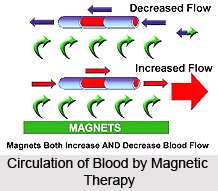
Effect of Magnets on Human Body
Magnets have a stimulating effect on various body systems such as digestive, urinary, respiratory. Magnet has its affect on blood and hence it influen...
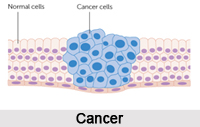
Cancer, Disease
Cancer is a malignant in which a group of cells display uncontrolled growth.
Principles of Massage
Principles of Massage are consisted of proper intricacies and sequence.
Foot Massage
Foot Massage is an extremely healing and effective therapy in Ayurveda, which can eliminate several problems in the entire body.
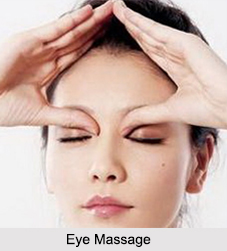
Eye Massage
Eye Massage helps to make the eyes cool and calm making the muscles stronger.
Related articles in Naturopathy in India
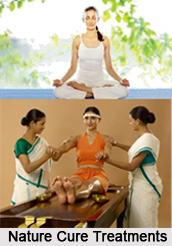
Nature Cure Treatments
Nature Cure Treatments comprise the use of natural elements and healthy lifestyle for healing various ailments and staying fit.
Water Therapy
Water therapy is an alternative therapeutic method that cures many diseases.
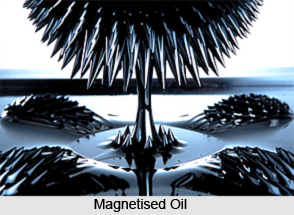
Magnetized Oils
Magnetized Oils are prepared either on the North Pole or the South Pole.