Introduction
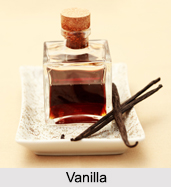 Vanilla is a flavouring agent that can be derived from orchids of the genus Vanilla. It is a product which finds a great position among the gourmet. It is widely used for both commercial and domestic purpose such as baking, perfume creation and aromatherapy. Vanilla essence is extracted from vanilla beans and is used to flavour several desserts and dishes. It is the extract that is made from vanilla beans which are soaked in alcohol. It is widely used as flavouring and vanilla ice-cream is the most common flavour.
Etymology of Vanilla
Vanilla or vanilla orchids are flowering plant genus. The botanical name of Vanilla include "Vanilla fragrans Ames", "Vanilla planifolia Andrews", "Vanilla pompona Schneider", "Vanilla tahitensis Moore" and the family name is "Orichidaceae". However, in all Indian languages and dialects, it is called Vanilla.
Origin of Vanilla
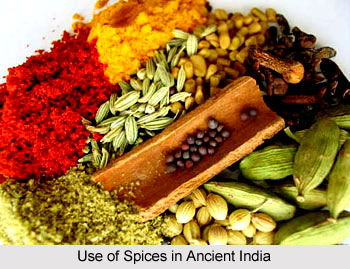
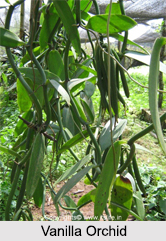 Vanilla is an evergreen plant and it is found all over the world. It was traditionally not known to Indians. Europeans introduced it for flavouring dishes of the western preparations such as puddings, ice creams, cakes and pastries. Thus, vanilla was popularized as an Indian flavouring and was used in traditional sweets like Kheer, Sandesh, etc. Vanilla therefore became the second most expensive spice after Saffron. It is highly valued in the country as well as the whole world for its flavour.
Properties of Vanilla
Vanilla has aphrodisiac properties and sedation properties. It is rich in antioxidants.
Uses of Vanilla
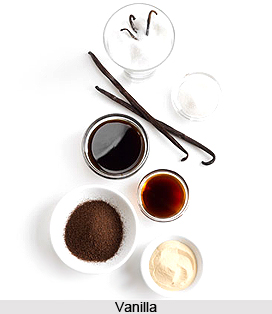 Vanilla has attained a position in the world in general and India in particular as one of the most expensive spices after saffron and cardamom. Thus vanilla is grown all over the country commercially. Numerous uses of Vanilla are outlined which include culinary approaches, or as medicinal herbs. Since ancient days, vanilla was employed for flavouring the drink. The beans and the extract of vanilla find usage all over the country. The flavouring comes from the seed pod, or the `bean` of the vanilla plant. These prepared beans are very dark brown in colour and grow slender, pleated and about 20 centimeter. Vanilla having a frosting of crystal called givre is found and the bean is found to be tough and bendable. The crystals contain the active ingredient `vanillin` which is main source of fragrance and is produced during the process of induced fermentation. Vanilla is used for various purposes for as it has rich and full flavour. Vanilla is an aromatic and powerful product.
Best uses of Vanilla are found to be in the culinary preparations. Vanilla is renowned for its culinary uses. The fragrance of Vanilla adds delectable taste to the sweet dishes such as ice cream, puddings, cakes, custards and creams. Vanilla flavour is used to enhance the taste of many chocolate and confectionery items and several liqueurs such as Crème de Cacao and Galliano. Furthermore, natural vanilla is used with three main commercial purposes. The preparations include whole pod, powder which are kept pure or blended with sugar, starch or other ingredients and extract in alcoholic solution. The food industry uses methyl and ethyl vanillin. A stronger aroma is attained when the pods are split in two, exposing more of the pod`s surface area to the liquid. Food becomes more delightful with the addition of vanilla extract or by cooking vanilla pods in the liquid preparation. The pods` seeds are mixed into the preparation. One of the essential properties of Vanilla is its strong aromatic flavour and thus used in flavouring food. The cosmetics industry also highlights the uses of Vanilla as it is used to manufacture perfume.
Vanilla has property to cure various diseases. Thus uses of Vanilla in the medicinal field are noticeable. The old medicinal literature has described Vanilla to have characteristics that acts as a remedy for fevers, as it has febrifuge. According to proofs, Vanilla increases the levels of catecholamine which includes epinephrine. In addition to that, vanilla is considered to be addictive too. Vanilla is found to block quorum sensing in bacteria. The microbes only become virulent when the signals indicate that they have the numbers to resist the host immune system response. Added to that, the essential oils extracted from Vanilla and vanillin is also used in aromatherapy. Vanilla is also used in few cases for medicinal purposes and pharmaceutical flavouring.
Vanilla Oil
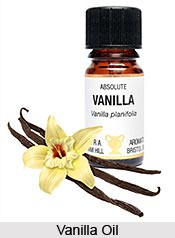 Vanilla is commonly available as an oleoresin and occasionally as an essential oil. Vanilla oil is extracted from "Vanilla Planifolia" of the Orchidaceae family and is also known as common vanilla. Most of the flavors that include "vanilla" are not actually derived from proper vanilla at all. They are synthesized from hydrocarbons. The odour is a relaxant for stress, anger, and tension, and it can be added to a blend for aphrodisiac effect for tense lovers.
Origin of Vanilla Oil : The word "vanilla" comes from the Spanish word "vainilla" which means little black pod. Vanilla is indigenous to Central America and Mexico, but has been widely grown in the subtropics of Asia, Northern Europe, and Canada. Madagascar is the largest producer of vanilla in the world. It is a perennial herbaceous climbing vine that can grow up to 25m high and is native to Central America and Mexico.
In cultivation, the deep trumpet-shaped flowers of the plant must be hand-pollinated, but in Mexico the native humming bird does the work.
Extraction of Vanilla Oil : The Oil of Vanilla is extracted by solvent extraction of a resinous substance obtained from fermented vanilla beans. These beans come from vanilla plants, a creeper that grows mainly in Mexico and neighbouring countries. The green capsules or fruit are picked and "cured" and the immature Vanilla pod or bean is fermented and dried to turn it into a fragrant brown vanilla bean.
Health Benefits of Vanilla Oil : Beyond its fantastic aroma and delicious flavor, vanilla oil boasts of a variety of health-promoting properties. The health benefits of Vanilla Oil can be attributed to its properties as an antispasmodic, balsamic, calming, emenagogue, antioxidant, aphrodisiac, anticarcinogenic, febrifuge, antidepressant, sedative, tranquilizing and relaxing substance.
• Fight some types of cancers
• Regulate menstruation
• Relieve nausea
• Ease stress, anxiety, depression, and insomnia
• Heal wounds
• Enhance your libido
• Induce sleep and encourage dreaming
Vanilla oil can also work as a fever reducer due to its eugenol and vanillin content, the same compounds that lessen inflammation and strengthen the body"s immune system.
Vanilla oil is usually directed for topical applications to soothe burns, promote healthy skin, encourage hair growth, and as a massage oil to reduce muscle or joint pain. Vanilla oil also has a range of positive effects when used in aromatherapy. Vanilla oil has been particularly found to be useful in improving one"s emotional and physiological health and well-being, especially when used in aromatherapy.